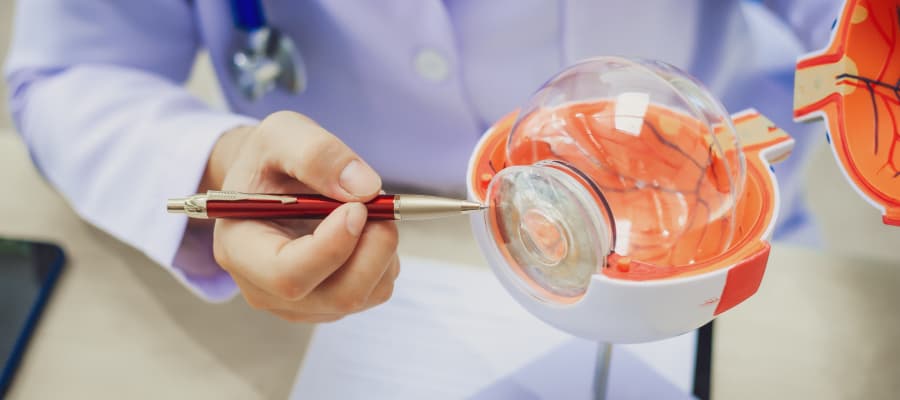
Laser Eye Surgery (LASIK)
Tbilisi
Laser Eye Surgery (LASIK) in Tbilisi is available at 1 hospital in the Voumed network.
Laser eye surgery is a quick, well-established refractive procedure that reshapes the cornea, the clear front window of the eye, so that light focuses sharply on the retina and the dependence on glasses or contact lenses is reduced or removed. It treats short-sightedness, long-sightedness and astigmatism, and for most suitable patients the change to everyday vision is dramatic and rapid. Because the treatment is painless, takes only minutes per eye and allows a return to normal life within days, it is one of the most popular reasons people travel abroad for eye care. Patients seek out experienced refractive teams, modern laser platforms and the convenience of completing a full assessment and treatment within a single short trip.
On this page
At a glance
- Anaesthesia
- numbing eye drops only, no general anaesthesia
- Hospital stay
- day case, no overnight stay
- Procedure time
- about 10 to 15 minutes for both eyes
- Recovery
- useful vision within 24 hours; full settling over a few weeks
- Time before flying home
- usually 3 to 5 days, after the first follow-up check
- Results visible
- a clear improvement within a day, stabilising over 1 to 3 months
What it is
Laser eye surgery is a form of refractive surgery, which means it corrects the way the eye focuses rather than treating a disease. A refractive error happens when the shape of the eye prevents light from landing precisely on the retina, producing blurred vision. By removing a microscopically thin, precisely mapped layer of corneal tissue with a cold excimer laser, the surgeon changes the curvature of the cornea so that focus is restored. In LASIK, the most widely performed method, a thin protective flap is created in the surface of the cornea, lifted aside, and the laser is applied to the layer beneath before the flap is gently laid back into place, where it seals without stitches. The result is a cornea reshaped to the patient's exact prescription, allowing clearer vision without glasses.
When it is recommended
Laser eye surgery is considered by people who want to reduce or end their reliance on glasses and contact lenses for everyday life, work or sport. It is suited to low and moderate degrees of myopia (short-sightedness), hyperopia (long-sightedness) and astigmatism, and is most predictable when the prescription has been stable for at least a year. It is not a treatment for an eye disease, and a thorough assessment decides whether the eye is a good candidate. People with a very high prescription, an unusually thin or irregular cornea, certain corneal conditions or an unstable prescription may be better served by a lens-based procedure instead, which the eye surgeon will explain. The aim is always a safe, lasting result rather than treating every eye with the same method.
How it is performed
Treatment begins with numbing eye drops, so the eye feels nothing and no general anaesthesia is needed; the patient is awake and relaxed throughout. Several techniques fall under the umbrella of laser correction, and the surgeon chooses the one that fits the eye. In flap-based LASIK, a thin hinged flap is created with a femtosecond laser or fine instrument, folded back, and the excimer laser reshapes the cornea underneath before the flap is replaced. In surface methods such as PRK and no-touch TransPRK, the outermost layer is gently removed or treated directly by the laser without a flap, which can suit thinner or more active eyes. In every case the laser delivery itself lasts only seconds per eye, guided by the precise map taken during the assessment. The whole visit takes around 10 to 15 minutes for both eyes, after which a protective shield or contact lens may be placed briefly while the surface settles.
Candidacy and preparation
A good candidate is an adult, generally over eighteen, with a stable prescription, healthy eyes free of significant disease, and realistic expectations. Preparation centres on a detailed pre-operative examination that maps the shape and thickness of the cornea, measures the prescription, checks the tear film and screens for any condition that would make laser unwise. Contact lens wearers are usually asked to switch to glasses for a short period beforehand, because lenses temporarily change the corneal shape and could distort the measurements. For patients travelling from abroad, a recent eye report and prescription can be reviewed before the journey, but the definitive scans and the decision on the best method are completed in person, since the safety of the treatment depends on these precise on-site measurements.
Recovery and planning your treatment abroad
Most people notice clearer vision within hours, and useful sight returns within a day, though it is normal for the eyes to feel gritty, watery or sensitive to light for the first day or two, especially with surface methods. Vision continues to sharpen and stabilise over the following weeks, and lubricating drops are used to keep the eyes comfortable during healing. When planning a trip abroad, it is sensible to allow about 3 to 5 days in the destination city so the surgeon can carry out the assessment, perform the laser and review the eyes at the first follow-up before clearance to fly. Air travel is generally comfortable once that check confirms healing is on track, although a dry cabin can make drops especially useful. After returning home, follow-up continues remotely by message or video, and international patient teams routinely provide interpreters and coordinators so language is never a barrier.
Risks, safety and results
Performed by an experienced refractive surgeon after proper screening, laser eye surgery is one of the safest and most successful elective procedures in modern medicine, but no surgery is entirely without risk. Common early effects such as dry eyes, glare, halos around lights at night and mild fluctuation in vision are expected and usually fade as the cornea heals. Less common issues include under or over-correction that may need a small enhancement, flap-related concerns with LASIK, or infection, all of which are minimised by careful patient selection and aftercare. The great majority of suitable patients achieve clear vision that removes or greatly reduces the need for glasses for distance, with the corrected prescription remaining stable over the long term. Choosing a qualified surgeon, completing the full assessment and following the drop and review schedule are the keys to a safe experience and a lasting result.
Frequently asked questions
These answers are general guidance and may vary by provider. Confirm the details with the hospital you choose.
Is laser eye surgery painful?
No. Numbing drops make the procedure itself painless, and most people feel only mild pressure. For a day or two afterwards the eyes may feel gritty or watery, more so with surface methods, but this is well managed with the drops your surgeon provides.
How many days should I plan to stay abroad?
Most patients plan about 3 to 5 days in the destination city. This covers the detailed assessment, the laser treatment and the first follow-up check, after which the surgeon confirms it is safe for you to fly home.
When can I fly home after surgery?
Usually within a few days, once your surgeon has examined the eyes at the first review and confirmed healing is progressing well. The cabin air is dry, so carrying your lubricating drops and using them often during the flight keeps the eyes comfortable.
How quickly will I see clearly?
Most people notice a clear improvement within hours and have useful vision the next day. Sight keeps sharpening over the following weeks, and the result generally stabilises within one to three months.
Will I still need glasses afterwards?
For distance vision, the great majority of suitable patients no longer need glasses or need them only occasionally. Reading glasses may still become necessary with age, since that is a separate, natural change in the lens that laser does not prevent.
Is it safe to have the surgery in only one trip?
Yes. The assessment, treatment and first follow-up are all completed within a single short stay, which is exactly why so many people choose to travel for it. The decisive scans are done on site to keep the treatment safe and accurate.
Can my prescription come back?
When the eye is well chosen and the prescription was stable beforehand, the correction is designed to last. A small number of patients have a minor enhancement later to fine-tune the result, and natural age-related changes can still affect near vision over time.
How does follow-up work once I am home?
Your surgeon gives you a written aftercare plan and stays reachable for remote follow-up by message or video. Routine checks can usually be carried out by an eye professional near your home, and interpreter support is available throughout.
Not sure which hospital fits your case?
Upload your medical records and let AI match you to the right hospital.
Upload records and get matchedAvailable at these hospitals
Specialties
Not sure which hospital fits your case?
Upload your medical records and let AI match you to the right hospital.
Upload records and get matched