Ebola Outbreak 2026: What Is Ebola, Symptoms, Spread to Kenya and Nigeria, and the Real Risk
The 2026 Ebola outbreak involves the Bundibugyo strain in Central Africa. Learn about symptoms, transmission, travel-related cases, and global risk.

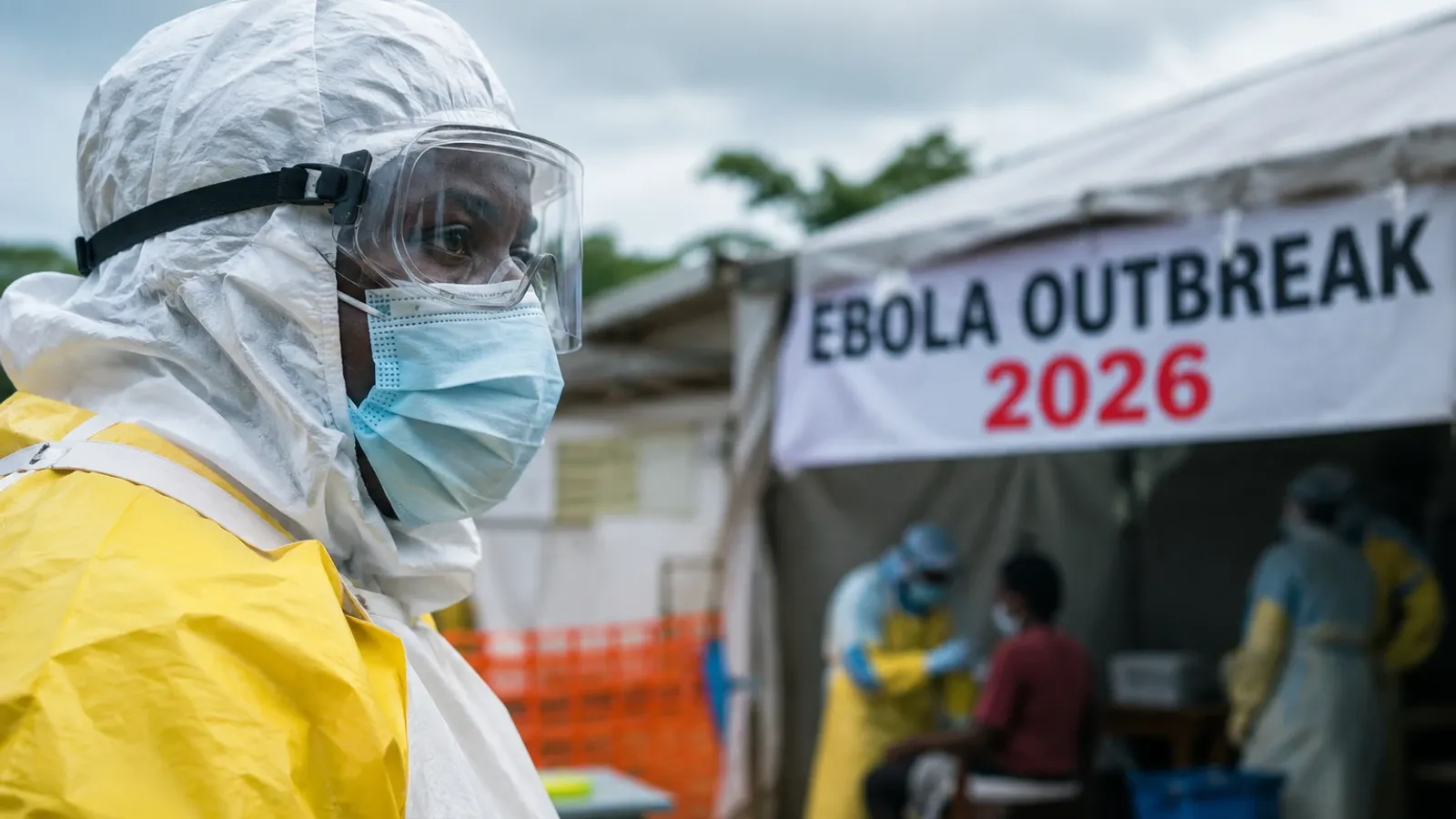
Quick Answer: The 2026 Ebola outbreak involves the Bundibugyo strain centered in the Democratic Republic of the Congo, spreading through direct contact with infectious bodily fluids rather than through the air. For international travelers and communities outside the active outbreak zones, the overall risk of infection remains very low.
Key Takeaways:
- As of late October 2026, the Democratic Republic of the Congo has reported over 10,000 cases and 4,887 deaths linked to the Bundibugyo virus strain.
- Cross-border spread remains limited to isolated travel-related cases in Kenya, Nigeria, and Uganda, alongside one medical evacuation to Switzerland.
- Standard vaccines approved by the US FDA for the Zaire strain do not protect against the Bundibugyo strain, though clinical trials for the candidate Tumaini vaccine are underway.
- Ebola does not spread through casual contact or airborne droplets; infection requires direct physical contact with fluids like blood, vomit, or diarrhea.
- Returning travelers who develop a fever within 21 days of visiting affected areas should call a local healthcare provider before visiting a clinic in person.
Ebola virus disease is an acute, severe hemorrhagic illness caused by infection with a virus from the Orthoebolavirus genus. First identified in 1976 near the Ebola River, the pathogen causes high fevers, gastrointestinal distress, and vascular damage in humans and non-human primates.
Current Ebola Outbreak: 2026 Status in the Democratic Republic of the Congo
As of late October 2026, the Democratic Republic of the Congo has recorded more than 10,000 cases and 4,887 deaths attributed to the Bundibugyo orthoebolavirus strain. This situation has prompted coordinated regional surveillance and intensive contact tracing across Central and East Africa.
The current Ebola outbreak represents one of the largest recorded public health emergencies involving this specific viral species. The epicenter remains concentrated in rural and peri-urban zones within the eastern provinces of the Democratic Republic of the Congo. There, logistical barriers, population displacement, and busy trade corridors complicate public health responses. Local epidemiologists and international teams have deployed decentralized treatment centers to isolate cases early and reduce community exposure.
Every Ebola outbreak update from local health authorities emphasizes that sustained community trust remains central to breaking chains of transmission. Safe burial teams, contact-tracing networks, and mobile testing laboratories help slow transmission in areas where local health centers lack permanent isolation facilities.
| Metric / Parameter | 2026 Outbreak Data (October 2026) | Historical Comparison (2018-2020 North Kivu) |
|---|---|---|
| Primary Pathogen | Bundibugyo virus | Zaire ebolavirus |
| Confirmed & Probable Cases | Over 10,000 | 3,470 |
| Documented Deaths | 4,887 | 2,287 |
| Reported Case-Fatality Rate | Approximately 45%-50% | Approximately 66% |
| Approved Vaccine Available | No (Candidate trials active) | Yes (Ervebo) |
| Transmission Mode | Direct contact with fluids | Direct contact with fluids |
What Is Ebola and How Does the Virus Transmit?
Ebola virus disease is a rare filovirus infection that spreads through direct contact with broken skin, mucous membranes, or bodily fluids from an infected person or contaminated object, rather than through respiratory droplets.
To understand what Ebola is, one must look at how the pathogen interacts with host tissues. The virus belongs to the family Filoviridae. It primarily infects immune cells, endothelial cells lining blood vessels, and hepatocytes in the liver. Once inside the body, the virus disrupts normal immune signaling and triggers widespread inflammation, which destabilizes fluid balance and blood clotting mechanisms.
Transmission does not occur while a person is incubating the virus without symptoms. An individual becomes infectious only once physical illness begins, with viral levels in bodily fluids rising as symptoms worsen. Direct transmission occurs through:
- Contact with blood, feces, vomit, urine, saliva, or semen from a symptomatic individual
- Direct handling of contaminated linens, clothing, needles, or medical tools
- Direct contact with the body of a deceased patient during traditional funeral and burial ceremonies
- Exposure to infected wild animals, such as fruit bats, forest duikers, or non-human primates, often through the preparation of bushmeat
Everyday interactions, such as passing someone in public or sitting in a shared waiting room without physical contact, do not transmit the virus.
Ebola Symptoms and the 21-Day Incubation Timeline
Signs and symptoms of Ebola typically appear between 2 and 21 days after exposure, starting abruptly with fever, severe fatigue, headache, and muscle aches before advancing to diarrhea, persistent vomiting, abdominal pain, and, in severe cases, internal bleeding.
The illness follows a characteristic clinical sequence that clinicians divide into early and advanced phases. The average incubation period lasts 6 to 12 days, during which the individual feels healthy and cannot pass the infection to others. Once initial Ebola symptoms manifest, the clinical course progresses quickly without medical care.
- Early Stage (Days 1-3 post-onset): High fever, chills, profound exhaustion, frontal headache, and joint pain (arthralgia). These nonspecific complaints frequently resemble malaria, typhoid, or dengue fever.
- Gastrointestinal Phase (Days 4-7 post-onset): Watery diarrhea, recurrent vomiting, and severe abdominal cramping. Fluid loss during this phase can exceed 5 to 10 liters per day, creating a high risk of hypovolemic shock.
- Advanced Vascular Phase (Days 7-10 post-onset): Capillary leakage, low blood pressure (hypotension), confusion, and a flat red rash (maculopapular rash). External bleeding is less common than often depicted, but microvascular leakage, pinpoint bleeding spots (petechiae), red eyes, and gastrointestinal bleeding can occur.
- Resolution or Organ Failure (Day 10 onward): Patients whose immune systems produce effective antibodies begin a gradual recovery. Severe cases deteriorate into multiorgan failure, dangerous blood acidity (metabolic acidosis), and circulatory collapse.
Regional Spread: Managing Ebola in Kenya, Nigeria, and Neighboring Borders
Isolated travel-associated cases identified in Kenya, Nigeria, and Uganda, along with one medical evacuation to Switzerland, prompted immediate border screening and quarantine protocols that have kept community transmission localized.
Health teams managing cases of Ebola in Kenya identified isolated travel cases involving cross-border truck drivers and travelers moving through western border points. The Kenyan Ministry of Health quickly set up isolation units in border counties such as Busia and at Jomo Kenyatta International Airport in Nairobi, tracing contacts before wider spread could occur.
Similarly, health officials tracking Ebola in Nigeria responded rapidly after an international traveler from Central Africa arrived in Lagos with a fever. Using surveillance protocols established during earlier outbreaks, authorities isolated the patient, monitored direct contacts for the full 21 days, and prevented any secondary cases.
In Europe, Swiss health authorities oversaw the medical evacuation of an infected relief worker under biosafety level 4 transport protocols. The patient received specialized care in a high-containment hospital ward in Geneva, preventing secondary exposure to the public.
Vaccine Availability and Clinical Care: Why the Bundibugyo Strain Lacks an Approved Vaccine
Existing vaccines approved by the US FDA and authorized by the European Medicines Agency in the European Union protect specifically against the Zaire strain, offering no proven cross-protection against the Bundibugyo virus. As a result, supportive care, fluid management, and candidate vaccine trials form the backbone of treatment.
The Ervebo vaccine (rVSV-ZEBOV) and the two-dose Zabdeno/Mvabea regimen express the surface glycoprotein of the Zaire strain. Because the Bundibugyo virus has a distinct genetic profile and different surface proteins, antibodies produced by Zaire vaccines do not neutralize it. Monoclonal antibody treatments such as Ebanga (ansuvimab) and Inmazeb (atoltivimab, maftivimab, and odesivimab) also lack activity against Bundibugyo.
To close this gap, public health agencies launched field trials for the investigational Tumaini vaccine. This platform uses an adapted viral vector that targets the specific proteins of the Bundibugyo species. While early phase studies show encouraging immune responses, clinical teams administer it under monitored trial protocols rather than general public programs.
Standard clinical management relies on prompt, intensive physiological support:
- Continuous intravenous fluid replacement using balanced electrolyte solutions
- Frequent blood tests to detect and correct potassium, sodium, and calcium imbalances
- Targeted broad-spectrum antibiotics to manage bacterial infections originating in the compromised bowel
- Nutritional support and fever management using acetaminophen, while avoiding nonsteroidal anti-inflammatory drugs (NSAIDs) like ibuprofen that could worsen bleeding risks
Starting supportive care early significantly lowers mortality, with observational studies showing field hospital death rates dropping from over 70% to under 40% when fluids are managed aggressively.
International and US Risk Assessment: Evaluating Global Transmission
Public health agencies, including the US Centers for Disease Control and Prevention (CDC) and the World Health Organization (WHO), assess the risk of sustained Ebola transmission in the United States and other non-outbreak countries as very low. This is due to advanced infection control standards and the biological fact that the virus requires direct fluid contact to spread.
Filoviruses cannot spread through aerosols or respiratory droplets. Because people cannot transmit the virus before symptoms start, air travelers incubating the disease do not shed viral particles in airports or aircraft cabins. A traveler who develops severe symptoms mid-flight can be promptly identified and isolated upon landing.
Healthcare systems in countries with private patient rooms, reliable personal protective equipment (PPE), modern wastewater systems, and rapid diagnostic testing can interrupt transmission chains quickly. Any imported case can be safely isolated, monitored, and treated without causing widespread community infection.
Travel Recommendations and Post-Arrival Care Protocols
Individuals returning from regions with active Ebola transmission should check their temperature twice daily for 21 days. If a fever or other concerning symptoms appear, they should call an emergency room or local public health department before arriving in person.
Travelers with essential business or humanitarian assignments in Central Africa should observe practical safety measures:
- Avoid direct physical contact with anyone who shows signs of fever or acute illness
- Wash hands frequently with soap and clean water, or use an alcohol-based hand rub containing at least 60% alcohol
- Avoid participating in traditional funeral or burial ceremonies in active outbreak areas
- Do not handle, purchase, or consume bushmeat, wild animal carcasses, or raw animal products
- Avoid visiting health facilities that manage viral hemorrhagic fevers unless working there as trained clinical staff equipped with certified PPE
If you develop a fever of 100.4°F (38.0°C) or higher, headache, joint pain, vomiting, or diarrhea within 21 days of traveling through an active outbreak zone, do not take public transit or walk unannounced into a clinic. Call your local emergency department or public health agency, inform them of your travel history, and follow their arrival instructions.
Risks and Potential Complications of Ebola Virus Disease
Ebola virus disease carries serious physiological risks, including hypovolemic shock, acute kidney injury, severe blood clotting disorders (coagulopathy), and secondary bacterial sepsis.
Many people who survive the acute illness develop post-Ebola syndrome during recovery. Clinical follow-up programs commonly document lingering joint pain, eye inflammation (uveitis), profound fatigue, headaches, and memory issues. In some individuals, the virus can persist for months in protected body compartments, including the interior of the eye, cerebrospinal fluid, and semen, even after it has cleared completely from the bloodstream.
Lowering these risks depends heavily on seeking medical evaluation at the very first sign of illness. Prompt supportive care helps protect vital organ function and prevents circulatory collapse.
Frequently Asked Questions
Where Is the Ebola Outbreak?
The primary outbreak is centered in the eastern provinces of the Democratic Republic of the Congo. Small, contained travel-related cases have been identified at transit points in Kenya, Nigeria, and Uganda, with no sustained community transmission outside the central Congo basin.
Can Ebola mutate to spread through the air?
Current scientific evidence shows no indication that Ebola viruses can mutate to spread through respiratory droplets or airborne routes in humans. Filoviruses have a physical structure and infection mechanism suited specifically to direct fluid contact, and their transmission mode has remained consistent across five decades of clinical observation.
How long does a person remain contagious after recovering?
A person cannot transmit the virus through casual daily contact once clinical symptoms resolve and blood tests show no detectable viral RNA. However, because the pathogen can remain in semen for extended periods, health agencies advise male survivors to practice safe sex or abstain for at least 12 months, or until two consecutive semen tests confirm negative results.
What should I do if I am exposed to someone with suspected Ebola?
Step away immediately, avoid physical contact with others, and wash any exposed skin thoroughly with soap and running water. Call your local public health agency or hospital emergency department right away to explain the exposure and arrange daily health monitoring for the 21-day incubation period.
Not sure which hospital is right for your case?
Upload your medical reports and our AI will match them against the verified capabilities of every hospital in our network.
- Upload your reports (no account needed)
- Our AI matches your case with hospitals that can actually treat it
- You choose who receives your case. We present it in the hospital's own language, and the hospital replies directly to you
Free and anonymous. Your documents stay private until you decide to send them.