El Niño Winter 2026: 10 Emergency Tips for Home-Care Patients and Caregivers

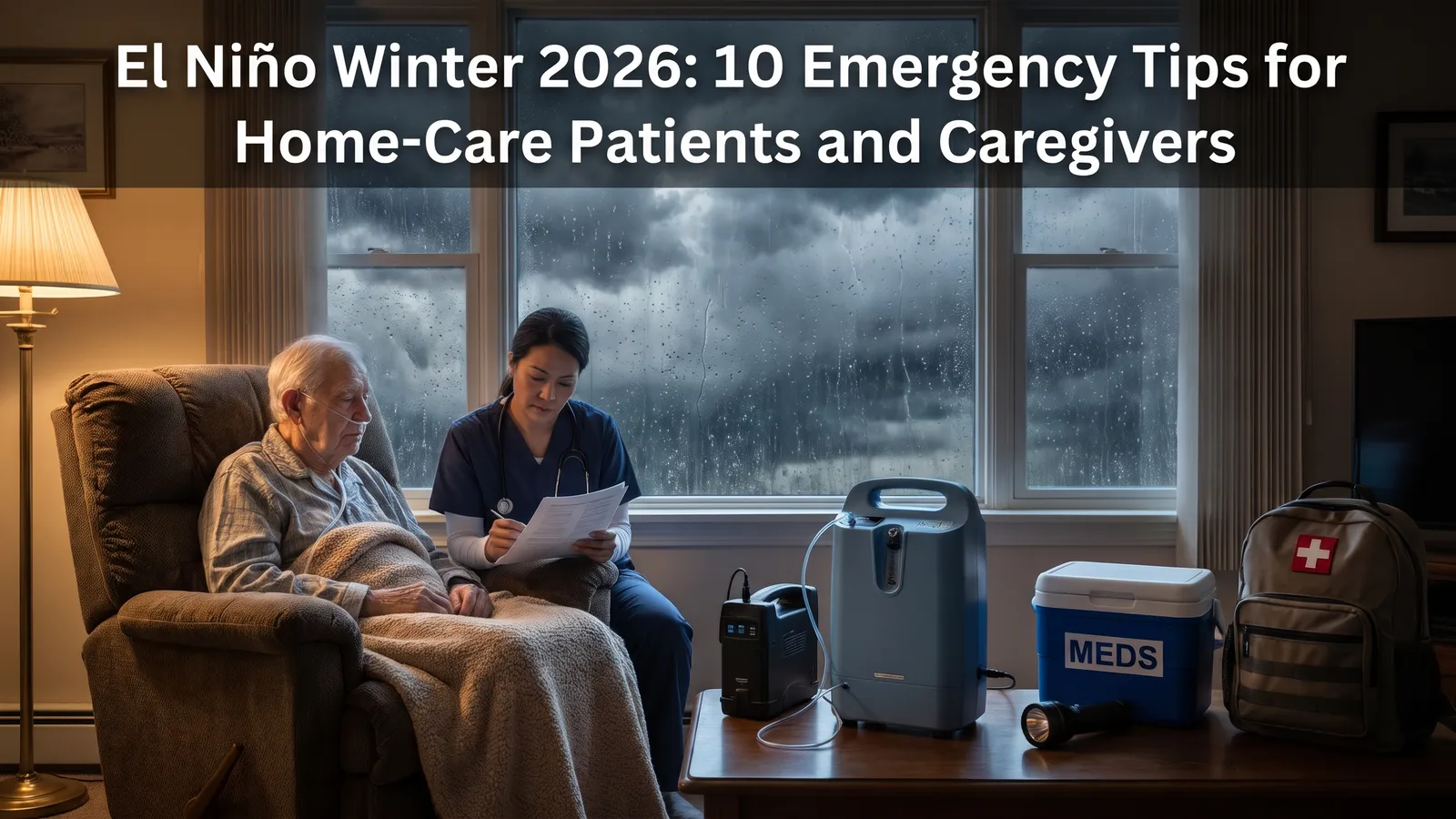
Quick Answer: A confirmed super El Niño winter brings severe storm systems, prolonged electrical outages, and localized flooding that threaten home medical equipment and care routines. Medically fragile individuals and caregivers must secure uninterrupted backup power, maintain a 14-day prescription buffer, safeguard cold-chain medications, and pre-register with local utility and emergency priority registries.
Key Takeaways:
- Power-dependent equipment, including oxygen concentrators and ventilators, requires dedicated uninterruptible power supplies, portable battery banks, and non-electric mechanical backups.
- Unopened insulin and biologic medications must be maintained between 36°F and 46°F (2°C to 8°C) using insulated coolers and digital thermometers to prevent protein denaturing.
- Enrolling in electric utility Medical Baseline programs and municipal special-needs rosters alerts local dispatchers to prioritized restoration and evacuation needs.
- Pre-arranged clinical protocols for dialysis patients and infusion recipients reduce the risk of clinical decompensation if road closures disrupt scheduled appointments.
- A five-day, waterproof medical go-bag containing essential disposables, written clinical summaries, and extra charging hardware helps support a smoother transition during mandatory evacuations.
An El Niño winter occurs when sustained warming of the central and eastern equatorial Pacific shifts atmospheric jet streams, driving intense storm cycles, heavy precipitation, and severe weather across North America. For individuals managing complex medical regimens at home, such as mechanical ventilation, supplemental oxygen, hemodialysis, and specialized wound therapy, these weather extremes introduce substantial clinical hazards. Prolonged electrical disruptions, damaged transit routes, and strained emergency response systems mean standard home support networks can fail without warning. Proactive, structured emergency preparedness preserves clinical stability when external services are delayed.
El Niño Winter 2026: What the Severe Weather Outlook Means for Vulnerable Patients
The confirmed super El Niño winter elevates risks of prolonged power outages, infrastructure damage, and supply delivery disruptions from California atmospheric rivers to Gulf Coast convective storms. For individuals receiving home healthcare, severe weather threatens the continuous power needed for life-sustaining equipment, interrupts home health nurse visits, and compromises time-sensitive medical deliveries.
Meteorologists at the National Oceanic and Atmospheric Administration (NOAA) confirmed the emergence of a super El Niño pattern on November 12, 2026. This setup brings a heightened probability of atmospheric river events to the West Coast, capable of producing severe inland flooding and mudslides. Across the southern tier of the United States and the Gulf Coast, the enhanced subtropical jet stream increases the frequency of severe convective storms, flash flooding, and tornadoes. In northern regions, rapid transitions between heavy wet snow and ice storms elevate the risk of downed trees and widespread grid collapse.
For medically fragile individuals, navigating an extreme winter like El Niño 2026 requires recognizing that standard emergency response times will be lengthened. Flooded thoroughfares prevent commercial package couriers from delivering oxygen refills, enteral nutrition formulas, and sterile dressings. Electrical grid failures halt the operation of alternating-pressure mattresses, nebulizers, and electric patient lifts. Caregivers must move from reactive day-to-day management to a resilient operational framework designed to withstand at least 72 to 96 hours of complete household isolation.
Power Continuity: Keeping Oxygen Concentrators and Life-Support Devices Running
Home-care patients who rely on power-dependent medical devices such as oxygen concentrators, ventilators, suction machines, and feeding pumps must maintain an uninterruptible power plan featuring dedicated battery reserves or safe generator setups. Caregivers should contact device suppliers immediately to request non-electric backup options, such as compressed oxygen cylinders, and verify the battery charge run-time across all critical apparatus.
The initial step in electrical planning is completing a comprehensive wattage audit of all medical machinery in the home. Medical devices carry labels indicating their operating wattage and voltage requirements. Continuous-use equipment requires clean, stable power; modern sensitive electronic components in ventilators and portable oxygen concentrators can be damaged by sudden voltage surges or dirty power from standard low-cost fuel generators. Caregivers should invest in outdoor pure sine wave inverter generators or indoor-safe, high-capacity lithium-iron-phosphate (LiFePO4) portable power stations.
Non-electric mechanical redundancies are required for patients on continuous supplemental oxygen. While stationary concentrators require 300 to 600 watts of continuous electrical power, compressed gas cylinders (such as E-tanks) operate via mechanical pressure regulators without any electricity. Caregivers must coordinate with their durable medical equipment (DME) provider to calculate the total liters per minute (L/min) required and retain an on-site reserve of compressed gas tanks sufficient to bridge at least 48 to 72 hours of complete electrical failure.
| Device Type | Average Power Requirement | Primary Backup Source | Secondary / Mechanical Redundancy | Critical Action Step |
|---|---|---|---|---|
| Stationary Oxygen Concentrator | 300W-600W | Lithium power station (1,500Wh+) or inverter generator | Compressed gas E-cylinders with manual regulators | Verify cylinder regulator compatibility and key wrench availability. |
| Home Mechanical Ventilator | 50W-100W | Internal device battery (2-4 hours runtime) | External hot-swappable lead-acid or lithium battery packs | Keep all external battery packs connected to wall power before the storm. |
| Airway Suction Machine | 40W-80W | Integrated rechargeable battery unit | Manual bulb or hand-pump mechanical suction device | Test manual aspiration strength and keep extra suction catheters nearby. |
| Enteral Feeding Pump | 10W-25W | Internal rechargeable battery (up to 24 hours) | Gravity feeding drip bags and tubing sets | Store calibrated gravity administration sets and calculate manual drip rates. |
| Alternating Pressure Mattress | 10W-30W | Portable battery power bank | Static foam or high-density air-overlay mattress topper | Place static overlay on bed frame if pump depressurizes during outage. |
When deploying outdoor gas- or propane-powered generators, strict safety precautions must be enforced to prevent carbon monoxide poisoning. Generators must be positioned outdoors at least 20 feet away from windows, doors, and fresh air intake vents. They must never be operated inside a garage, basement, or enclosed porch, regardless of door or window positioning. Battery-powered carbon monoxide detectors with digital readouts must be operational on every floor of the home.
Medication Reserves and Cold-Chain Protection: Safeguarding Insulin and Essential Prescriptions
Caregivers should obtain a minimum 14-day supply of all maintenance medications ahead of severe storm cycles by requesting disaster overrides from insurance carriers. Unopened insulin and other biologic injectables require temperatures between 36°F and 46°F (2°C to 8°C); during blackouts, maintain this cold chain using dedicated insulated coolers, digital thermometers, and sealed ice packs wrapped in towels to avoid direct freezing.
Obtaining a medication surplus often requires contacting prescribing physicians and commercial insurance plans to issue an early-refill authorization or emergency catastrophe override. Most commercial payers, Medicare Part D plans, and state Medicaid programs carry explicit provisions permitting early refills when a governor or local authority declares an emergency or severe weather alert. If maintenance pharmaceuticals arrive via mail-order pharmacy, caregivers should request that shipments be expedited or transferred to a local brick-and-mortar pharmacy before localized transit routes close.
Maintaining temperature controls for sensitive injectables requires disciplined cooler management:
- Avoid direct contact with ice: Direct contact with frozen gel packs can cause liquid medications to drop below 32°F (0°C). Freezing permanently alters the molecular structure of insulin, monoclonal antibodies, and specific vaccines, destroying their therapeutic efficacy.
- Buffer ice packs with cloth: Line the base and sides of a hard-sided insulated cooler with sealed ice packs, followed by a thick layer of bubble wrap or hand towels, before positioning the medication boxes.
- Deploy a digital thermometer probe: Place a digital indoor/outdoor probe thermometer inside the container with the display secured outside, allowing temperature checks without opening the lid and releasing cold air.
- Monitor room-temperature tolerances: In-use vials or pens of human insulin can safely remain at room temperature (up to 86°F or 30°C) for up to 28 days, depending on the specific formulation. If cooling resources become scarce, prioritize chilling unopened reserve inventory while keeping open daily-use items in a secure, ambient-temperature space away from heat sources.
Clinical Agency Coordination: Dialysis Protocols and Caregiver Redundancy
Home dialysis patients and individuals dependent on home nursing agencies must establish written, pre-arranged contingency plans that identify alternative clinics and secondary care routes before flooding closes access roads. In parallel, primary family caregivers need to train at least two backup individuals on the patient's daily transfer, medication, and device needs if travel becomes impossible.
The negative effects of El Niño often concentrate along regional transportation networks, where flash floods, mudslides, and downed power poles cut off home access. For patients receiving in-center hemodialysis or home peritoneal dialysis, missed treatments present life-threatening risks of pulmonary edema, metabolic acidosis, and severe hyperkalemia. Caregivers must secure the direct phone lines for their nephrologist and dialysis center coordinator. Patients should obtain a copy of their comprehensive dialysis orders, including machine parameters, dialyzer membrane type, prescription fluid composition, and heparin dosages. Dialysis networks regularly partner with reciprocal facilities, meaning patients can receive emergency treatment at neighboring clinics outside their normal provider group if their home facility loses power or municipal water supply.
To prepare for missed dialysis sessions during an environmental isolation event, patients should review their provider's specialized emergency renal diet plan. This protocol restricts daily fluid intake to roughly 16 to 24 ounces (500 to 750 mL) plus urine output volume, sharply limits high-potassium foods (such as potatoes, citrus, and tomatoes), and moderates sodium intake to mitigate extreme fluid retention. Caregivers should verify the availability of emergency oral potassium-binding medications (such as sodium polystyrene sulfonate, patiromer, or sodium zirconium cyclosilicate) if specifically prescribed by the patient's physician for power-outage emergencies.
Caregiver redundancy requires building a localized care circle:
- Instruct at least two neighbors or nearby relatives on safe patient transfer techniques, basic operation of medical equipment, and the precise daily medication schedule.
- Provide backup caregivers with physical keys or digital entry codes to the home in case primary caregivers are stranded off-site.
- Store a written daily log of patient care requirements in a high-visibility location, outlining feeding times, catheter care protocols, repositioning schedules, and emergency contacts.
Emergency Registration and Evacuation Go-Bags: Planning for Accessible Shelter
Registering on utility Medical Baseline programs and municipal vulnerable-person registries alerts emergency responders and power companies that a household requires urgent restoration and evacuation priority. Caregivers must prepare a waterproof go-bag containing printed medical summaries, physician contact details, power adapters, specialized dietary formulas, and five days of essential supplies for rapid transit to medical-needs shelters.
Major regional utility providers manage specialized medical programs (frequently titled the Medical Baseline Allowance or Critical Care Priority Registry). Enrolling requires a physician's certification stating that a resident uses life-support equipment or requires continuous climate control for clinical stability. While enrollment does not guarantee that power will be restored immediately to an individual home, it typically provides advance notification of planned public safety power shutoffs and places the home on prioritized lists for municipal power reconnection. Households should simultaneously register with their municipal 211 program, county emergency management division, and local fire department.
Caregivers must assemble a dedicated medical evacuation go-bag kept in an easily accessible entryway closet. Standard emergency shelter supplies are insufficient for individuals with advanced functional impairment or complex chronic illnesses:
Clinical Documentation:
- Laminated emergency face sheet (diagnoses, allergies, baseline vitals)
- Comprehensive medication administration record (MAR)
- Photocopies of health insurance, Medicaid, and Medicare cards
- Signed advance directives (Do Not Resuscitate, POLST, or MOLST forms)
- Contact roster (primary physician, DME suppliers, home health agency)
Hardware and Power Accessories:
- Device-specific AC power adapters and DC car charging cords
- Dedicated USB and device-specific battery charging blocks
- 12-volt inverter unit for standard automotive power sockets
- Mechanical backup tools (manual blood pressure cuff, pulse oximeter)
Consumable Supplies (Minimum 5-Day Buffer):
- Enteral feeding bags, extension sets, and prescribed liquid formula
- Suction canisters, connecting tubing, and sterile suction catheters
- Tracheostomy spare tubes (one current size, one half-size smaller)
- Sterile urinary catheters, drainage bags, and insertion supplies
- Specialized wound dressings, sterile saline flushes, and barrier wipes
Standard community emergency shelters managed by local municipalities are typically designed for uninjured, ambulatory residents. They frequently lack auxiliary power supplies for continuous medical machinery, specialized clinical staff, and bariatric or specialized hygiene amenities. When local authorities announce evacuation warnings, medically fragile individuals should coordinate placement at an officially designated Medical-Needs Shelter or Special Needs Shelter (SNS). These facilities provide clinical monitoring, emergency generator power, and accessible personal hygiene facilities.
Triage and Emergency Navigation: Knowing When to Call 911 vs Sheltering in Place
Caregivers should activate 911 emergency services immediately for severe respiratory distress, unresponsiveness, acute chest pressure, unstoppable bleeding, or imminent failure of life-sustaining oxygen or ventilation where backup supplies are exhausted. Stable patients facing standard utility disruptions or minor logistical delays should shelter in place, contact non-emergency community hotlines, and deploy their household backup supplies.
Severe storms generate secondary physiological risks beyond direct mechanical failure. Prolonged loss of home heating increases the hazard of accidental hypothermia, which impairs cardiac function, blunts cognitive reflexes, and worsens metabolic instability in older adults. Conversely, lack of air movement and elevated humidity can compromise skin integrity, accelerating the development of stage 2 through stage 4 pressure injuries in immobilized patients. Caregivers must monitor body temperature closely, use layered wool or thermal blankets without restricting breathing, and perform scheduled positional changes every two hours regardless of electrical disruption.
Caregivers must distinguish between non-emergency disruptions and emergent clinical crises:
- Shelter in Place and Deploy Contingencies: The electrical grid disconnects, but the patient's secondary battery reserves and mechanical backups are functional. A scheduled home health aide fails to arrive because flooded secondary roads prevent travel, but backup family caregivers are on-site to assist with transfers and meals. A routine oral medication dose is delayed by several hours, but the patient demonstrates stable vital signs without discomfort or distress. In these circumstances, the household is generally stable enough to shelter in place; caregivers should contact their agency by phone, conserve battery power, and avoid overburdening emergency dispatch networks.
- Activate 911 Emergency Services: Call 911 immediately if the patient displays central cyanosis (blueness of the lips or tongue), a peripheral oxygen saturation (SpO2) dropping persistently below 88% despite supplemental oxygen, or acute respiratory retraction. Emergency dispatch is also indicated for sudden neurological deficits (facial drooping, slurred speech, acute unilateral weakness), sudden cardiac chest pressure, progressive unresponsiveness, or when mechanical ventilator failure occurs and manual bag-valve-mask ventilation cannot be maintained by the caregiver.
If high water enters the living quarters or structural compromise threatens the home, early evacuation to an elevated floor or deployment of municipal rescue teams is paramount. Never attempt to transport a bed-bound, device-dependent patient across flooded terrain in a non-specialized consumer vehicle.
Frequently Asked Questions
How long do portable oxygen concentrator batteries last during a storm?
Standard single-battery portable oxygen concentrators typically deliver 2 to 4 hours of continuous power, whereas extended-capacity batteries can operate for 5 to 8 hours depending on the flow setting. Pulse-dose modes consume considerably less power than continuous-flow configurations, noticeably extending operating duration. Caregivers should confirm that all available battery units are fully charged before the storm arrives and keep an active 12-volt automotive DC charging cable available for vehicular recharging if safe to access.
What medical assistance is available at a designated emergency shelter?
Designated special-needs or medical-needs shelters provide generator-supported electrical outlets for medical equipment, accessible restrooms, and basic nursing oversight to assist with vital sign checks and simple triage. They do not operate as acute hospital units; they do not supply specialized medications, intravenous therapies, or dedicated one-on-one personal care aides. Family caregivers must accompany the patient and bring all daily medications, specialized feeding formulas, dressings, and medical hardware necessary for daily maintenance.
Can frozen insulin be thawed and used after an ice storm?
Insulin that has frozen solid must be discarded immediately and cannot be used, even after thawing. The freezing process permanently degrades and fragments the delicate protein structure of the insulin hormone, eliminating its ability to lower blood glucose reliably. If vials or cartridges show clumping, cloudiness (in clear formulations), or inner crystalline residue after exposure to freezing temperatures, discard them and obtain an emergency replacement supply.
How can patients verify that their home is registered for priority power restoration?
Patients can confirm enrollment by contacting their retail electric utility's customer service department and requesting verification of their Medical Baseline or Critical Care status. Utility providers maintain a dedicated account notation that identifies the location as housing life-support apparatus, ensuring the address receives pre-outage warnings and prioritized status during system restoration efforts. Enrollment should be reviewed and renewed annually, as many utility providers require updated clinical certifications from a licensed physician every 12 to 24 months.
Not sure which hospital is right for your case?
Upload your medical reports and our AI will match them against the verified capabilities of every hospital in our network.
- Upload your reports (no account needed)
- Our AI matches your case with hospitals that can actually treat it
- You choose who receives your case. We present it in the hospital's own language, and the hospital replies directly to you
Free and anonymous. Your documents stay private until you decide to send them.