Roasted Peanuts and Brain Health: What the New Study Really Shows
Roasted peanuts support cerebral blood flow and brain insulin signaling due to healthy fats and L-arginine, though they do not prevent dementia.

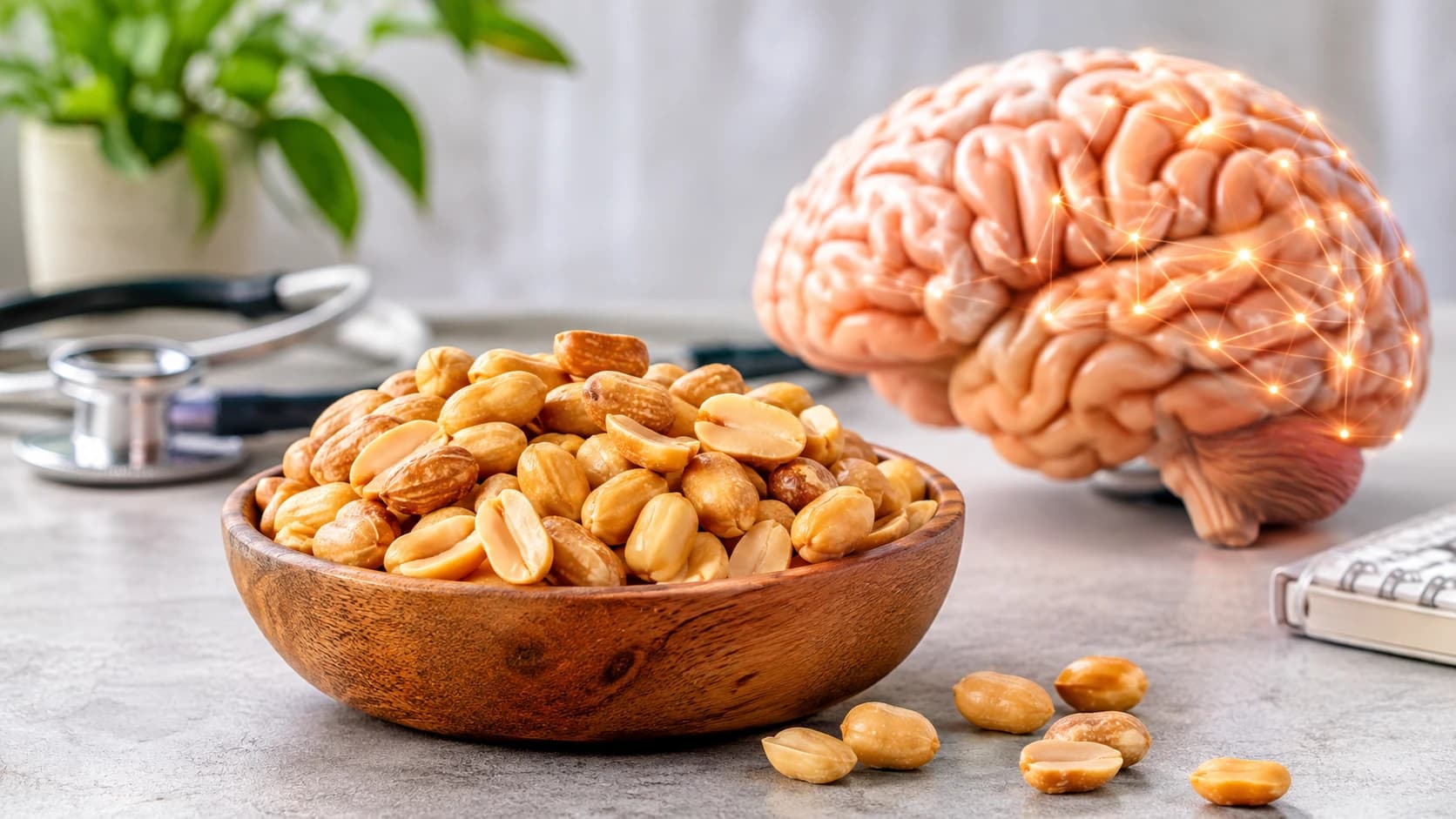
Quick Answer: Daily consumption of unsalted roasted peanuts can improve cerebral blood flow and brain insulin signaling in older adults, but current clinical research does not prove that peanuts prevent dementia, Alzheimer's disease, or long-term cognitive decline.
Key Takeaways:
- A 16-week randomized crossover trial linked daily peanut consumption to improved insulin sensitivity in memory-associated brain regions in older adults.
- Bioactive compounds in peanuts, including resveratrol, L-arginine, and monounsaturated fats, support vascular reactivity and nitric oxide synthesis.
- Study limitations include a modest sample size of 31 participants, short duration, surrogate metabolic endpoints, and industry funding.
- Unsalted, dry-roasted peanuts may offer cerebrovascular advantages without the excess sodium that compromises arterial health.
- Peanuts function best as a calorie-controlled component of a broader Mediterranean or MIND dietary pattern rather than as an isolated therapy.
Nutritional neuroscience investigates how specific dietary patterns and bioavailable nutrients influence cerebral blood flow, brain metabolism, and neuronal health across the lifespan. When considering whether peanuts are healthy, researchers focus on lifestyle modifications that support aging brain tissue. Recent clinical trials continue to examine whether regular intake of nutrient-dense whole foods can favorably alter vascular and metabolic markers within the central nervous system.
The Maastricht Clinical Trial: Daily Peanuts and Brain Insulin Response
In a 16-week randomized crossover trial published in Food & Function, researchers at Maastricht University evaluated daily peanut intake in 31 healthy adults aged 60 to 75. Consuming approximately 60 grams (about 2 ounces) of unsalted roasted peanuts each day enhanced brain insulin sensitivity in memory-associated regions. These results build on 2025 findings from the same group that showed improved cerebrovascular blood flow.
The clinical trial investigated how targeted dietary changes influence the central nervous system's response to insulin. Investigators used functional magnetic resonance imaging (fMRI) paired with intranasal insulin delivery. This validated technique delivers insulin directly to the brain without altering peripheral blood sugar levels. Following 16 weeks of daily peanut intake, participants showed stronger perfusion responses to intranasal insulin in frontal and temporal brain regions. These anatomical areas govern executive function, spatial orientation, and episodic memory.
This trial expanded on earlier physiological data gathered by the research team in 2025, which showed that regular peanut intake increased global and regional cerebral blood flow. Reduced cerebrovascular perfusion and central insulin resistance represent early pathological abnormalities observed in vascular cognitive impairment and neurodegenerative disorders. By examining healthy older adults, the trial sought to determine whether modest daily dietary changes could attenuate subclinical, age-related declines in neural insulin signaling.
What the Maastricht Study Found: Are Roasted Peanuts Healthy for Brain Function?
Roasted peanuts support vascular and metabolic signaling in the central nervous system by supplying bioactive compounds such as resveratrol, L-arginine, and monounsaturated fatty acids. These nutrients work together to promote nitric oxide production and support localized glucose uptake in prefrontal and temporal brain regions.
When evaluating whether roasted peanuts are healthy for brain function, researchers examine several biological mechanisms:
- Endothelial Nitric Oxide Synthesis: Peanuts are an abundant dietary source of L-arginine. The vascular endothelium requires this amino acid precursor to synthesize nitric oxide, which promotes arterial vasodilation, reduces vascular resistance, and preserves microvascular compliance in cerebral capillary beds.
- Microvascular Perfusion: Polyphenolic compounds, primarily resveratrol and p-coumaric acid, lower oxidative stress within the vascular lining. By neutralizing reactive oxygen species, these compounds preserve endothelial function so regional blood flow can adjust dynamically to neuronal metabolic demand.
- Central Metabolic Signaling: Insulin receptors in the hippocampus and prefrontal cortex modulate synaptic plasticity, neurotransmitter release, and cellular energy production. Enhancing insulin responsiveness in these tissues supports neuronal fuel utilization, countering the metabolic blunting commonly observed in aging neural tissue.
These physiological improvements demonstrate that bioactive dietary lipids and polyphenols can cross the blood-brain barrier or influence neurovascular coupling through systemic vascular adaptations.
Evaluating the Evidence: Study Limitations and Cognitive Health Realities
While the Maastricht trial demonstrates measurable physiological changes, it does not prove that eating peanuts prevents dementia, Alzheimer's disease, or age-related memory loss. The trial involved a modest cohort of 31 healthy individuals, spanned only 16 weeks, measured surrogate metabolic markers rather than long-term clinical endpoints, and received funding from The Peanut Institute Foundation.
Readers assessing whether dry roasted peanuts are healthy must consider several critical methodological boundaries:
- Surrogate Markers Versus Clinical Endpoints: The study measured vascular hemodynamics and fMRI blood-oxygen-level-dependent (BOLD) signals following intranasal insulin. It did not evaluate objective longitudinal changes in memory retention, processing speed, executive function, or incidence rates of mild cognitive impairment (MCI).
- Study Duration: Neurodegenerative conditions like Alzheimer's disease develop over decades. A 16-week intervention is insufficient to establish whether enhanced insulin sensitivity translates into sustained structural preservation, reduced amyloid-beta plaque accumulation, or protection against neurofibrillary tangles.
- Sample Demographics: The trial examined a narrow group of 31 healthy older adults without baseline metabolic, cerebrovascular, or cognitive deficits. These physiological results cannot be generalized to populations with established type 2 diabetes, cerebrovascular disease, or clinical dementia.
- Industry Funding: The study was funded by The Peanut Institute Foundation. While industry-supported research frequently adheres to rigorous peer-reviewed methodology, independent replication by non-industry-funded academic institutions is necessary to corroborate these physiological observations.
Roasted Peanuts Nutrition: Brain-Supporting Nutrients in Every Handful
A standard 60-gram serving of roasted peanuts delivers roughly 15 grams of plant protein, 30 grams of predominantly monounsaturated and polyunsaturated fats, alongside key neuro-supportive micronutrients including niacin (vitamin B3), vitamin E, folate, magnesium, and polyphenol antioxidants.
Evaluating roasted peanuts nutrition reveals an array of components that support systemic vascular health and cellular metabolism:
| Nutrient | Amount per 60 g Serving | Physiological Function in Brain and Vascular Health |
|---|---|---|
| Total Calories | ~350 kcal | Sustained metabolic energy substrate |
| Protein | ~15.5 g | Supplies amino acids, including the nitric oxide precursor L-arginine |
| Total Fat | ~29.5 g | Predominantly oleic (MUFA) and linoleic (PUFA) fatty acids |
| Monounsaturated Fat | ~14.5 g | Supports healthy lipid profiles and vascular endothelial flexibility |
| Polyunsaturated Fat | ~9.5 g | Supports cellular membrane fluidity and serves as a precursor for eicosanoid balance |
| Saturated Fat | ~4.0 g | Structural component of cell membranes in physiologic amounts |
| Dietary Fiber | ~5.0 g | Modulates gut microbiota and reduces systemic inflammatory tone |
| Niacin (Vitamin B3) | ~7.5 mg (47% DV) | Vital for neuronal NAD+/NADH synthesis and cellular DNA repair |
| Vitamin E (Alpha-tocopherol) | ~5.0 mg (33% DV) | Lipid-soluble antioxidant protecting neural membranes from peroxidation |
| Magnesium | ~100 mg (24% DV) | Regulates NMDA receptor signaling and vascular smooth muscle tone |
| Folate (Vitamin B9) | ~85 mcg (21% DV) | Regulates homocysteine metabolism, reducing vascular endothelial risk |
The synergy of these nutrients, rather than any single isolated element, underpins the metabolic and vascular observations documented in nutritional trials.
Portion Size, Salt, and Processing: Are Unsalted Peanuts Healthy?
Unsalted dry-roasted peanuts provide optimal vascular benefits because excessive sodium in conventional salted snacks can elevate blood pressure and counteract endothelial advantages. Because 60 grams contains approximately 340 to 360 calories, daily intake should replace other dietary fats or snacks rather than serve as a caloric surplus.
When considering whether unsalted peanuts are healthy, preparation methods meaningfully alter their physiological impact:
- Unsalted Versus Salted Peanuts: Typical commercial salted peanuts contain between 200 and 400 milligrams of added sodium per serving. Elevated sodium intake impairs endothelial nitric oxide generation, induces systemic fluid retention, and increases peripheral vascular resistance. Consuming unsalted varieties helps prevent the vascular benefits of L-arginine and magnesium from being offset by elevated blood pressure.
- Dry-Roasted Versus Oil-Roasted Peanuts: Dry roasting applies radiant heat without added oils or fats. Conversely, commercial oil roasting frequently introduces secondary hydrogenated or refined vegetable oils that elevate saturated fat content and increase susceptibility to lipid oxidation.
- Caloric Substitution Strategy: Peanuts are an energy-dense food. Adding 350 calories of peanuts to an existing diet without removing equivalent energy sources can promote gradual weight gain. In clinical trials, positive outcomes occur when nuts replace ultra-processed snacks, refined carbohydrates, or solid fats like butter.
Allergies, Caloric Density, and Context Within a Brain-Healthy Diet
Peanut consumption is strictly contraindicated for individuals with diagnosed peanut allergies, and their benefits exist strictly within the context of a diversified Mediterranean or MIND dietary pattern rather than as an isolated superfood cure for cognitive decline.
Several medical and dietary considerations determine safe and effective consumption:
- Immunological Safety: Peanut allergy is a common, potentially life-threatening IgE-mediated food allergy. Exposure can induce acute anaphylaxis, bronchospasm, and cardiovascular collapse. Individuals with confirmed or suspected peanut allergies must avoid all peanut products and rely on alternative nutrient sources, such as sunflower seeds, walnuts, or olive oil, to obtain similar fatty acid and polyphenol profiles.
- Mycotoxin Management: Peanuts can be susceptible to contamination by Aspergillus molds, which produce toxic metabolites known as aflatoxins. In the United States, regular testing and action levels established by the US FDA ensure that commercial peanut products remain within acceptable safety thresholds for human consumption.
- Dietary Pattern Context: Isolated foods do not prevent complex neurodegenerative syndromes. Clinical trials consistently confirm that comprehensive patterns, specifically the Mediterranean-DASH Intervention for Neurodegenerative Delay (MIND) diet, provide the most robust protection against cognitive decline. The MIND diet incorporates nuts alongside daily green leafy vegetables, weekly berry consumption, whole grains, extra virgin olive oil, and regular seafood intake.
Patients experiencing sudden memory disturbances, changes in spatial orientation, speech difficulties, or sudden weakness require immediate medical evaluation by a licensed neurologist, as these symptoms represent warning signs of acute neurological or cerebrovascular conditions that cannot be managed through nutritional changes.
Frequently Asked Questions
Are salted peanuts healthy for you?
Salted peanuts contain beneficial fatty acids, protein, and micronutrients, but their added sodium content can elevate blood pressure and strain vascular endothelium. To maximize cerebrovascular and cardiovascular health, clinical guidelines recommend choosing unsalted varieties to prevent excessive daily sodium accumulation.
Are peanuts a healthy snack?
Peanuts serve as a nutrient-dense snack when consumed in portion-controlled quantities of approximately 1 to 2 ounces (30 to 60 grams) daily. Their combination of plant protein, dietary fiber, and monounsaturated fats promotes satiety and supports stable postprandial blood sugar levels.
Can dry-roasted peanuts help prevent Alzheimer's disease?
Current scientific research does not indicate that dry-roasted peanuts prevent, arrest, or reverse Alzheimer's disease. While early trials show short-term improvements in regional brain perfusion and insulin response, long-term randomized clinical trials assessing real-world dementia incidence have not been conducted.
How quickly do physiological changes occur after eating roasted peanuts daily?
Trials evaluating neurovascular blood flow and regional brain insulin sensitivity demonstrate measurable physiological changes over a 12- to 16-week period. These adaptations reflect progressive improvements in endothelial reactivity and lipid signaling rather than immediate, acute changes in cognitive architecture.
Not sure which hospital is right for your case?
Upload your medical reports and our AI will match them against the verified capabilities of every hospital in our network.
- Upload your reports (no account needed)
- Our AI matches your case with hospitals that can actually treat it
- You choose who receives your case. We present it in the hospital's own language, and the hospital replies directly to you
Free and anonymous. Your documents stay private until you decide to send them.