

Chemotherapy
Oncology

Chemotherapy is offered at 32 hospitals across 13 cities in the Voumed network.
32 hospitals offer this procedure across 7 countries through the Voumed network; 22 of them hold JCI accreditation.
Chemotherapy uses carefully chosen anti-cancer drugs to reach and destroy cancer cells throughout the body, which makes it the backbone of treatment for many cancers that have spread or carry a risk of spreading. Unlike an operation, it is not a single event but a planned course given in cycles over weeks or months, with rest periods built in to let the body recover between doses. Many people travel abroad for chemotherapy to reach experienced medical oncology teams, modern day-unit facilities and well-organised supportive care, often as part of a wider treatment plan. Because a full course takes time, the practical questions of how much to do abroad and how to continue safely at home matter as much as the drugs themselves. With good planning, the journey can be arranged so that the most important parts of treatment happen under expert supervision while everyday life is disrupted as little as possible.
Key takeaways
- Chemotherapy is drug treatment that circulates in the blood and strikes fast-dividing tumour cells wherever they have reached, which is why it covers disease that may already have spread.
- It serves as the main treatment, before an operation to shrink a tumour, afterwards to sweep out remaining cells, or beside radiotherapy, with the intent ranging from cure to lower recurrence to symptom relief.
- Most courses run as day-unit drips through a port under the skin, some as tablets at home, arranged in cycles every one to four weeks with blood, kidney and liver checks before each dose.
- Every cycle brings a few heavy days of tiredness, nausea or low counts and then a climb back before the next, which is why many people take the work-up and first cycles abroad and finish the rest near home under a written protocol.
- Flying is safer between cycles once counts recover, so ask which days carry the higher infection risk and make sure the written summary of drugs, doses and monitoring reaches your oncologist at home.
On this page
At a glance
- Setting
- mostly outpatient day unit; some intensive regimens need inpatient stays
- Course length
- usually several weeks to a few months, depending on the cancer and the goal
- Session frequency
- cycles every one to four weeks; each infusion day lasts a few hours
- Recovery between sessions
- a few days of tiredness or nausea, then a return toward normal before the next cycle
- Coordination with home care
- a written plan lets blood tests and later cycles continue safely with a doctor near home
- Results
- assessed at intervals with scans and blood tests, and the plan is adjusted to the response
What it is
Chemotherapy is the use of medicines that interfere with the way cancer cells grow and divide. Because cancer cells divide much faster than most healthy cells, they are especially vulnerable to these drugs, which is why a well-designed regimen can shrink or control a tumour while normal tissues largely recover. Different drug families act at different points in the life cycle of a cell, so two or more agents are often combined to attack the cancer from several directions at once. Chemotherapy travels through the bloodstream and reaches cells all over the body, which is what makes it suitable for cancers that may have spread beyond their starting point. It can be the main treatment, or it can be used before surgery to shrink a tumour, after surgery to clear any cells left behind, or alongside radiotherapy to make both more effective.
When it is recommended
Chemotherapy is recommended whenever a cancer is best controlled by a treatment that works throughout the whole body rather than in one spot. This includes cancers of the breast, lung, bowel, stomach, ovary and prostate, as well as blood cancers such as lymphoma and leukaemia, among many others. The intent varies: sometimes the aim is cure, sometimes it is to lower the chance of the cancer returning after surgery, and sometimes it is to control the disease and ease symptoms when cure is not possible. The decision is made by a multidisciplinary team that reviews the tumour type, its stage, its molecular profile and the patient's general health, so that the regimen is matched to the individual rather than applied as a one-size-fits-all treatment. For many cancers, chemotherapy is combined with surgery, radiotherapy, targeted drugs or immunotherapy in a planned sequence.
How it is given
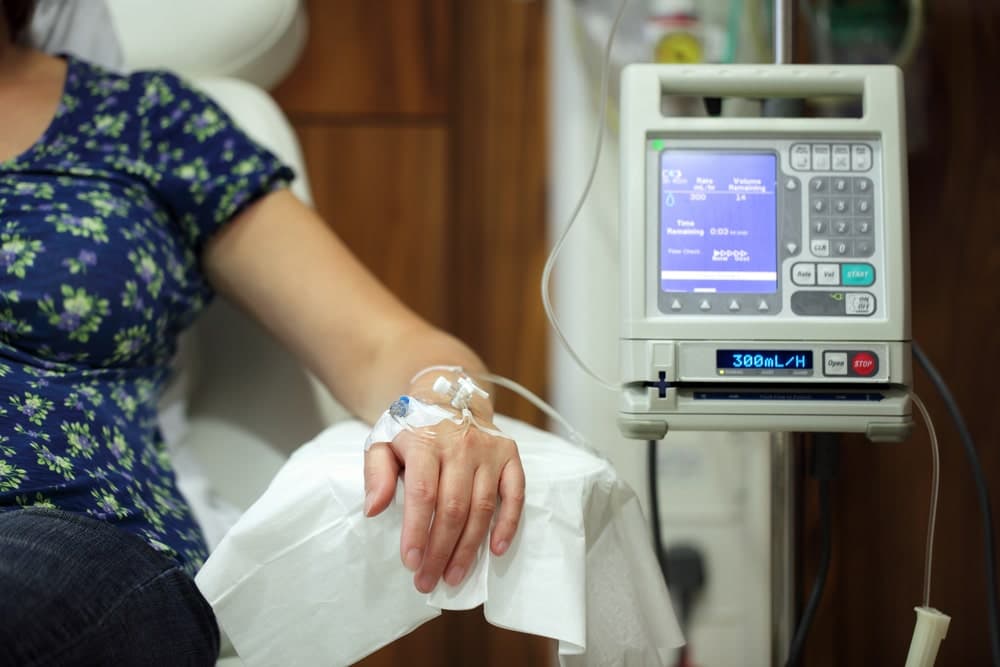
Most chemotherapy is given by a drip into a vein, usually through a small device called a port that is placed under the skin to protect the veins over a long course. Some regimens are taken as tablets at home on a set schedule, with regular clinic checks, and a few are placed directly into a body cavity such as the abdomen or bladder. A single infusion day typically lasts a few hours and is given in a comfortable day unit, after which the patient goes home; only the more intensive or high-dose regimens, including those followed by a stem cell transplant for some blood cancers, require admission to hospital. Treatment is organised into cycles, often every one to four weeks, with a built-in recovery gap so that healthy tissues can bounce back before the next dose. Before each cycle, blood counts and kidney and liver function are checked to confirm it is safe to proceed, and the dose can be adjusted to keep treatment both effective and tolerable.
Candidacy and preparation
Almost anyone with a cancer that responds to drug treatment can be considered, but the regimen is tailored to fitness, organ function and other medical conditions, and gentler schedules are available for older or frailer patients. Preparation begins with confirming the diagnosis and stage through a biopsy and imaging, followed by blood tests, heart and kidney checks and a dental review when relevant, since these establish a safe baseline. A small port may be placed before the first cycle to make repeated infusions easier. Patients are counselled in advance about likely side effects, fertility preservation where it applies, and the practical rhythm of the cycles. For international patients, much of this groundwork can begin remotely: scans, pathology slides and reports can be reviewed before travel, so that the plan is largely agreed before arrival and the in-person assessment confirms it and starts treatment without delay.
Recovery and planning your treatment abroad
There is no single recovery in the surgical sense; instead, each cycle brings a few days when tiredness, nausea or a dip in blood counts are most noticeable, followed by a gradual return toward normal before the next one. Because a full course can run for weeks or months, the key planning question is how much to do abroad. A common and practical approach is to complete the diagnostic work-up, the treatment plan and the first cycles under expert supervision in the destination city, then continue the remaining cycles closer to home under a clear written protocol shared with the home oncologist. Some patients prefer to stay for the whole course; others travel back and forth between cycles. Whichever route is chosen, the destination team provides a detailed plan covering drugs, doses, schedule and monitoring, so that later cycles and blood tests can be carried out safely by a doctor near home, with the original team reachable for advice. International patient offices commonly arrange interpreters, accommodation near the day unit and coordination of the travel timetable around the cycles.
Risks, safety and results
Chemotherapy is a powerful and well-established treatment, and modern supportive care has made it far more tolerable than in the past, though it still carries side effects because it also affects some healthy fast-dividing cells. Common, temporary effects include nausea, tiredness, mouth soreness, hair thinning or loss, and a drop in blood counts that raises the risk of infection, anaemia or bruising; these are actively managed with anti-sickness drugs, growth factors, transfusions and careful monitoring. A small number of agents carry a risk of longer-term effects such as nerve tingling in the hands and feet, effects on the heart, or, rarely, a second cancer years later; the specific risk profile depends on the exact drugs and the total dose. Response is checked at planned intervals with scans, and where useful with tumour markers, so the plan can be intensified, eased or changed if needed. Choosing an experienced team, following the monitoring schedule and keeping home and destination doctors in close contact are the keys to a safe course and the best possible result.
Frequently asked questions
These answers are general guidance and may vary by provider. Confirm the details with the hospital you choose.
How long does a full course of chemotherapy take?
It depends on the cancer and the goal of treatment, but a typical course runs from a few weeks to several months. Treatment is given in cycles, often one every one to four weeks, with rest periods in between. Your oncologist will set out the planned number of cycles at the start and adjust it according to how the cancer responds and how well you tolerate treatment.
Can I do part of my chemotherapy abroad and the rest at home?
Yes, and this is a very common arrangement. Many patients have their diagnosis confirmed, their plan made and their first cycles given abroad, then continue the remaining cycles closer to home under a written protocol. The destination team provides the exact drugs, doses, schedule and monitoring plan so that a doctor near you can safely deliver the later cycles, with the original team available for advice.
When can I fly after a chemotherapy session?
Flying is usually possible between cycles once you are feeling well and your blood counts are safe, which your team will confirm. The main caution is the period when white cells and platelets are at their lowest, when the infection risk is higher and travel is best avoided. Your oncologist will tell you the safest windows to fly based on your specific regimen.
Will I lose my hair, and is it permanent?
It depends on the drugs used, as not all regimens cause hair loss. When it does happen it is almost always temporary, and regrowth usually begins within a few weeks of finishing treatment, although the texture or colour may differ at first. Some day units offer scalp-cooling to reduce hair loss with certain drugs.
Is it safe to travel for cancer treatment?
For most patients it is, provided the trip is planned around the treatment cycles and around the times when blood counts are safe. The destination team will advise on timing, vaccinations and any precautions, and will coordinate with your home doctor. The benefit of reaching an experienced team and starting an agreed plan promptly often outweighs the inconvenience of travel when it is properly organised.
How will my home oncologist stay involved?
Coordination with your home doctor is built into the plan. Before you travel, your records and scans can be reviewed remotely, and after the first cycles you receive a full written treatment summary, including the drugs, doses, schedule and monitoring required. This lets your home oncologist continue the course safely, and the destination team stays reachable for questions throughout.
How do you know whether the chemotherapy is working?
Response is assessed at set points during the course, usually with scans such as CT or PET-CT and, for some cancers, with blood tumour markers. If the cancer is shrinking or stable, treatment continues as planned; if it is not responding well or side effects become difficult, the regimen can be changed. This regular review is why the plan is described as a living one that adapts to your body's response.
What is chemotherapy?
Chemotherapy means treating cancer with drugs that disrupt how tumour cells grow and multiply. Fast-dividing cells are the most vulnerable to them, so a tumour can be shrunk or held in check while normal tissue largely recovers in the gaps between doses. Since the drugs circulate in the blood and reach every part of the body, they suit disease that may already have moved beyond its original site. They can be the whole treatment, or they can come before an operation, after one, or in step with radiotherapy.
Not sure which hospital fits your case?
Upload your medical records and let AI match you to the right hospital.
Upload records and get matchedAvailable in these cities
Not sure which hospital fits your case?
Upload your medical records and let AI match you to the right hospital.
Upload records and get matched