Oncology
Is Radiotherapy Painful? 10 Honest Answers to What Patients Really Ask

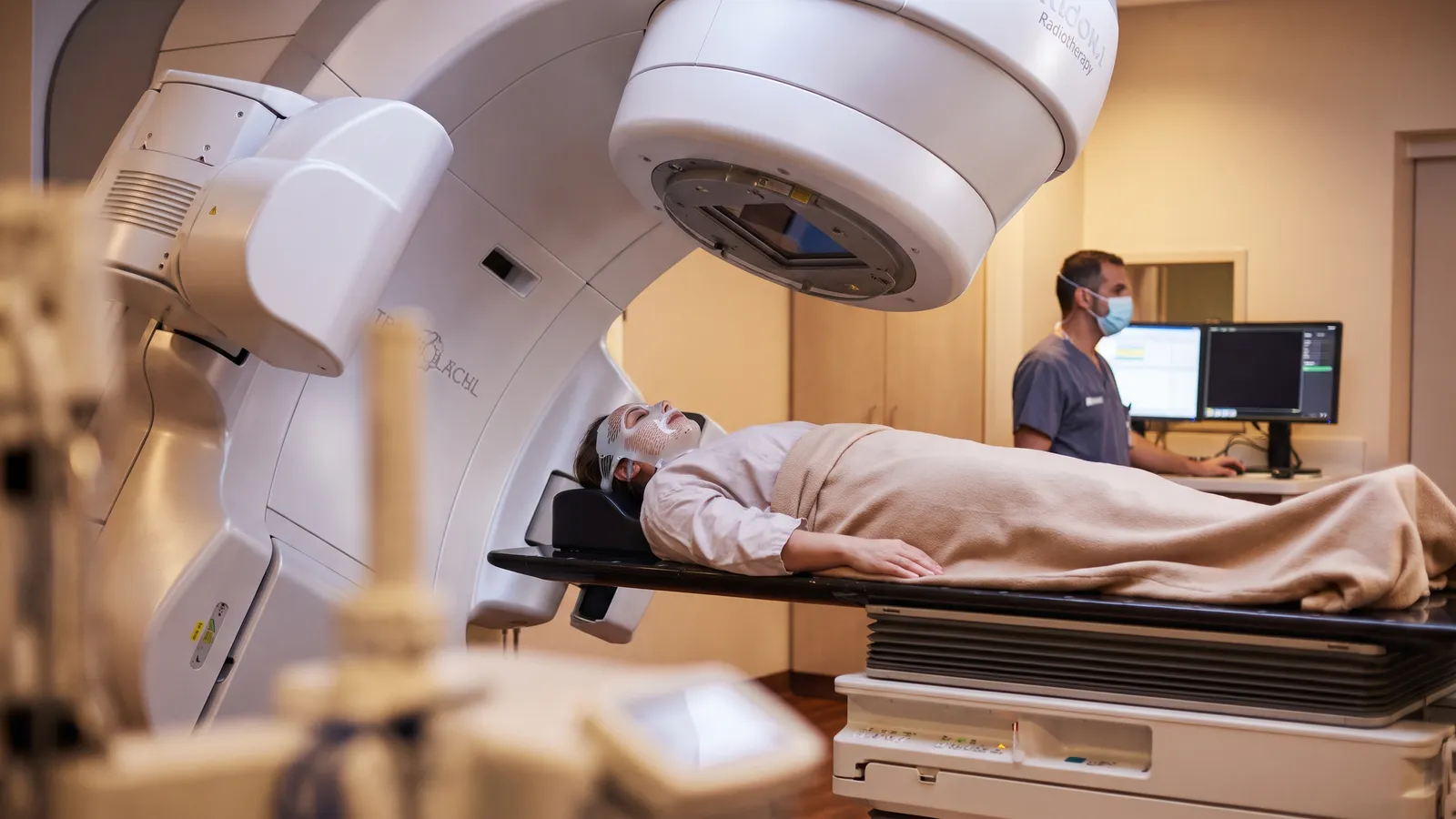
Quick Answer: External beam radiotherapy does not cause pain while the machine is running, as invisible ionizing rays pass through the skin without any immediate sensation. Mild discomfort, localized skin tenderness, and cumulative fatigue develop gradually over several weeks of daily exposure rather than during the procedure itself.
Key Takeaways:
- Linear accelerator radiation beams cannot be felt, seen, smelled, or heard passing through bodily tissues.
- Radiation-induced hair loss occurs exclusively within the targeted anatomical area and does not trigger total body hair loss.
- External beam radiotherapy emits zero residual radiation, meaning you pose no hazard to family members, children, or pets.
- Cumulative side effects like tissue inflammation and skin redness peak roughly one to two weeks after the final session before resolving.
- Managing daily sessions alongside work or driving remains entirely feasible for many, though schedule adjustments help offset progressive fatigue.
Radiotherapy is a targeted oncological treatment that uses precisely focused beams of high-energy ionizing radiation, most commonly photons or protons, to damage the cellular DNA of malignant or abnormal cells. By disrupting the reproductive mechanisms of these cells, the treatment prevents them from dividing and growing, allowing surrounding healthy tissues to repair themselves between fractional doses. Because the treatment involves large, humming machinery and protective bunkers, it frequently generates understandable apprehension regarding physical sensation, personal safety, and post-procedural recovery.
Does Radiotherapy Hurt While It Is Being Delivered?
External beam radiotherapy does not cause pain during the session itself. Patients do not feel, see, or smell the radiation beam passing through tissue, although holding still on the firm treatment couch can cause brief musculoskeletal stiffness.
The delivery experience closely mirrors having a standard diagnostic X-ray, albeit with a much larger mechanical apparatus called a linear accelerator (linac). The machine rotates around the body on an automated gantry without ever making physical contact with your skin. During delivery, the machine emits a faint buzzing, whirring, or clicking noise as internal collimator leaves adjust to sculpt the beam precisely around the perimeter of the tumor.
For the vast majority of patients asking whether radiotherapy is painful, the primary physical challenge during the appointment is maintaining an identical posture for several minutes. Radiation therapists carefully position your limbs using custom foam rests, head cradles, or knee cushions to reproduce the exact geometry established during planning scans. If you suffer from underlying joint stiffness, pre-existing back pain, or shoulder tightness, remaining immobile on the flat carbon-fiber couch can feel uncomfortable. Communicating this discomfort to the therapy team allows them to adjust supportive bolsters, incorporate gentle stretching protocols, or schedule mild pre-treatment analgesia.
Will Radiotherapy Cause Hair Loss?
Radiotherapy causes hair loss only in the precise anatomical area targeted by the radiation beam. Patients receiving treatment to the breast, pelvis, or prostate do not lose hair from their scalp, eyebrows, or eyelashes.
A common misunderstanding stems from confusing localized radiation therapy with systemic medical treatments. When people wonder, "Does radiotherapy cause hair loss across the whole body?", they are usually picturing the diffuse shedding associated with cytotoxic chemotherapy drugs that circulate throughout the entire vascular system. Radiation therapy operates like a localized beam of light; it interacts only with cellular structures directly within the treatment field and a minimal exit margin.
Alopecia within the targeted zone typically manifests two to three weeks into a multi-week course of treatment:
- Brain and Head Treatments: Temporary or partial hair loss occurs on the scalp only where entry and exit fields intersect hair follicles.
- Head and Neck Treatments: Facial hair, beards, mustaches, and lower scalp hair near the nape of the neck may thin or fall out completely.
- Chest and Breast Fields: Sparing the scalp entirely, treatment may cause the shedding of underarm (axillary) hair or localized chest hair.
- Pelvic and Abdominal Fields: Pubic hair loss may occur if the lower pelvic lymphatic basin or genital region falls within the beam path.
Follicular regrowth typically begins two to four months after your treatment course finishes, depending on the cumulative radiation dose delivered to that anatomical depth. At standard doses, hair usually returns, though it may initially emerge finer, thinner, or slightly different in texture or pigmentation.
Are You Radioactive After External Beam Treatment?
You are not radioactive after external beam radiotherapy because no radiation remains in your body once the linear accelerator turns off. It is completely safe to embrace family members, children, pregnant individuals, and pets immediately after each appointment.
The energy emitted by modern linear accelerators passes cleanly through matter, leaving behind broken microscopic DNA chains in cells without leaving lingering radioactive particles or unstable isotopes in your organs, blood, sweat, or saliva. The mechanism is identical to turning off a domestic light bulb: the moment the electrical current switches off, the room is no longer illuminated, and the air retains no residual light particles.
This total absence of residual radioactivity applies strictly to external beam radiotherapy (EBRT), which accounts for the vast majority of outpatient radiation treatments. Patients can travel on public transit, sleep in the same bed as their partner, prepare meals for the family, and interact normally without taking isolation measures.
The only scenario requiring temporary radiation precautions involves internal radioisotope therapies, such as radioactive iodine capsules for thyroid cancer or permanent low-dose-rate brachytherapy seeds for prostate cancer. In those specific procedures, unstable isotopes are placed directly into bodily tissues, requiring temporary distance precautions defined by clinical medical physicists. External beam therapies carry no such requirements.
Why Is a Radiotherapy Mask or Skin Tattoo Needed?
A custom thermoplastic radiotherapy mask or tiny pinpoint skin tattoos help the therapeutic beam target planned tumor margins every day while protecting neighboring healthy organs. The mesh mask warms and molds gently to the head or neck to minimize involuntary movement during delivery.
Targeting precision in modern radiation oncology relies on submillimeter margins. Because high-energy beams must strike the exact micro-environment of a tumor while protecting adjacent critical structures, such as the optic nerves, spinal cord, heart, or brainstem, the patient's daily physical alignment must remain identical throughout a five-to-thirty-day schedule.
To achieve this reproducibility, radiotherapy immobilization systems and positioning markers are individually constructed during the initial planning session, known as a CT simulation:
- Thermoplastic Radiotherapy Mask: Used primarily for head, neck, or brain treatments, this perforated plastic sheet is submerged in a warm water bath until soft, then contoured over the patient's facial structures. As it cools over 10 to 15 minutes, it solidifies into a rigid, breathable mesh frame that clips firmly to the table during daily beam alignment.
- Pinpoint Alignment Tattoos: For thoracic, abdominal, and pelvic treatments, therapists apply two to four dark, permanent freckle-sized dots using a fine, sterile needle and medical ink. These micro-tattoos align with the room's laser leveling system to establish baseline spatial coordinates.
- Surface-Guided Radiation Therapy (SGRT): Many contemporary treatment units now use non-invasive 3D optical cameras that track patient skin surfaces in real time, occasionally reducing or eliminating the need for permanent tattoos.
- Vac-Lok Bags and Custom Cushions: Heavy-duty nylon bags filled with tiny polystyrene beads mold around the arms, legs, or torso; extracting the air via vacuum forms a rigid cradle tailored to individual anatomy.
Although wearing a tightly fastened radiotherapy mask can initially provoke feelings of claustrophobia or restriction, the mesh is completely porous, allowing normal breathing and sight. Clinical teams can incorporate open-face designs, relaxation protocols, or mild short-acting anxiolytics to ensure comfort throughout the immobilization process.
How Long Do Individual Sessions and Treatment Courses Take?
Individual beam delivery typically lasts only two to five minutes, with total daily room time averaging 15 to 30 minutes for patient positioning and automated verification imaging. Most curative or adjuvant radiotherapy courses run daily from Monday through Friday over one to six weeks.
The vast majority of an outpatient appointment involves meticulous spatial verification rather than actual radiation exposure. Once you enter the treatment suite, the radiation therapists assist you onto the treatment couch, arrange immobilization devices, and align your skin marks with laser crosshairs. Low-dose cone-beam CT scans or digital planar X-rays are acquired right on the couch to verify that internal organs, such as the bladder or rectum, match the initial computer planning models down to the millimeter.
| Radiotherapy Technique / Clinical Indication | Typical Duration per Daily Session | Standard Course Length | Primary Goal of Treatment Schedule |
|---|---|---|---|
| Conventional External Beam (EBRT) (e.g., Post-lumpectomy breast, prostate) | 15-20 minutes | 3 to 6 weeks (15-30 fractions) | Eradicate microscopic residual tumor cells while permitting normal tissue repair between doses |
| Hypofractionated Radiotherapy (e.g., Accelerated breast, localized prostate) | 15-20 minutes | 1 to 4 weeks (5-20 fractions) | Deliver higher daily biological doses over a condensed calendar window with equivalent efficacy |
| Stereotactic Body Radiotherapy (SBRT / SABR) (e.g., Early-stage lung, solitary liver lesions) | 30-60 minutes | 1 to 5 fractions (over 1-2 weeks) | Target small, well-defined tumors with extreme submillimeter precision and ablative doses |
| Stereotactic Radiosurgery (SRS) (e.g., Single or multiple brain metastases) | 30-90 minutes | Single session or up to 5 fractions | Provide focused intracranial ablation without surgical craniotomy |
| Palliative Radiotherapy (e.g., Bone metastases, spinal cord compression relief) | 10-15 minutes | Single fraction or 1 to 2 weeks (1-10 fractions) | Quickly alleviate pain, arrest localized bleeding, and preserve neurological function |
Weekend breaks are structured into standard multi-week courses. These 48-hour pauses allow surrounding healthy tissues to undergo cellular repair, counteracting acute inflammation while malignant cells, which possess defective DNA repair pathways, remain unable to recover.
What Skin Reactions and Sensation Changes Develop Over Time?
Skin changes in the treatment field develop gradually after two to three weeks of cumulative exposure, presenting as erythema, dryness, or peeling resembling mild to moderate sunburn. These localized reactions are managed with non-perfumed barrier moisturizers recommended by the oncology team.
Radiation dermatological changes are graded based on their severity. Because ionizing radiation must pass through the epidermal and dermal layers to reach deeper tissues, basal skin cells temporarily experience a reduced turnover rate, leading to predictable, phased reactions:
- Initial Erythema (Weeks 1 to 2): Skin across the targeted zone shows faint pinkness or faint warmth. Many patients experience no outward visual alteration during this initial stage.
- Dry Desquamation (Weeks 3 to 4): As cellular turnover slows, the skin can feel tight, itchy, dry, and rough. Flaking and superficial peeling resemble the late stages of a typical sun exposure reaction.
- Moist Desquamation (Weeks 4+ in select high-friction zones): In anatomical areas where skin rubs against skin, such as the inframammary fold beneath the breast, the axilla, or the groin, the superficial epidermis can slough, exposing moist, sensitive dermis that requires non-adherent silicone dressings.
- Resolution and Hyperpigmentation (Post-treatment): Two to four weeks after radiation ends, the skin rapidly re-epithelializes. The treated field often retains a subtle tan or hyperpigmented hue that gradually softens over the subsequent year.
To minimize friction and prevent chemical irritation, cleanse the treated area using lukewarm water and unscented, pH-neutral soap. Apply aqueous creams, pure calendula ointment, or medical barrier lotions only as directed by the radiation oncology nursing staff, and avoid shaving, hot water bottles, ice packs, or direct sun exposure on the treated field throughout therapy.
Can You Drive and Work During Radiotherapy Treatment?
Most patients are legally and medically permitted to drive and continue working during radiotherapy, provided their tumor location and symptom profile do not impair alertness or coordination. As treatment-related fatigue accumulates toward the later weeks, many individuals reduce working hours or arrange transport.
The physical ability to safely operate a motor vehicle or sustain regular professional duties hinges entirely on tumor location, daily commuting distance, and concurrent treatments. For patients receiving localized therapy to the breast, limb, or prostate, without concurrent systemic chemotherapy, daily functional stamina remains relatively stable during the opening two weeks.
However, patients often ask, "Can you drive after radiotherapy if you feel exhausted?" You should never drive if you experience sudden waves of cognitive lethargy, dizziness, or peripheral neuropathy. Specific scenarios require distinct work and transit adjustments:
- Brain or Spinal Irradiations: Patients undergoing intracranial treatment or stereotactic radiosurgery for brain tumors are often legally restricted from driving because of local seizure regulations and cerebral edema risks. Formal neurological clearance is required.
- Pelvic and Abdominal Radiation: Patients experiencing frequent, urgent bowel movements or urinary frequency may find long commutes impractical without scheduled bathroom breaks.
- Cumulative Cancer-Related Fatigue: Because systemic tiredness builds across successive weeks, scheduling appointments early in the morning or near the end of the working shift helps preserve professional routines while leaving room for midday rest.
- Remote Work and Modified Duties: Shifting to flexible hours or hybrid remote work during weeks four through six allows patients to conserve essential energy for treatment completion and recovery.
When commuting becomes stressful or tiring, hospital transport networks, community volunteer drivers, and regional cancer support foundations can provide daily transportation.
Radiotherapy vs Chemotherapy: What Is the Difference?
Radiotherapy is a targeted physical intervention that damages cancer cell DNA strictly within a defined regional field, whereas chemotherapy is a systemic medication circulating throughout the entire bloodstream. Consequently, radiotherapy side effects are predominantly confined to the treated tissue rather than the whole body.
Both interventions are central pillars of modern oncology, yet their mechanisms of action, delivery pathways, and bodily impacts differ substantially.
| Feature | Radiotherapy | Chemotherapy |
|---|---|---|
| Primary Mechanism | High-energy physical beams damaging local cellular DNA | Systemic cytotoxic drugs disrupting cell division |
| Delivery Method | External beam linear accelerator or localized implants | Intravenous infusion or oral tablets |
| Anatomical Scope | Strictly regional and localized to the target volume | Systemic, circulating throughout the entire body |
| Typical Side Effects | Local skin changes and fatigue confined to the treated site | Nausea, diffuse hair loss, and immune suppression |
| Blood Cell Counts | Modest localized impact unless treating large bone marrow reserves | Broad, systemic bone marrow suppression |
Chemotherapy drugs travel through the bloodstream to intercept rapidly dividing cells anywhere in the body, which explains why they affect healthy tissues with fast turnover rates, such as hair follicles, mouth linings, and bone marrow stem cells.
Radiotherapy, conversely, acts like a surgical beam. While it produces systemic fatigue through the metabolic energy cost of repairing tissues, it does not induce widespread systemic side effects unless combined concurrently with chemotherapy (chemoradiation). A patient receiving radiation to the ankle or breast will not experience mouth sores, digestive upset, or diffuse scalp hair loss, because those tissues lie entirely outside the treatment perimeter.
How Long After Radiotherapy Will You Feel Better?
Acute side effects typically peak one to two weeks following the final treatment session before gradual healing begins. Most superficial skin changes resolve within four to six weeks, while full energy levels and baseline stamina commonly return over two to six months depending on individual factors.
Many patients expect their discomfort and exhaustion to subside the moment they complete their final radiation fraction. In clinical practice, radiation effects are cumulative. Cellular damage within the targeted area reaches its zenith 7 to 14 days after completing therapy, meaning skin sensitivity, mucosal irritation, and tiredness may intensify slightly before starting to improve.
The physiological recovery phase follows a reliable clinical arc:
- Weeks 1 to 2 Post-Treatment: Side effects reach their peak. Patients should maintain dedicated skincare routines, prioritize daily hydration, and take regular rest periods.
- Weeks 3 to 4 Post-Treatment: Acute inflammation rapidly subsides. Erythema begins to fade, peeling skin re-epithelializes, and localized tenderness declines substantially.
- Months 2 to 3 Post-Treatment: Most acute side effects have fully resolved. Patients recovering from pelvic or head and neck therapies notice gradual normalization of bowel, bladder, or salivary function.
- Months 3 to 6 Post-Treatment: Patients wondering "How long after radiotherapy will I feel better physically?" usually experience a steady return of baseline energy around this time. Regular, light physical activity, such as walking, hastens functional recovery and helps clear lingering metabolic fatigue.
Recovery timelines vary based on age, nutritional status, pre-existing conditions, and whether the course was preceded by surgery or accompanied by concurrent chemotherapy.
Managing Potential Risks and Long-Term Complications
While acute side effects are temporary and resolve within months, high-energy therapeutic radiation can occasionally cause long-term tissue changes in healthy structures near the treatment site. Modern computer-controlled delivery, such as Intensity-Modulated Radiotherapy (IMRT) and Volumetric Modulated Arc Therapy (VMAT), significantly reduces these risks by tailoring dose margins to the millimeter.
Reported clinical studies indicate that serious late adverse effects occur in roughly 2% to 5% of modern radiation treatment fields. Potential late effects depend heavily on anatomical location:
- Radiation Fibrosis: Tissues within the high-dose zone can lose elasticity over months or years, leading to localized firmness or joint tightness. Targeted physical therapy and gentle stretching help preserve mobility.
- Secondary Malignancies: Developing a new, radiation-induced solid tumor within adjacent normal tissues is rare, with risk estimates generally reported under 1% at 10 to 15 years post-exposure. In curative settings, the clinical benefit of treating the primary cancer far outweighs this long-term risk.
- Cardiovascular and Pulmonary Changes: For left-sided breast cancers or thoracic tumors, small segments of the lung or coronary arteries may receive incidental low-dose scatter. Techniques such as Deep Inspiration Breath Hold (DIBH) push the heart away from the chest wall, lowering cardiovascular risks.
- Lymphedema: When regional lymph nodes undergo surgical dissection followed by radiation, lymphatic drainage from an arm or leg can become sluggish, requiring maintenance with compression garments.
When to Seek Immediate Medical Evaluation: If you develop sudden shortness of breath, sudden chest pain, unexpected persistent bleeding from the bowel or bladder, a new fever above 100.4°F (38°C) during treatment, or rapidly spreading skin redness with warmth and severe pain, contact your oncology triage center or attend an emergency department right away.
Frequently Asked Questions
Is radiotherapy painful for breast cancer?
The daily delivery of radiation to the breast or chest wall is typically painless while the machine is running. Over three to four weeks of treatment, the breast tissue often becomes swollen, warm, and firm, accompanied by skin changes similar to sunburn across the lower breast fold and axilla. Mild, shooting sensations or aches within the breast parenchyma can occur intermittently as damaged tissues heal, but these symptoms are readily controlled with simple analgesics and approved topical barrier creams.
Is radiotherapy for prostate cancer painful?
Prostate radiotherapy does not cause any physical sensation during the daily treatment session itself. As treatment progresses across multiple weeks, cumulative radiation to the adjacent bladder and rectal walls can produce urinary frequency, a mild burning sensation during urination, and softer, more urgent bowel movements. These symptoms represent temporary internal inflammation rather than pain from the beam itself, and they are managed with urinary alkalizers, anti-spasmodic medications, and dietary adjustments until the tissues settle after therapy.
Does radiotherapy cause permanent changes to the skin?
Most superficial skin changes heal completely within a few months of completing a radiotherapy course. In a minority of patients, subtle long-term changes may remain, including a faint tan-like pigmentation across the treated field, slight textural thickening (subcutaneous fibrosis), or tiny visible surface blood vessels called telangiectasias. Shielding the treated skin from future sun exposure using high-SPF sunscreen helps protect skin integrity and prevents further pigmentation changes over the long term.
Can I be around pregnant women and small children during treatment?
You can safely spend time around pregnant individuals, infants, and young children immediately after every external beam radiotherapy appointment. Because external radiation beams pass directly through you without leaving radioactive particles behind, your body, bodily fluids, and breath emit zero radiation. You can hold, feed, and sleep beside your family members without any risk of secondary radiation exposure.
Not sure which hospital is right for your case?
Upload your medical reports and our AI will match them against the verified capabilities of every hospital in our network.
- Upload your reports (no account needed)
- Our AI matches your case with hospitals that can actually treat it
- You choose who receives your case. We present it in the hospital's own language, and the hospital replies directly to you
Free and anonymous. Your documents stay private until you decide to send them.