Ophthalmology
Ozempic and Zepbound Eye Risk Warnings: What the FDA's NAION Label Means for You

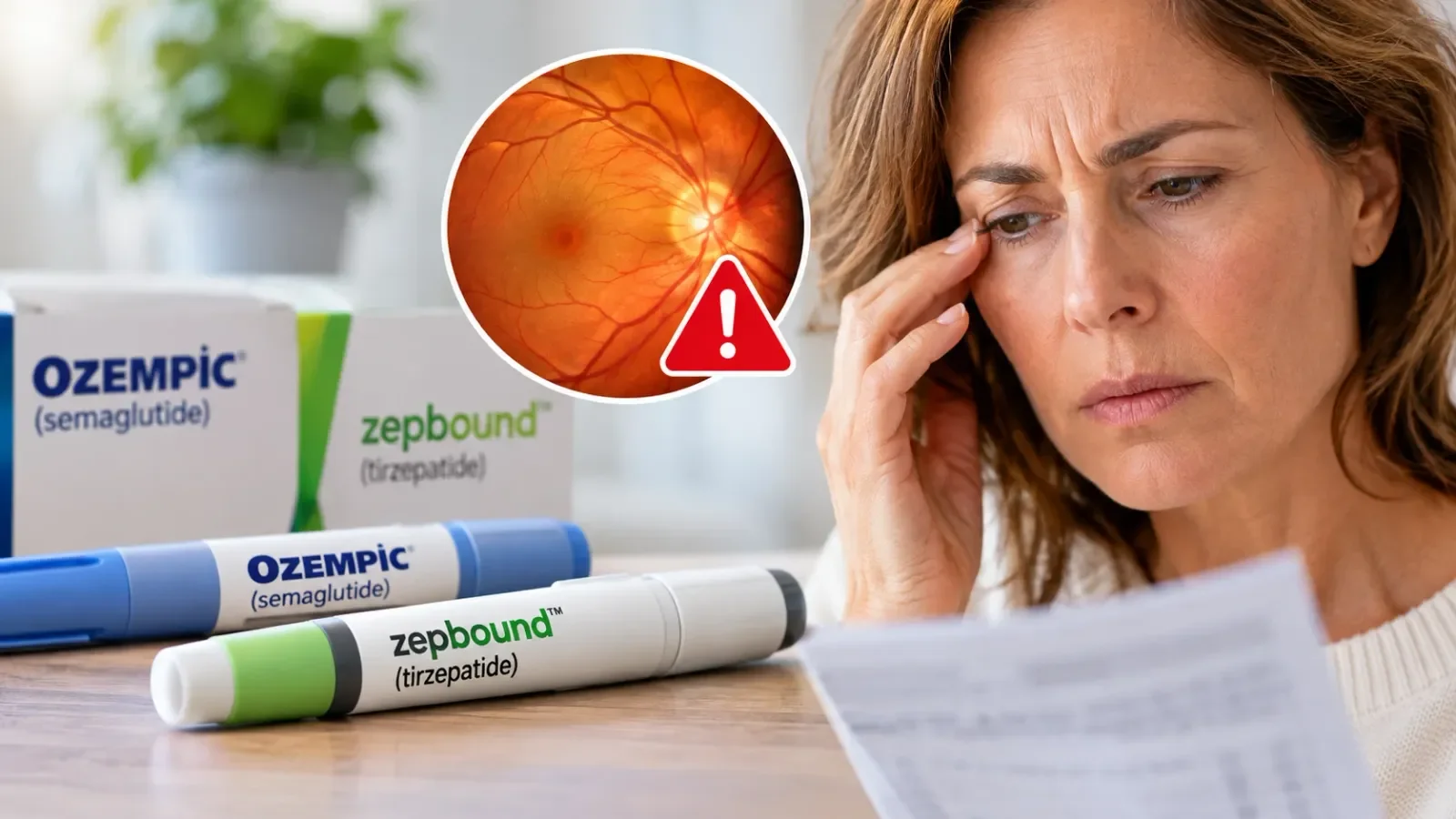
Quick Answer: On November 9, 2026, the US FDA required a class-wide safety warning for non-arteritic anterior ischemic optic neuropathy (NAION) across GLP-1 medications like Ozempic and Zepbound. The update followed clinical reviews showing an absolute incidence of roughly 6 cases per 100,000 patient-years in exposed individuals compared to 4 per 100,000 in unexposed controls.
Key Takeaways:
- The US FDA issued a class-wide safety label update for all GLP-1 and dual GIP/GLP-1 receptor agonists regarding the rare optic nerve disorder NAION.
- International regulators, including the UK MHRA and the European Medicines Agency (EMA), classify NAION as a very rare clinical event.
- The statistical increase reflects approximately 2 additional cases per 100,000 patient-years, meaning the absolute risk remains very low.
- Hallmark warning signs include sudden, painless visual loss or blurriness in one eye, most often noticed immediately after waking.
- Patients should not stop their medications without clinical guidance; those facing contraindications can discuss metabolic options such as bariatric surgery.
Non-arteritic anterior ischemic optic neuropathy (NAION) is an uncommon neuro-ophthalmic disorder caused by reduced blood flow to the head of the optic nerve, resulting in sudden, painless visual loss. As the global use of glucagon-like peptide-1 (GLP-1) receptor agonists and dual incretin therapies expands for type 2 diabetes and chronic weight management, regulatory agencies monitor potential microvascular complications. The updated Ozempic and Zepbound eye risk warnings provide patients and physicians with transparent safety data, balancing verified metabolic benefits against rare ischemic ocular events.
What is the US FDA's November 2026 NAION warning for GLP-1 medications?
On November 9, 2026, the US FDA instructed manufacturers to add a class-wide warning for non-arteritic anterior ischemic optic neuropathy (NAION) to all GLP-1 receptor agonists, including Ozempic, Wegovy, Mounjaro, and Zepbound. The directive followed an analysis of 126 clinical studies indicating an incidence of approximately 6 cases per 100,000 patient-years in exposed patients, compared to 4 per 100,000 in unexposed control groups.
This safety communication addresses single-agent GLP-1 receptor agonists such as semaglutide and dual incretin agents such as tirzepatide. Earlier observational studies and retrospective database analyses suggested potential neuro-ophthalmic signals, prompting the federal regulator to undertake a systematic multi-study review. The compiled evidence showed that while the relative risk is slightly higher than in non-users, the condition remains an exceptionally rare clinical event.
The GLP-1 NAION warning from the US FDA establishes consistent labeling language across the entire pharmacological class. Rather than restricting access or recommending treatment discontinuation, the agency designed the guidance to ensure that prescribing physicians, endocrinologists, and ophthalmologists discuss visual symptoms with patients before and during treatment. The advisory underlines that blood sugar (glycemic) control, kidney protection, and cardiovascular risk reduction remain substantial clinical benefits for most patients taking these drugs.
How do international health authorities (US FDA, UK MHRA, EMA) assess NAION risk?
Health regulators view NAION as an exceptionally rare clinical event. Both the UK Medicines and Healthcare products Regulatory Agency (MHRA) and the European Medicines Agency (EMA) previously cataloged NAION as a very rare adverse reaction for semaglutide, and the US FDA's 2026 action harmonizes safety labeling across the entire incretin-mimetic drug class.
Regulatory bodies evaluate post-marketing pharmacovigilance reports through distinct surveillance systems:
- United Kingdom (MHRA): The UK Medicines and Healthcare products Regulatory Agency monitors adverse incidents through its Yellow Card scheme. The MHRA previously noted NAION in product literature as a very rare reaction (occurring in fewer than 1 in 10,000 individuals) for semaglutide, encouraging targeted clinical reporting.
- European Union (EMA): The European Medicines Agency, through its Pharmacovigilance Risk Assessment Committee (PRAC), reviewed observational datasets and case series across European populations. The EMA concluded that while a small statistical correlation exists, the absolute event frequency remains minimal.
- United States (FDA): The US Food and Drug Administration formalized a class-wide labeling requirement in late 2026, aligning semaglutide, tirzepatide, liraglutide, and dulaglutide under an identical precautionary standard.
These international health authorities maintain that the cardiometabolic benefits of incretin-based therapies substantially outweigh the marginal statistical risk of optic nerve ischemia. International guidelines advocate for heightened clinical awareness and prompt diagnostic evaluation rather than routine drug withdrawal.
What is NAION, and what ocular symptoms should patients watch for?
Non-arteritic anterior ischemic optic neuropathy (NAION) occurs when blood flow drops to the front portion of the optic nerve, causing sudden, painless loss or blurring of vision in one eye that patients usually discover upon waking.
Sensationalized media coverage describing "Ozempic blindness" refers clinically to this localized vascular event. Clinicians often describe NAION as a "stroke of the optic nerve." It occurs when perfusion pressure drops within the short posterior ciliary arteries that supply oxygenated blood to the optic disc. Unlike acute angle-closure glaucoma or eye infections, NAION does not produce eye pain, redness, discharge, or headaches.
Patients should know the specific NAION symptoms with Ozempic or Zepbound:
- Sudden blurring or cloudiness affecting only one eye
- Loss of part of the visual field, frequently appearing as a dark curtain or shadow across the lower half of sight (altitudinal visual defect)
- Reduced contrast sensitivity and faded color perception, making bright shades look washed out
- Persistent reduction in vision that does not change with blinking, artificial tears, or updated glasses
These clinical signs differ clearly from the temporary visual blurriness many people notice when first starting incretin therapy. Rapid drops in blood sugar shift the fluid balance and curvature of the eye's natural lens, producing temporary refractive changes. This benign blurring affects both eyes and resolves within a few weeks as glucose levels settle, depending on individual patient factors.
What is the actual statistical rate of NAION, and who is at higher risk?
The absolute risk remains very low at an estimated 6 cases per 100,000 patient-years, with higher susceptibility seen in people with pre-existing microvascular disease, high blood pressure (hypertension), untreated sleep apnea (obstructive sleep apnea), long-standing diabetes, or crowded optic disc anatomy (small cup-to-disc ratio).
Contextualizing the statistical Ozempic blindness rate helps clarify clinical reality versus alarmist headlines. In control groups sharing similar demographic and metabolic traits, the baseline incidence of NAION is roughly 4 cases per 100,000 person-years. Taking GLP-1 or dual incretin therapy accounts for approximately 2 additional reported cases per 100,000 treated individuals over a 12-month period.
| Clinical Feature | Unexposed Baseline Cohort | GLP-1 / Tirzepatide Cohort | Clinical Consideration |
|---|---|---|---|
| Annual Incidence Rate | ~4 per 100,000 patient-years | ~6 per 100,000 patient-years | Absolute increase is ~2 cases per 100,000 annually |
| Typical Onset Pattern | Unilateral, noted upon awakening | Unilateral, noted upon awakening | Linked to nocturnal arterial hypotension |
| Eye Involvement | Unilateral (>90% initial cases) | Unilateral (>90% initial cases) | Involvement of the fellow eye occurs in a minority over time |
| Primary Clinical Marker | Optic disc edema on exam | Optic disc edema on exam | Fundoscopic examination confirms swelling of the optic nerve head |
Evaluating an individual's Ozempic blindness risk involves assessing several anatomical and systemic factors:
- Crowded Optic Disc Anatomy: People born with a small, structurally crowded optic nerve head (clinically termed a "disc at risk") have less space for vascular tissue, making microvascular compromise more likely.
- Nocturnal Hypotension: Pronounced blood pressure drops during sleep, sometimes worsened by taking blood pressure medications late at night, reduce perfusion pressure to the optic disc.
- Untreated Obstructive Sleep Apnea (OSA): Nighttime oxygen drops and vascular dysfunction linked to sleep apnea represent established contributors to optic nerve ischemia.
- Advanced Microvascular Disease: Long-standing type 2 diabetes, elevated cholesterol, and smoking can damage microcirculation and impair vascular autoregulation.
Should you stop taking Ozempic or Zepbound because of eye warnings?
Patients should never stop taking prescribed GLP-1 medications without medical guidance, because abrupt withdrawal can trigger rapid blood sugar spikes and metabolic instability; however, anyone who notices acute visual changes must seek immediate ophthalmologic evaluation and notify their prescribing doctor.
Stopping incretin medications suddenly carries distinct metabolic risks. For people managing type 2 diabetes, rapid withdrawal causes sharp glucose surges, raising the risk of acute glycemic complications and long-term damage to the kidneys and retinas. For those taking these medications for weight management, abrupt cessation frequently leads to rapid appetite return and substantial weight regain, increasing cardiometabolic strain.
Patients using GLP-1 treatments can protect their vision and overall health by taking key steps:
- Schedule a comprehensive baseline dilated eye examination, particularly if diagnosed with type 2 diabetes or diabetic retinopathy.
- Watch for changes upon waking, and seek same-day ophthalmic evaluation if sudden, painless vision loss occurs in one eye.
- Consult the prescribing doctor before changing any dose; if an ophthalmologist confirms NAION, the physician typically stops the medication to reduce risk to the other eye.
- Screen for and treat obstructive sleep apnea, and discuss the timing of blood pressure medications with a physician to avoid excessive blood pressure drops during sleep.
What weight management and metabolic alternatives exist if GLP-1s are not suitable?
For patients who cannot take GLP-1 receptor agonists due to ocular risk factors or medication intolerance, metabolic and bariatric surgery, including sleeve gastrectomy and gastric bypass (Roux-en-Y), provides long-lasting weight reduction and glycemic improvement without this medication-associated optic risk, supported by comprehensive pre-operative screening protocols.
When a prior ischemic optic event, crowded optic discs, or severe pharmacological side effects rule out incretin therapy, non-incretin medications and metabolic operations offer durable alternatives. Metabolic surgery reshapes the gastrointestinal tract, triggering favorable hormonal shifts that improve insulin sensitivity without creating ischemic strain on the optic nerve.
Surgical options for long-term weight reduction and metabolic management include:
- Sleeve Gastrectomy: Removes roughly 75% to 80% of the stomach along its outer curve, reducing stomach capacity and lowering levels of the hunger hormone ghrelin.
- Roux-en-Y Gastric Bypass (RYGB): Creates a small stomach pouch connected directly to the middle section of the small intestine (jejunum), bypassing the rest of the stomach to produce substantial metabolic changes.
| Metabolic Treatment Option | Average 5-Year Weight Loss | Glycemic Impact | Ocular Safety Profile |
|---|---|---|---|
| GLP-1 Therapy (Semaglutide) | 10%-15% total body weight (with ongoing use) | High during active administration | Class warning for NAION (~6 per 100,000 patient-years) |
| Dual Incretin (Tirzepatide) | 15%-20% total body weight (with ongoing use) | High during active administration | Class warning for NAION (~6 per 100,000 patient-years) |
| Sleeve Gastrectomy | 20%-30% total body weight | High, durable glycemic control | No associated optic ischemic mechanism |
| Roux-en-Y Gastric Bypass | 25%-35% total body weight | Highest rates of type 2 diabetes remission | No associated optic ischemic mechanism |
Bariatric procedures carry surgical risks that require careful consideration. Reported complications include wound infection (1% to 3%), internal bleeding or staple-line leak (under 1% in high-volume hospitals), and long-term nutritional deficiencies in iron, vitamin B12, and vitamin D that require ongoing supplementation.
Patients seeking bariatric surgery abroad often select hospitals accredited by the US-based Joint Commission International (JCI) or licensed by the Turkish Ministry of Health in Turkey. These clinical programs routinely include pre-operative evaluations by endocrinologists, bariatric surgeons, and dietitians, ensuring candidate suitability and structured follow-up care.
Frequently Asked Questions
Patient questions surrounding GLP-1 eye safety focus on distinguishing harmless, temporary blurriness from serious optic nerve conditions such as NAION.
Can Ozempic cause blindness?
Ozempic does not cause total bilateral blindness, but post-marketing surveillance links it to a very rare risk of NAION, which causes partial visual loss, usually in one eye. The condition stems from localized reduced blood flow at the optic nerve head rather than direct damage to the retina. Patients who notice sudden visual deficits need prompt evaluation, because distinguishing NAION from diabetic retinopathy ensures correct medical care.
Is Ozempic blindness permanent?
Visual deficits from confirmed NAION are generally long-lasting because damaged optic nerve fibers do not regenerate. Most patients find that their vision stabilizes within several weeks to months. Reported data shows that approximately 30% to 40% of patients experience modest spontaneous improvement in central vision, though peripheral visual field defects usually remain. Medical care focuses on protecting the remaining nerve fibers, managing cardiovascular risk factors, and safeguarding the fellow eye.
How does diabetic retinopathy differ from GLP-1-associated NAION?
Diabetic retinopathy is a chronic microvascular complication that develops gradually over years in both eyes, whereas NAION presents abruptly and unilaterally as sudden ischemic damage to the optic nerve. Rapid drops in blood sugar after starting GLP-1 therapy can temporarily worsen pre-existing diabetic retinopathy before vision stabilizes over the long term. In contrast, NAION causes acute swelling of the optic disc without the microaneurysms, retinal hemorrhages, or abnormal blood vessel growth seen in retinopathy.
What should patients with existing optic nerve issues consider before starting GLP-1s?
Patients with a prior history of NAION in one eye face a higher baseline risk of developing the condition in their other eye and should consult an ophthalmologist before starting incretin medications. Eye specialists often check the optic nerve structure using optical coherence tomography (OCT) to identify crowded discs. If microvascular or structural risks are significant, non-incretin medications or bariatric metabolic surgery provide viable alternatives that carry no known risk of optic nerve ischemia.
Not sure which hospital is right for your case?
Upload your medical reports and our AI will match them against the verified capabilities of every hospital in our network.
- Upload your reports (no account needed)
- Our AI matches your case with hospitals that can actually treat it
- You choose who receives your case. We present it in the hospital's own language, and the hospital replies directly to you
Free and anonymous. Your documents stay private until you decide to send them.