Oncology
Pancreatic Cancer Drug Daraxonrasib: What the New Pill Means for Patients


Quick Answer: Daraxonrasib is an oral pan-RAS inhibitor approved by the US FDA in August 2026 for advanced pancreatic cancer, demonstrating improved survival in clinical trials alone and alongside chemotherapy.
Key Takeaways:
- Daraxonrasib targets multiple active RAS mutations found in more than 90% of pancreatic ductal adenocarcinomas.
- The phase 3 RASolute 302 trial recorded a median overall survival of 13.2 months compared to 6.7 months with standard second-line chemotherapy.
- November 2026 trial findings combining the pill with chemotherapy demonstrated a 90% disease control rate and a 76.6% one-year overall survival rate.
- Dermatologic reactions, including an acneiform rash, represent the primary manageable side effect of the targeted therapy.
- International availability remains centered in the United States, with global patients accessing treatment through clinical trials and expanded access mechanisms.
Daraxonrasib is an oral small-molecule targeted therapy categorized as a pan-RAS inhibitor, engineered to block oncogenic RAS protein signaling within solid tumors. Developed under the trade name Rasonque, the medication addresses pancreatic ductal adenocarcinoma, a malignancy historically characterized by limited therapeutic options and a high prevalence of driver mutations within the KRAS gene.
What Daraxonrasib (Rasonque) Is and How It Targets Pancreatic Cancer
Daraxonrasib (marketed under the brand name Rasonque) is a once-daily oral targeted therapy designed to inhibit mutated and active forms of RAS proteins, particularly KRAS mutations present in more than 90% of pancreatic ductal adenocarcinomas.
For decades, oncologists regarded the RAS family of proteins as "undruggable" targets because of their smooth molecular surface and high affinity for cellular energy molecules. While earlier targeted drugs addressed only the KRAS G12C variant, a mutation present in fewer than 2% of pancreatic cancer cases, daraxonrasib functions across multiple alterations. This broad activity enables the drug to target the mutations that drive the vast majority of pancreatic malignancies, including:
- KRAS G12D, the most frequent driver mutation in pancreatic adenocarcinoma
- KRAS G12V, associated with aggressive tumor growth
- KRAS G12R, commonly identified in non-smoking pancreatic cancer cohorts
- Select neuroblastoma RAS (NRAS) and Harvey RAS (HRAS) oncogenic variants
Patients take the medication orally as a daily tablet, offering a systemic alternative or adjunct to conventional intravenous chemotherapy regimens.
Understanding the Daraxonrasib Mechanism of Action: Blocking the RAS Engine
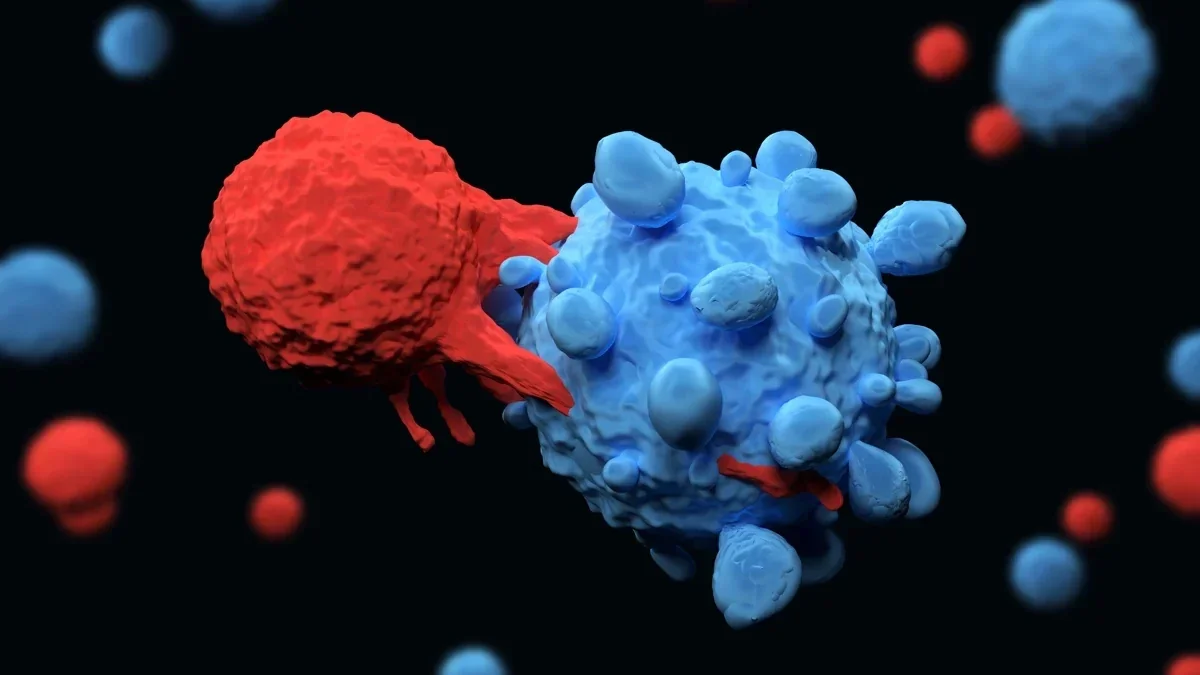
The daraxonrasib mechanism of action works by selectively binding to the active GTP-bound state of multiple RAS variants, halting the cellular signaling cascade that drives uncontrolled pancreatic tumor proliferation.
Under standard physiological conditions, normal RAS proteins act as biological switches. They cycle between an active state bound to guanosine triphosphate (GTP) and an inactive state bound to guanosine diphosphate (GDP). When mutated, RAS proteins become locked in the active GTP-bound conformation, continuously broadcasting signals through downstream cellular pathways. These uncontrolled signals instruct cancer cells to divide, evade apoptosis, and stimulate local angiogenesis.
Daraxonrasib acts as a molecular blocker that selectively targets this active "on" state. By locking into the protein complex alongside an intracellular chaperone, it prevents the mutated RAS engine from engaging downstream effectors. This action suppresses tumor cell growth while largely sparing non-cancerous tissues that rely on standard, regulated baseline signaling.
Clinical Trial Milestones: RASolute 302 and November 2026 Trial Results
In the phase 3 RASolute 302 trial, daraxonrasib demonstrated median overall survival of 13.2 months compared to 6.7 months on standard therapy, while an early trial reported in November 2026 evaluating daraxonrasib with chemotherapy in 61 patients observed disease control in 90% and a 76.6% one-year survival rate.
The pivotal phase 3 RASolute 302 daraxonrasib clinical trial served as the regulatory benchmark for single-agent therapy in patients whose cancer progressed after first-line systemic treatment. Researchers observed a doubling of median overall survival alongside an objective response rate of roughly 28%, a notable finding in advanced pancreatic disease where single-digit response rates remain common for second-line options.
On November 20, 2026, researchers published updated data from an ongoing multicenter clinical trial investigating daraxonrasib combined with first-line multi-agent chemotherapy in 61 patients with newly diagnosed metastatic disease. The findings demonstrated notable biological activity:
- Tumors stopped growing or regressed in 90% of participants (disease control rate).
- Approximately 8% of patients experienced a complete radiographic response, meaning target lesions were no longer visible on computed tomography (CT) scans.
- The 12-month overall survival reached 76.6%, representing a meaningful benchmark for metastatic pancreatic cancer care.
While these milestones indicate substantial disease stabilization, clinicians emphasize that targeted RAS inhibition suppresses tumor progression rather than providing a permanent cure.
| Trial Parameter | RASolute 302 (Phase 3 Monotherapy) | Frontline Combination Study (Nov 2026 Data) |
|---|---|---|
| Patient Population | Pretreated locally advanced or metastatic | Newly diagnosed metastatic adenocarcinoma |
| Cohort Size | Approximately 440 randomized participants | 61 enrolled participants |
| Treatment Arms | Daraxonrasib oral pill vs. investigator's choice chemotherapy | Daraxonrasib once daily plus multi-agent chemotherapy |
| Median Overall Survival | 13.2 months (vs. 6.7 months control) | Follow-up ongoing (76.6% at 1 year) |
| Disease Control Rate | 64% | 90% |
| Complete Response Rate | Under 2% | Approximately 8% |
Managing Daraxonrasib Side Effects: Skin Rash and Tolerability
The most common daraxonrasib side effects involve dermatologic reactions such as acneiform rash and skin dryness, alongside mild nausea, fatigue, and diarrhea, which oncologists manage with dose modifications and prophylactic topical regimens.
Because normal epithelial tissues rely partly on baseline RAS pathway signaling for cell repair, dermatologic toxicity occurs in a significant proportion of patients. This typically manifests within the first two to four weeks of beginning therapy. Oncologists implement structured supportive care to maintain comfort and avoid treatment interruption:
- Topical clindamycin or low-potency hydrocortisone creams applied to the face, neck, and upper chest
- Oral prophylactic antibiotics, such as doxycycline or minocycline, initiated alongside the first dose
- Alcohol-free skin moisturizers and broad-spectrum sunscreens to manage photosensitivity and dry skin
- Scheduled oral antiemetics and antidiarrheal medications taken as needed for gastrointestinal upset
Routine laboratory testing evaluates liver transaminases (AST and ALT), total bilirubin, and serum creatinine every two to four weeks during initial treatment.
Patients must remain vigilant for acute complications associated with underlying pancreatic disease. Symptoms such as sudden high fever with chills, progressive yellowing of the skin or eyes (jaundice), severe unrelenting abdominal pain, or confusion require immediate emergency evaluation at a local hospital to rule out biliary obstruction or cholangitis.
Global Access: Daraxonrasib FDA Approval, UK Access, and International Availability
Daraxonrasib received approval from the US FDA in August 2026 for pretreated advanced pancreatic cancer, while access in the UK, Europe, and elsewhere remains limited to clinical trials, compassionate use protocols, or early access programs.
The daraxonrasib FDA approval in the United States established commercial availability across US outpatient pharmacies and specialized cancer centers. In the United Kingdom and the European Union, formal health technology assessments and marketing authorizations remain underway. UK patients treated within the National Health Service (NHS) cannot routinely access the medication as standard care, though oncologists may submit Individual Funding Requests (IFR) or seek entry through the Early Access to Medicines Scheme (EAMS) when qualified.
International daraxonrasib availability depends primarily on active clinical trial registries and cross-border medical pathways. Patients considering travel abroad for treatment must verify the following factors prior to departure:
- Next-generation sequencing (NGS) molecular pathology reports confirming tumor RAS status
- Documentation of baseline organ function and performance status (ECOG score of 0 to 1)
- Logistical planning for extended stays, as targeted therapies require periodic safety monitoring
- Established communication between local home oncologists and treating international specialists
Evaluating Daraxonrasib Cost and Expanded Access Programs
The monthly daraxonrasib cost in the United States reflects commercial pricing for novel oral targeted oncology drugs, but eligible patients may access the medication through manufacturer copay programs, expanded access programs (EAP), or enrolled clinical studies.
The wholesale acquisition daraxonrasib price in the US market falls within the standard window for novel oral cancer therapeutics, averaging between $18,000 and $22,500 per 30-day supply before insurance adjustment. Insured domestic patients rarely pay the full list price, relying instead on tiered pharmacy benefit plans, commercial manufacturer copay savings cards, and independent foundation assistance.
Non-US patients or those without comprehensive prescription coverage explore alternative access pathways:
- Manufacturer Expanded Access Programs: Compassionate use pathways that provide medication to eligible patients with life-threatening conditions who lack therapeutic alternatives.
- Enrolled Clinical Trials: Participation in ongoing phase 2 and phase 3 combination studies, where the investigational drug and protocol-specific lab tests are provided without charge.
- Single-Patient Investigational New Drug (IND) Applications: Regulatory filings coordinated by treating academic oncologists to obtain unapproved therapies directly from pharmaceutical sponsors.
When discussing potential therapy with an oncology team, patients should request comprehensive genomic tumor profiling to confirm the presence of a responsive RAS mutation, evaluate physical tolerance for combination regimens, and consult hospital financial navigators regarding insurance pre-authorization and grant eligibility.
Frequently Asked Questions
What is daraxonrasib?
Daraxonrasib is a targeted oral prescription medication designed to inhibit active RAS proteins that fuel pancreatic cancer progression. Unlike cytotoxic chemotherapy, which damages all rapidly dividing cells, this small-molecule inhibitor works inside the cell to turn off mutated molecular drivers.
How does daraxonrasib work?
The drug operates by binding specifically to oncogenic RAS variants while they are trapped in their active, GTP-bound molecular state. This direct blockade interrupts critical intracellular signaling cascades, preventing tumor cells from dividing and encouraging them to enter cellular arrest.
Can daraxonrasib be combined with standard chemotherapy?
Preliminary clinical research confirms that daraxonrasib can be administered alongside standard multi-agent chemotherapy regimens under close oncologic supervision. Combining the targeted pill with systemic chemotherapy aims to attack cancer cells through complementary mechanisms, producing high rates of disease stabilization while maintaining a manageable toxicity profile.
What should patients discuss with their oncologist regarding eligibility?
Patients should ask whether their tumor tissue or circulating cell-free DNA has undergone comprehensive next-generation sequencing to confirm a KRAS or RAS mutation. Discussions should also evaluate past treatment responses, current liver and kidney laboratory values, and whether joining an active clinical trial or expanded access pathway represents the best therapeutic strategy.
Not sure which hospital is right for your case?
Upload your medical reports and our AI will match them against the verified capabilities of every hospital in our network.
- Upload your reports (no account needed)
- Our AI matches your case with hospitals that can actually treat it
- You choose who receives your case. We present it in the hospital's own language, and the hospital replies directly to you
Free and anonymous. Your documents stay private until you decide to send them.