Proton Therapy: Technology, Benefits, and Global Costs
Learn how proton therapy radiotherapy works, who is a candidate, side effects, key advantages over photon radiation, and typical global treatment costs.

Proton Therapy: Technology, Benefits, and Global Costs
Quick Answer: Proton therapy is an advanced form of external beam radiation that uses targeted particle physics (the Bragg peak) to deliver a concentrated radiation dose directly into a tumor while stopping completely, protecting surrounding healthy tissues and vital organs from unnecessary radiation damage.
Key Takeaways:
- Protons deposit their maximum destructive dose inside the tumor margin and emit zero exit radiation beyond it.
- Pediatric cancers and tumors located near sensitive structures such as the brain, spinal cord, lungs, or prostate benefit most from this precision.
- Proton therapy acts as a direct substitute for standard photon radiotherapy rather than an added therapy layered on top of it.
- High construction and accelerator engineering costs restrict proton facilities to specialized tertiary medical hubs worldwide.
- International proton therapy packages typically average $35,000 to $65,000, compared to self-pay costs exceeding $100,000 in the United States.
Proton therapy radiotherapy is a specialized modality of external beam radiation oncology that uses energized atomic particles to destroy malignant cells. Unlike conventional treatments that use electromagnetic waves, this approach leverages the mass and electrical charge of protons to target deep-seated solid tumors with millimeter accuracy. By controlling where the particles release their destructive charge, clinicians can deliver curative or palliative doses to complex tumors while minimizing damage to the surrounding healthy tissues.
What Is Proton Therapy and How Does the Technology Work?
Proton therapy is an advanced form of external beam radiotherapy that uses positively charged subatomic particles (protons) instead of traditional X-rays (photons) to destroy cancer cell DNA. Unlike conventional radiation beams that enter the body, pass through the tumor, and continue damaging tissues on the way out, protons release the vast majority of their destructive energy directly inside the tumor and stop completely-a physical property known as the Bragg peak.
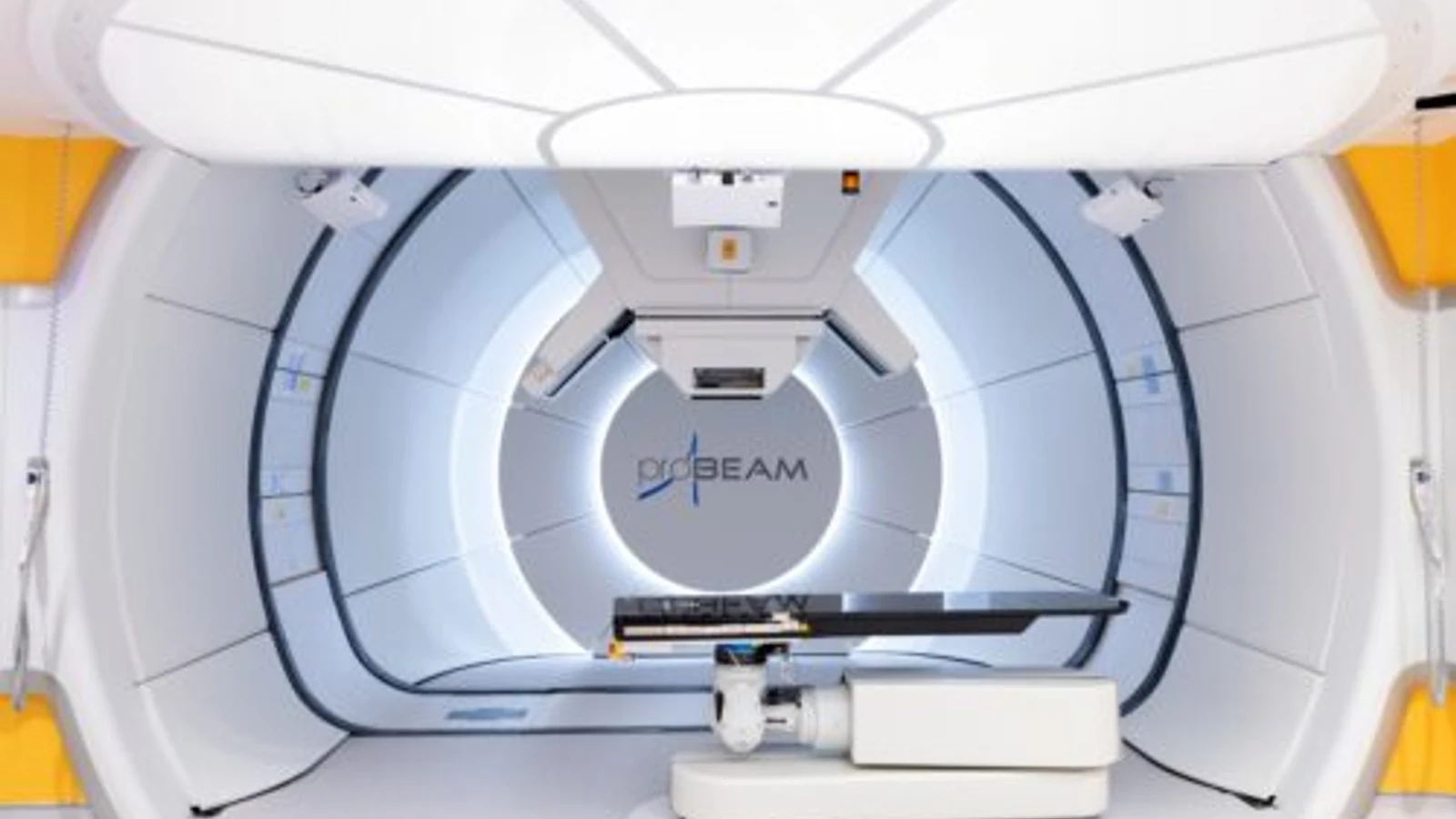
To generate these beams, a particle accelerator-either a cyclotron or a synchrotron-extracts protons from hydrogen gas and accelerates them to roughly 60% of the speed of light. Electromagnetic transport lines direct the accelerated beam into a multi-story rotating gantry that moves around the patient. Modern centers use pencil-beam scanning (PBS), a technique where narrow proton beams paint the tumor layer by layer across its exact three-dimensional contours.
The clinical power of proton physics relies on depth-dose distribution. As a proton travels through human tissue, it loses only a small portion of its energy along the entry path. When the particle reaches a precise depth determined by its initial speed, it decelerates rapidly, releasing a sharp spike of energy (the Bragg peak) before coming to a complete halt. Because no radiation exits beyond this stopping point, downstream organs receive zero radiation dose.
Proton Radiation vs Radiation Therapy: Understanding the Differences
The primary clinical difference between proton radiation and standard photon radiotherapy lies in the exit dose: traditional X-ray beams deposit energy along their entire trajectory through the body, while proton beams stop at a predetermined depth with zero exit dose beyond the tumor margin. This sharp drop-off reduces unnecessary radiation to surrounding organs by an estimated 50% to 60%, lowering the risk of acute toxicity and radiation-induced secondary cancers.
Standard external beam radiotherapy uses high-energy X-rays generated by linear accelerators. Photons possess no mass and carry neutral charge, causing them to deposit their peak energy shortly after entering the body. The beam then continues through the tumor and exits out the other side, leaving an exit dose that irradiates healthy tissues behind the target. Modern photon methods, such as Intensity-Modulated Radiation Therapy (IMRT) and Image-Guided Radiation Therapy (IGRT), cross multiple beam angles to dilute this collateral damage, but they cannot eliminate the entry and exit path entirely.
In contrast, evaluating proton radiation vs radiation therapy highlights how proton beam therapy eliminates the exit dose altogether. This capability makes it the preferred option when treating tumors abutting critical structures, including the optic nerve, brainstem, spinal cord, or heart.
| Feature / Metric | Conventional Photon Therapy (IMRT / IGRT) | Proton Beam Radiotherapy |
|---|---|---|
| Radiation Particle | Massless X-ray photons | Positively charged protons (hydrogen nuclei) |
| Exit Dose Beyond Tumor | Present (penetrates fully through tissue) | Zero (stops completely at target depth) |
| Healthy Tissue Sparing | Moderate (dispersed over broad entry paths) | High (up to 50-60% less non-target radiation) |
| Secondary Cancer Risk | Low to moderate baseline risk | Significantly lower due to reduced total body dose |
| Pediatric Suitability | Used with strict dose limits | Clinical standard for pediatric solid tumors |
| Facility Infrastructure | Standard linear accelerator room | Multi-room cyclotron/synchrotron bunker |
| Typical Global Availability | Widespread in community & tertiary hospitals | Concentrated in specialized international centers |
What Is Proton Therapy Used For? Common Cancer Types and Candidates
Proton therapy is primarily used for localized, solid tumors situated near critical organs where excess radiation could cause irreversible damage. The most common indications include pediatric solid tumors, brain tumors, skull-base chordomas, head and neck malignancies, spinal chordomas, non-small cell lung cancer, and localized prostate cancer.
Determining what is proton therapy used for depends largely on anatomical location and proximity to radiation-sensitive tissues. Clinical oncologists evaluate tumor geometry, histology, and prior radiation exposure to identify who is a good candidate for proton therapy. Key tumor categories include:
- Pediatric Malignancies: Developing children are highly vulnerable to radiation-induced developmental delays, hormone deficiencies, and secondary malignancies later in life. Proton therapy is widely considered the clinical standard for pediatric medulloblastomas, ependymomas, and rhabdomyosarcomas.
- Central Nervous System Tumors: Patients requiring proton radiation therapy brain tumor protocols benefit from the sharp dose drop-off, which spares memory centers (hippocampus), optical pathways, and the brainstem from excess toxicity.
- Thoracic Cancers: Applying proton radiation therapy for lung cancer and esophageal malignancies limits the dose delivered to the adjacent heart muscle, healthy lung tissue, and spinal cord, decreasing the incidence of radiation pneumonitis and cardiovascular complications.
- Prostate Cancer: Delivering proton radiation therapy for prostate cancer allows high curative doses directly to the prostate capsule while substantially sparing the anterior rectal wall and bladder base.
- Skull-Base and Spinal Tumors: Chordomas and chondrosarcomas require exceptionally high radiation doses that traditional photon therapy cannot safely deliver due to the proximity of the spinal cord and cranial nerves.
- Re-irradiation Cases: Patients who have previously received radiation in an anatomical region and experienced a localized recurrence often qualify for proton beam therapy because surrounding tissues have already reached their lifetime photon tolerance.
Is Proton Therapy an Alternative or an Additional Layer to Cancer Treatment?
Proton therapy serves as a direct, precision alternative to standard photon radiotherapy rather than an extra layer applied on top of it. In a comprehensive cancer care plan, proton therapy replaces conventional radiation and is frequently combined with surgery, chemotherapy, or immunotherapy according to the patient's stage and tumor biology.
Radiation oncologists do not prescribe proton therapy concurrently with photon radiotherapy for the same anatomical target. Instead, it occupies the radiotherapy position within a multimodal oncology plan:
- Neoadjuvant Setting: Proton radiation is delivered before surgical resection to shrink localized tumors near vital structures, making surgical margins clearer while protecting surrounding tissue viability.
- Adjuvant Setting: Following surgical removal of a primary tumor, proton therapy targets the surgical bed to eliminate microscopic residual disease without damaging newly reconstructed tissue or adjacent organs.
- Definitive Treatment: When tumors are medically inoperable due to location or patient health factors, proton therapy functions as the primary curative treatment, often administered alongside concurrent chemotherapy.
Why Isn't Proton Therapy Available in Every Country or Hospital?
Proton therapy remains limited globally because a single facility requires massive particle accelerators (cyclotrons or synchrotrons), heavily shielded concrete bunkers, and precision rotating gantries that cost between $40 million and $150 million to construct and maintain. Because of these substantial capital requirements, proton centers are concentrated in major medical hubs across North America, Europe, East Asia, and select international tertiary referral hospitals.
A conventional linear accelerator fits into a standard basement bunker and costs roughly $3 million to $6 million. In comparison, a multi-room proton center requires a dedicated building footprint, reinforced concrete shielding up to several meters thick, and high-power electromagnetic systems. Operating a center demands sub-millimeter engineering tolerances, dedicated particle physicists, specialized dosimetry teams, and significant continuous electrical power.
Because of this infrastructure investment, many public healthcare systems and regional hospitals cannot justify building local units. As a result, cancer patients frequently travel to designated domestic centers of excellence or seek care at accredited international hospitals with established proton beam facilities.
What to Expect During Proton Therapy: Schedule, Duration, and Side Effects
A standard proton therapy course typically spans 5 to 8 weeks, delivered in daily outpatient sessions lasting 15 to 30 minutes, five days a week, though actual beam delivery takes only 1 to 3 minutes. Side effects depend on the treated area; prostate cancer protocols may cause temporary urinary urgency or bowel changes, while brain and lung treatments can involve localized fatigue, skin redness, or mild tissue inflammation.
The clinical pathway for proton treatment follows a structured series of stages:
- Simulation and Immobilization (Week 0): Clinicians construct custom immobilization devices (thermoplastic masks for brain/head treatments or body cradles) and conduct high-resolution 4D-CT and MRI scans to map the target in three dimensions.
- Dosimetric Treatment Planning (5 to 10 Days): Medical physicists and radiation oncologists calculate beam trajectories, particle penetration depths, and tissue margins using advanced planning algorithms.
- Daily Outpatient Fractions (Weeks 1 to 5-8): The patient is positioned on a robotic treatment couch Monday through Friday. Radiographers verify position using daily digital X-rays or cone-beam CT (CBCT) before delivering the pencil-beam proton sweep.
- Restaging and Follow-up (Post-Treatment): Clinicians conduct scheduled follow-up scans and clinical exams to evaluate tumor response and monitor tissue recovery.
Understanding proton therapy for prostate cancer side effects and toxicities at other anatomical sites helps patients prepare realistically for recovery:
- Skin Reactions: Mild erythema, dryness, or peeling limited to the beam entry site, typically resolving within 2 to 4 weeks post-treatment.
- Fatigue: Mild to moderate energy loss caused by cellular repair processes, usually peaking during the final two weeks of therapy.
- Site-Specific Symptoms: Brain treatments may cause temporary localized hair loss or headaches; thoracic treatments can cause a dry cough; prostate protocols may involve transient urinary frequency, mild dysuria, or minor rectal irritation.
Risks and Potential Complications of Proton Beam Therapy
While proton therapy significantly limits collateral radiation to healthy organs, it carries localized risks related to the specific treatment site, including skin irritation, fatigue, tissue swelling, and late-onset scarring (fibrosis). Complication rates vary based on tumor proximity to critical nerves and vascular structures, but severe long-term toxicities remain relatively uncommon in clinical studies.
Potential risks and adverse effects associated with proton radiotherapy include:
- Range Uncertainty: Anatomical variations, such as changes in patient weight, tumor shrinkage, or gas pockets in the digestive tract, can slightly shift where the Bragg peak stops. Centers mitigate this with regular verification scans and adaptive replanning.
- Organ Motion Effects: Tumors in the lungs or liver shift during normal respiration. Specialized centers use respiratory gating techniques and 4D imaging to ensure the beam fires only when the tumor is within the target window.
- Late Tissue Changes: Months or years after treatment, high-dose areas may develop localized fibrosis, vascular changes, or tissue necrosis, which require monitoring by the oncology team.
Patients should seek immediate medical attention if they experience sudden neurological deficits, severe shortness of breath, unexplained fever during combined chemo-proton therapy, or persistent bleeding from the bladder or bowel.
How Much Does Proton Therapy Cost and What Drives the Price?
A complete course of proton therapy typically costs between $30,000 and $120,000 depending on the country, tumor complexity, and number of treatment fractions. In the United States, self-pay or out-of-network pricing often ranges from $60,000 to over $110,000, whereas accredited proton therapy centers in Europe and international medical hubs provide equivalent treatment protocols for approximately $35,000 to $65,000.
Several distinct variables determine how much does proton therapy cost:
- Number of Fractions: Standard curative regimens require 25 to 40 daily fractions, whereas hypofractionated protocols (used in select prostate or lung cases) deliver higher daily doses over 5 to 15 sessions, reducing total expenses.
- Treatment Complexity and Gantry Angles: Multi-field pencil-beam scanning with multiple gantry angles requires more physics calculations and quality assurance checks than single-field setups.
- Geographic Location and Hospital Overhead: Operating costs, capital amortization, and regional medical pricing structures heavily influence the final proton therapy price.
| Country / Region | Average Cost Range (USD) | What Is Typically Included |
|---|---|---|
| United States | $60,000 - $115,000+ | Simulation scans, treatment fractions, clinical reviews (often self-pay/out-of-network rates) |
| United Kingdom / Western Europe | $45,000 - $75,000 | Immobilization, treatment planning, full radiation course, weekly oncology consultations |
| Central / Eastern Europe (e.g., Czech Republic) | $35,000 - $55,000 | Simulation, full fraction package, physics QA, translator and medical coordination |
| East Asia (e.g., South Korea, Japan) | $30,000 - $50,000 | Complete radiation series, immobilization devices, daily imaging checks, follow-up consults |
Patients traveling abroad for treatment should confirm that the hospital holds recognized quality accreditations and request an all-inclusive medical quotation covering simulation, planning, fraction delivery, and post-treatment restaging scans.
Frequently Asked Questions
How does travel logistics work for international proton therapy patients?
Patients traveling abroad generally arrive 5 to 7 days before beam delivery for mask customization, 4D simulation scans, and treatment planning. The patient remains in the host city for the 5-to-8-week outpatient treatment period, attending daily weekday sessions while staying in nearby hotel or serviced-apartment accommodation, followed by a final restaging consultation before returning home.
Can proton therapy be used if cancer has already metastasized?
Proton therapy is primarily a localized treatment designed to control solid primary tumors or isolated recurrences. If cancer cells have spread widely throughout the body, systemic therapies (chemotherapy, immunotherapy, or targeted medications) form the foundation of care; however, proton beams are sometimes applied in oligometastatic disease to ablate one or two isolated metastatic spots without adding broad systemic toxicity.
Does health insurance cover proton beam radiation abroad?
Coverage policies depend heavily on the insurer, country of origin, and clinical diagnosis. Many private international health insurance plans cover proton therapy for pediatric tumors, skull-base chordomas, and central nervous system malignancies where photon radiation poses unacceptably high risks. Patients should obtain a formal letter of medical necessity and a pre-authorization cost breakdown from the treating center prior to travel.
How soon after surgery can a patient start proton radiotherapy?
Patients typically begin adjuvant proton therapy 4 to 8 weeks after surgical resection, depending on the rate of wound healing and the surgical site. The surgical margins and skin incisions must be adequately healed to prevent infection and ensure that tissue geometry remains stable throughout daily radiation sessions.
Not sure which hospital is right for your case?
Upload your medical reports and our AI will match them against the verified capabilities of every hospital in our network.
- Upload your reports (no account needed)
- Our AI matches your case with hospitals that can actually treat it
- You choose who receives your case. We present it in the hospital’s own language, and the hospital replies directly to you
Free and anonymous. Your documents stay private until you decide to send them.