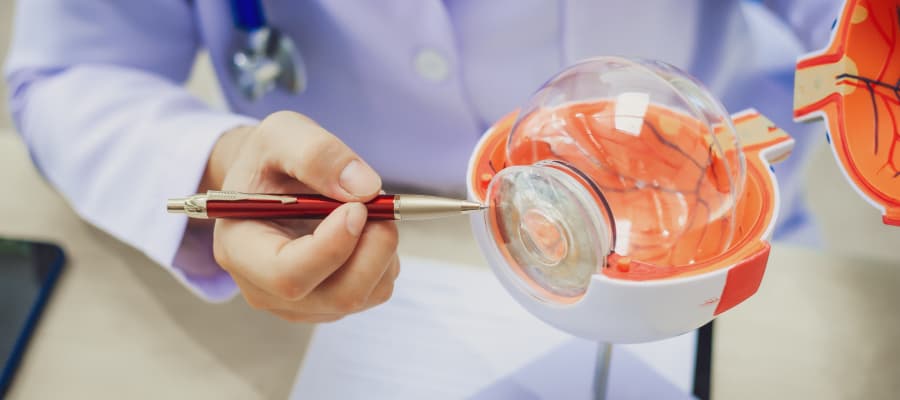
Cornea Transplant (Keratoplasty)

Cornea Transplant (Keratoplasty)

Istanbul

Cornea Transplant (Keratoplasty) in Istanbul is available at 12 hospitals in the Voumed network.

A cornea transplant, known medically as keratoplasty, replaces a cornea that has lost its transparency or shape with healthy donor tissue, so that clear vision can return. The cornea is the clear front window of the eye, and when it becomes cloudy, scarred or distorted, glasses and contact lenses can no longer correct the sight. Because the cornea has no blood vessels, this is the most successful of all transplants and rejection is uncommon. Many patients travel abroad for the operation to reach experienced corneal surgeons, modern partial-layer techniques and well-organised eye banks, and to combine treatment with a calm recovery away from daily pressures.

On this page

At a glance

Anaesthesia
local with sedation, or general anaesthesia
Hospital stay
usually a day case or one overnight stay
Procedure time
about 45 to 90 minutes for one eye
Recovery
light activity within days; vision sharpens gradually over weeks to months
Time before flying home
usually about 7 to 10 days, after the first checks
Results visible
an early improvement, with vision continuing to refine for up to a year or more

What it is

A cornea transplant replaces the diseased or damaged cornea, in whole or in part, with clear corneal tissue from a donor. The cornea is the transparent dome at the very front of the eye that focuses light onto the retina and shields the inside of the eye, so both its clarity and its smooth curve are essential for sharp vision. When disease or injury clouds or warps the cornea, replacing the affected tissue can restore the clear, focused image the eye has lost. Donor tissue is supplied and screened through eye banks, and modern surgery allows the surgeon to replace only the layer that is damaged rather than the full thickness whenever that is enough.

When it is recommended

A transplant is considered when the cornea has lost so much transparency or shape that vision cannot be corrected by any other means. The most common reason is advanced keratoconus, where the cornea thins and bulges into a cone that glasses and lenses can no longer manage. It is also used for corneal scarring after infection, injury or a chemical burn, for hereditary corneal dystrophies such as Fuchs dystrophy, and for corneal swelling that does not settle, including the swelling that can follow earlier eye surgery such as a cataract operation. The decision rests on a careful examination and corneal scans that map the shape and thickness of the cornea and confirm that a graft is the best path forward.

How it is performed

The operation can be done under local anaesthesia with sedation or under general anaesthesia, and it usually takes about 45 to 90 minutes for one eye, longer if it is combined with another procedure. In a full-thickness transplant, called penetrating keratoplasty, the cloudy or misshapen central cornea is removed and a matching disc of donor cornea is stitched into place with very fine sutures. In partial-layer techniques only the affected layer is exchanged: deep anterior lamellar keratoplasty replaces the front layers while keeping the patient's own healthy inner cell layer, which lowers the risk of rejection, and endothelial keratoplasty replaces only the thin inner cell layer, often for dystrophies and persistent swelling, needing few or no stitches and giving a faster visual recovery. The surgeon chooses the technique that matches the diseased layer.

Candidacy and preparation

A suitable candidate has corneal disease that limits vision and a healthy enough eye behind the cornea to benefit from a clear graft, confirmed by a detailed eye examination and corneal imaging. Preparation reviews the cause of the corneal problem, any previous eye surgery, general health and the medicines being taken, and the eye is treated for any active infection or inflammation before surgery. For international patients much of this assessment can begin remotely from existing eye reports and scans, with the final examination, matching of donor tissue and scheduling completed after arrival. The surgeon also explains the aftercare and the eye-drop routine in advance, because consistent drops are central to a good result.

Recovery and planning your treatment abroad

Most patients go home the same day or after one night, with the eye protected by a shield and a course of eye drops to prevent infection and calm inflammation. The first checks are done over the following days, and vision usually improves in stages: it often looks hazy at first and then sharpens over weeks to months as the graft settles and, where stitches were used, as they are adjusted or removed over time. For a trip abroad it is sensible to plan to stay in the destination city for about 7 to 10 days, so the early checks can confirm the graft is healthy and the eye is comfortable before flying. Air travel is generally safe once the surgeon gives clearance at that visit. Afterwards, follow-up continues remotely by message, photo or video, and international patient teams commonly arrange interpreters and coordinators so language is never a barrier, while routine local checks near home can support the long recovery.

Risks, safety and results

In experienced hands a cornea transplant is a safe, well-established operation with a high success rate, helped by the fact that the cornea has no blood vessels. As with any eye surgery there are risks, including infection, raised eye pressure, bleeding, problems with the stitches and, less commonly, rejection of the donor cornea, which can occur even years later. The encouraging point is that early rejection usually shows clear warning signs, such as redness, light sensitivity or a drop in vision, and prompt treatment with drops most often controls it, which is exactly why long-term follow-up and steady use of the prescribed drops matter so much. Most patients gain a meaningful and lasting improvement in vision, and many who relied on a transplant for a clouded or coned cornea regain the clear sight they had lost.

Frequently asked questions

These answers are general guidance and may vary by provider. Confirm the details with the hospital you choose.

Is a cornea transplant done under local or general anaesthesia?

It can be done either way. Many transplants are performed under local anaesthesia with sedation, so the eye is numb and you are relaxed but awake, while general anaesthesia is used when that is more suitable for the patient or the procedure. Your surgeon and anaesthetist decide together which is best for you.

How many days should I plan to stay abroad?

Most patients plan to stay in the destination city for about 7 to 10 days. This covers the assessment, the operation and the first checks, so the surgeon can confirm the graft is settling and the eye is comfortable before you fly home.

Where does the donor cornea come from and is it safe?

The donor cornea is supplied through eye banks, where tissue is carefully screened and prepared before use. Because the cornea has no blood vessels, matching is far simpler than for other transplants and rejection is uncommon, which is part of why the operation is so successful.

Will I be able to see clearly right after surgery?

Not immediately. Vision is usually hazy at first and then improves in stages over weeks to months as the graft settles, and where fine stitches are used the final focus continues to refine as they are adjusted or removed. Glasses or contact lenses are often used afterwards to fine-tune the result.

When can I fly home after surgery?

Most patients fly home once the surgeon confirms at the early checks that the graft is healthy and the eye is calm, usually around 7 to 10 days after surgery. Flying with a freshly operated eye before that clearance is not advised.

Can a transplanted cornea be rejected, and what are the warning signs?

Rejection is uncommon but possible, even years later. The warning signs are redness, increasing light sensitivity, pain or a drop in vision, and if any of these appear you should seek eye care quickly, because early treatment with drops usually controls it. Regular follow-up and steady use of your drops are the best protection.

How does follow-up work once I am home?

Your surgeon gives you a written aftercare plan and an eye-drop schedule, and stays reachable for remote follow-up by message, photo or video. Routine checks and any stitch adjustments can usually be handled by an eye doctor near your home, and interpreter support is available throughout so nothing is lost in translation.

Not sure which hospital fits your case?

Upload your medical records and let AI match you to the right hospital.

Upload records and get matched

Available at these hospitals

Specialties

Not sure which hospital fits your case?

Upload your medical records and let AI match you to the right hospital.

Upload records and get matched