

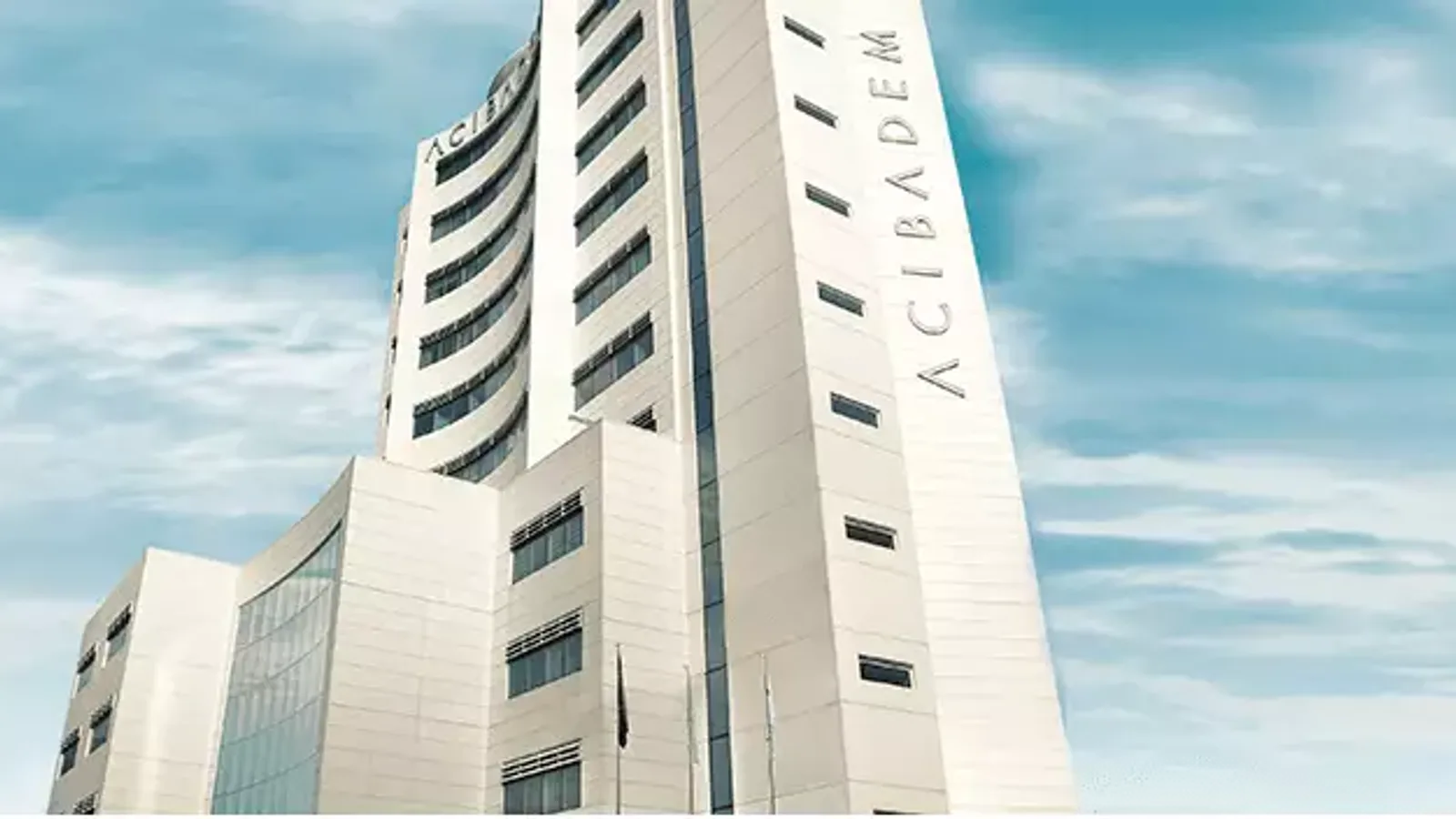

Acıbadem Fulya Hospital
Istanbul

- Specialties
- 23
Not sure which hospital fits your case?
Upload your medical records and let AI match you to the right hospital.
Upload records and get matchedAbout
Acıbadem Fulya Hospital is a general hospital in the Beşiktaş district on the European side of Istanbul, widely recognised for its orthopaedics, spine and sports-medicine programmes. Its facilities include a 101-bed treatment unit, eight operating rooms and a sixteen-bed intensive care unit. Accredited by Joint Commission International, the hospital serves international patients across orthopaedics, neurosurgery, oncology, cardiology and other adult and paediatric specialties.
Specialties
Physicians
1-12 of 225
Procedures
Bariatric and Metabolic Surgery
Cardiology and Cardiovascular Surgery
Dental, Oral and Maxillofacial Surgery
Ear, Nose and Throat
General Surgery
Gynecology and Obstetrics
IVF and Reproductive Health
Neurology and Neurosurgery
Oncology
Orthopedics and Traumatology
Physical Medicine and Rehabilitation
International patient services
- International patient office
- Interpreter and translation services
- Visa and travel assistance
- Airport transfer
- Accommodation assistance
Technologies and equipment
ESWT (Extracorporeal Shock Wave Therapy)
Extracorporeal shock wave therapy (ESWT) is a non-surgical, drug-free treatment that delivers high-energy acoustic waves generated outside the body to a painful or slow-healing tissue. The waves pass harmlessly through the skin and concentrate on the target area, where they stimulate the body's own repair processes. ESWT is used mainly for long-standing tendon, joint and soft-tissue problems that have not responded well to rest, medication or standard physiotherapy. Sessions are short, done in the clinic without anaesthesia, and afterwards most people return straight to their day. It is delivered as part of a rehabilitation plan rather than on its own.
Functional Balance and Coordination System
The functional balance and coordination system is an interactive rehabilitation platform that helps people stand, move and react more steadily. The patient performs guided exercises on a moving platform fitted with smart sensors that track posture and weight shift in real time and show the results on a screen. By reacting to this live feedback, the patient learns to correct posture, sharpen balance and activate the right muscles at the right moment. Because the training is turned into engaging game-like tasks, sessions stay motivating, which encourages the many repetitions that retraining balance requires.
DSA Digital Subtraction Angiography
Digital subtraction angiography (DSA) is an advanced imaging method that shows the blood vessels throughout the body in fine detail. A thin catheter delivers a contrast agent into the arteries, and specialised computer processing strips away the surrounding bone and tissue so that only the vessels stand out sharply. It is used to detect vascular problems such as narrowing, aneurysm, malformation and abnormal connections in the brain, abdomen, skin and limbs. DSA is also the basis for many minimally invasive treatments, allowing a specialist to find and, in the same session, treat a vascular problem through a tiny entry point rather than open surgery.
FibroScan
FibroScan is a non-invasive, ultrasound-based device that measures how stiff the liver is, which reflects the degree of scarring, or fibrosis, and at the same time estimates the amount of fat in the liver. It offers a fast, painless alternative to a liver biopsy, with no incision or needle, and it assesses a larger area of the organ than a tiny tissue sample would. A probe is simply placed on the skin over the liver while the patient lies down, and a numerical result is available within minutes. It is widely used to detect and follow liver conditions and to guide and monitor treatment.
Q-Switched Laser
The Q-switched laser is a dermatological laser that fires extremely short, very high-energy pulses of light, measured in billionths of a second, to shatter pigment in the skin. Because the burst is so brief and powerful, it breaks up dark pigment and tattoo ink into tiny fragments while leaving the surrounding skin largely unharmed. The body then carries those fragments away naturally over the following weeks. This makes the Q-switched laser the standard tool for removing unwanted pigmentation and tattoos and for refreshing uneven, sun-damaged skin, with little downtime between sessions.
Excimer Laser
The excimer laser is a precise, computer-controlled laser system used to correct refractive errors of the eye, most commonly short-sightedness (myopia), long-sightedness (hyperopia) and astigmatism. It works on the cornea, the clear front surface of the eye, gently removing microscopic layers of tissue to reshape it so that light focuses correctly on the retina. It is the workhorse behind most laser vision correction procedures, where its goal is to reduce or remove a person's dependence on glasses and contact lenses. The treatment is fast, carried out under anaesthetic drops, and recovery is generally quick.
Femtosecond Laser (Laser Vision Correction)
Femtosecond laser technology is the foundation of modern, bladeless laser vision correction, used to treat refractive errors such as short-sightedness (myopia), long-sightedness (hyperopia) and astigmatism. Working with ultra-fast, low-energy pulses, the laser performs the most delicate steps inside the cornea with great precision and without a mechanical blade. It powers several well-known correction methods, in which the laser either creates a thin protective corneal flap or shapes a small disc of tissue to be removed. The aim is the same: to reduce or remove a person's need for glasses and contact lenses, with a fast recovery.
3 Tesla MRI
3 Tesla MRI is a high-field magnetic resonance imaging scanner that produces exceptionally detailed pictures of the inside of the body. The "3 Tesla" refers to the strength of its magnet, which is about twice that of a standard MRI scanner, and this extra power allows sharper, higher-resolution images, often in less time. Like all MRI, it uses a strong magnetic field and radio waves rather than X-rays, so there is no ionising radiation involved. It is especially valuable for examining the brain, the nervous system, joints and soft tissues, helping doctors detect and characterise problems that may be hard to see on other scans.
Whole Body MRI
Whole body MRI examines the entire body in a single session, from the head down to the upper legs and sometimes the feet, producing one connected set of detailed images. It uses a strong magnetic field and radio waves rather than X-rays, so the examination involves no ionising radiation. By covering many organs and regions at once, it offers a broad overview that can pick up disease at an early stage. This makes it useful both as a screening tool for people who want a thorough check and as a way to look at conditions that may affect more than one part of the body.
Tomosynthesis Mammography (3D Mammography)
Tomosynthesis mammography, often called 3D mammography, is an advanced form of digital mammography that builds a three-dimensional picture of the breast from a series of thin layers. Instead of a single flat image in which overlapping tissue can hide or mimic a problem, it lets the radiologist scroll through the breast slice by slice on a high-resolution screen. This makes small lesions and tumours easier to see and helps distinguish real findings from harmless overlapping tissue, which is especially valuable for screening and for women with dense breasts.
Robotic Arm-Assisted Orthopedic Surgery
Robotic arm-assisted orthopedic surgery is a technology used mainly in knee and hip replacement to plan and carry out the operation with very high accuracy. A detailed three-dimensional plan is built from the patient's own CT scan, and during surgery a robotic arm guides the surgeon's instruments so that bone is prepared and the implant is positioned to that exact plan. The surgeon always holds and directs the instrument; the robotic arm adds steadiness and built-in limits that protect the surrounding tissue. The aim is a joint that fits and balances well, which can mean less pain and a smoother recovery.
Dual-Energy CT
Dual-energy CT is an advanced form of computed tomography that scans the body at two different X-ray energy levels at the same time. A standard CT uses a single energy and shows mainly the shape and density of tissues, but by comparing how structures behave at two energies, dual-energy CT can tell different materials apart far more precisely. This added information helps doctors characterise what they see, such as distinguishing one type of tissue or deposit from another, and it can often be achieved with less contrast agent and a lower radiation dose. It uses X-rays, as all CT does, but with techniques designed to keep exposure low.
Location
Dikilitaş Mah., Hakkı Yeten Cd. No:23, 34349 Beşiktaş/İstanbul
View on Google MapsAccreditations
- JCI
Not sure which hospital fits your case?
Upload your medical records and let AI match you to the right hospital.
Upload records and get matched