

Memorial Şişli Hospital
Istanbul

- Specialties
- 29
- Departments
- 77
Not sure which hospital fits your case?
Upload your medical records and let AI match you to the right hospital.
Upload records and get matchedAbout
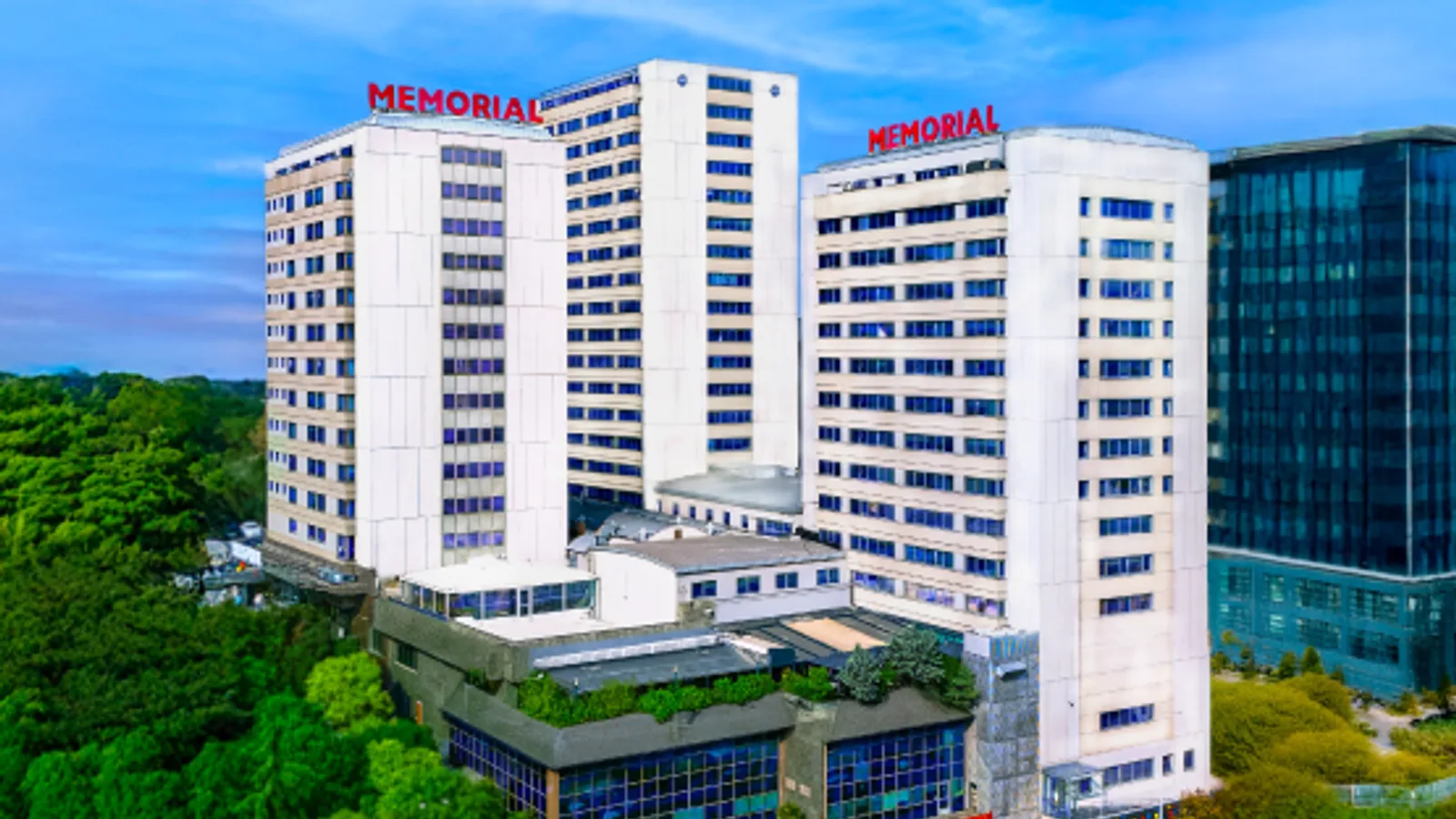
Memorial Sisli Hospital, opened in 2000, is the founding hospital of Memorial Health Group and stands on the European side of Istanbul. It was the first hospital in Turkey and the twenty first in the world to receive JCI accreditation, and within a 53,000 square meter facility it provides 267 beds, 12 operating rooms and dedicated intensive care and laboratory units. The hospital is an international reference center for organ transplantation, in vitro fertilization, cardiovascular surgery, oncology and da Vinci robotic surgery.
Specialties
Physicians
1-12 of 191
Departments
- Advanced Endoscopy Center
- Algology (Pain) Clinic
- Andrology
- Audiology
- Bone Marrow (Stem Cell) Transplant Center
- Breast Health Center
- Breast Surgery
- Cancer (Oncology) Center
- Cardiology
- Cardiovascular Surgery
- Check-Up Center
- Cosmetic Dermatology
- Dermatology
- Ear, Nose and Throat (ENT)
- Endocrinology and Metabolic Diseases
- Endometriosis Center
- Gastroenterology
- Gastrointestinal Oncologic Surgery Center
- General Surgery
- Gynecologic Oncology
- Hematology
- Hepato-Pancreato-Biliary (HPB) Center
- IVF and Reproductive Health Center
- Kidney Transplant Center
- Liver Transplant Center
- Lung Nodule Center
- Medical Oncology
- Nephrology
- Neurology
- Neuromuscular Diseases Center
- Neurosurgery
- Obesity (Bariatric) Surgery Center
- Obstetrics and Gynecology
- Ophthalmology
- Oral and Dental Health
- Oral, Dental and Maxillofacial Surgery
- Organ Transplant Center
- Orthopedics and Traumatology
- Pediatric Allergy
- Pediatric Bone Marrow Transplant Unit
- Pediatric Cardiology
- Pediatric Dentistry
- Pediatric Endocrinology
- Pediatric Gastroenterology
- Pediatric Hematology
- Pediatric Infectious Diseases
- Pediatric Nephrology
- Pediatric Neurology
- Pediatric Oncology
- Pediatric Pulmonology
- Pediatric Surgery
- Pediatric Urology
- Pediatrics
- Perinatology (High-Risk Pregnancy)
- Peripheral Vascular Surgery Clinic
- Physical Therapy and Rehabilitation
- Plastic, Reconstructive and Aesthetic Surgery
- Pulmonology
- Radiation Oncology (Radiotherapy)
- Rheumatology
- Robotic Orthopedic Surgery
- Robotic Rehabilitation Center
- Robotic Surgery Center
- Spine Center (Spine Surgery)
- Stroke and Brain Injury Rehabilitation Center
- Surgical Oncology Center
- Thoracic Surgery
- Urology
- Child and Adolescent Psychiatry
- Child and Adolescent Psychology
- Clinical Psychology
- Genetic Diseases Evaluation Center
- Geriatrics
- Immunology and Allergy
- Internal Medicine
- Nutrition and Dietetics
- Psychiatry
Procedures
Bariatric and Metabolic Surgery
Cardiology and Cardiovascular Surgery
Dental, Oral and Maxillofacial Surgery
Ear, Nose and Throat
Gastroenterology
General Surgery
Gynecology and Obstetrics
IVF and Reproductive Health
Neurology and Neurosurgery
Organ Transplantation
Orthopedics and Traumatology
Physical Medicine and Rehabilitation
Plastic and Aesthetic Surgery
Spine Surgery
Check-up packages
Cardiology Check-Up
Examinations
- Internal Medicine
- Cardiology
Radiology
- Chest X-Ray
Cardiology
- ECG
- Echocardiography
- Cardiac Stress Test (Treadmill)
- Coronary CT Angiography (performed with doctor approval)
Laboratory
- Blood panel: glucose, HbA1c, insulin, CBC, total/HDL/LDL cholesterol, creatinine, CRP, AST/ALT, triglycerides, TSH, full urinalysis
Comprehensive Female Check-Up
Examinations
- Gastroenterology
- Internal Medicine
- General Surgery
- Gynecology
- Cardiology
- Neurology
Radiology
- Cranial MRI
- Thorax CT
- Whole Abdomen Ultrasound
- Digital Mammography (double-sided)
- Breast Ultrasound
Cardiology
- ECG (12-lead)
- Transthoracic Echocardiography
- Treadmill Stress Test
Gastrointestinal
- Colonoscopy
- Upper Endoscopy
- Colon biopsy
- Stomach biopsy
- Sedation
Pathology
- Cervical/vaginal cytology (ThinPrep)
- Smear test
Tumor Markers
- AFP
- CA 125
- CA 15-3
- CA 19-9
- CEA
Laboratory
- Comprehensive blood panel (45+ parameters): CBC, lipid profile, liver and kidney function, thyroid (free T3/T4, TSH), hepatitis serology (HBsAg, Anti-HBs, Anti-HCV, Anti-HIV), iron studies and ferritin, vitamin B12 and D, HbA1c, insulin, calcium, phosphorus, PTH, calcitonin, uric acid, CRP, ESR, protein electrophoresis, full urinalysis
Comprehensive Male Check-Up
Examinations
- Gastroenterology
- Internal Medicine
- Cardiology
- Neurology
- Urology
Radiology
- Cranial MRI
- Thorax CT
- Whole Abdomen Ultrasound
Cardiology
- ECG (12-lead)
- Transthoracic Echocardiography
- Treadmill Stress Test
Gastrointestinal
- Colonoscopy
- Upper Endoscopy
- Colon biopsy
- Stomach biopsy
- Sedation
Pathology
- Histochemistry stain
- H. pylori CLO test
Tumor Markers
- AFP
- CA 19-9
- CEA
- PSA (free)
- PSA (total)
Laboratory
- Comprehensive blood panel (45+ parameters): CBC, lipid profile, liver and kidney function, thyroid (free T3/T4, TSH), hepatitis serology (HBsAg, Anti-HBs, Anti-HCV, Anti-HIV), iron studies and ferritin, vitamin B12 and D, HbA1c, insulin, calcium, phosphorus, PTH, calcitonin, uric acid, CRP, ESR, protein electrophoresis, full urinalysis
Female Over 40 Check-Up
Examinations
- Internal Medicine
- Ophthalmology
- Gynecology
- Dental
Radiology
- Chest X-Ray
- Bone Densitometry
- Whole Abdominal Ultrasound
- Breast Ultrasound
- Digital Mammography
Pathology
- PAP smear (cervical/vaginal cytology)
Cardiology
- ECG
Laboratory
- Blood panel: calcium, CBC, lipid profile, creatinine, potassium, AST/ALT, full urinalysis, triglycerides, TSH, albumin, Anti-HBs, ESR, GGT, fasting glucose, CRP, fecal occult blood
Female Under 40 Check-Up
Examinations
- Internal Medicine
- Dental
- Gynecology
Pathology
- PAP smear (cervical/vaginal cytology)
Radiology
- Chest X-Ray
- Whole Abdominal Ultrasound
Cardiology
- ECG
Laboratory
- Blood panel: HBsAg, CBC, albumin, ALP, Anti-HBs, ESR, GGT, fasting glucose, creatinine, AST/ALT, TSH, lipid profile, triglycerides, full urinalysis, uric acid
General Standard Check-Up
Examinations
- Internal Medicine
- Dental
Radiology
- Chest X-Ray
- Whole Abdominal Ultrasound
Cardiology
- ECG
Laboratory
- Blood panel: HBsAg, CBC, lipid profile, creatinine, AST/ALT, full urinalysis, triglycerides, TSH, uric acid
Male Over 40 Check-Up
Examinations
- Internal Medicine
- Cardiology
- Urology
- Dental
Radiology
- Chest X-Ray
- Whole Abdominal Ultrasound
Tumor Markers
- PSA (free)
- PSA (total)
Cardiology
- ECG
- Echocardiography (Doppler)
- Treadmill Stress Test
Laboratory
- Blood panel: albumin, Anti-HBs, fecal occult blood, ESR, GGT, fasting glucose, HBsAg, CBC, lipid profile, sodium and creatinine, uric acid, AST/ALT, full urinalysis, triglycerides, TSH
Male Under 40 Check-Up
Examinations
- Internal Medicine
- Dental
- Cardiology
Radiology
- Chest X-Ray
- Whole Abdominal Ultrasound
Cardiology
- ECG
- Treadmill Stress Test
Laboratory
- Blood panel: HBsAg, CBC, albumin, ALP, Anti-HBs, ESR, GGT, fasting glucose, creatinine, AST/ALT, TSH, lipid profile, triglycerides, full urinalysis, uric acid
Pediatric Basic Check-Up
Examinations
- Pediatrics
- Ophthalmology
- ENT
- Dental
Radiology
- Tympanometric Test
Laboratory
- CRP
- ESR
- Iron
- Iron Binding Capacity (IBC)
- Ferritin
- CBC (18 parameters)
- Stool examination for intestinal parasites
- General urinalysis
Pediatric Detailed Check-Up
Examinations
- Pediatrics
- Ophthalmology
- ENT
- Dental
Radiology
- Tympanometric Test
- Whole Abdominal Ultrasound
- Chest X-Ray
Laboratory
- CRP
- ESR
- Iron
- Iron Binding Capacity (IBC)
- Ferritin
- CBC (18 parameters)
- Stool examination for intestinal parasites
- General urinalysis
VIP Check-Up for Men
Examinations
- Internal Medicine
- Dental
- Ophthalmology
- Urology
- Cardiology
Radiology
- Chest X-Ray
- Whole Abdominal Ultrasound
Cardiology
- ECG
- Transthoracic Echocardiography
- Treadmill Stress Test
Tumor Markers
- AFP
- CA 19-9
- CEA
- PSA (free)
- PSA (total)
Laboratory
- Blood panel (~20 parameters): albumin, hepatitis serology, CBC, GGT, calcium, ESR, fasting glucose, creatinine, AST/ALT, TSH, BUN, lipid profile, triglycerides, uric acid, full urinalysis, fecal occult blood
VIP Check-Up for Women
Examinations
- Internal Medicine
- Dental
- Ophthalmology
- Gynecology
- Cardiology
Radiology
- Chest X-Ray
- Bone Densitometry
- Whole Abdominal Ultrasound
- Breast Ultrasound
- Digital Mammography
Pathology
- PAP smear test
Cardiology
- ECG
- Transthoracic Echocardiography
- Treadmill Stress Test
Tumor Markers
- AFP
- CA 125
- CA 15-3
- CA 19-9
- CEA
Laboratory
- Blood panel (~20 parameters): albumin, hepatitis serology, CBC, GGT, calcium, ESR, fasting glucose, creatinine, AST/ALT, TSH, BUN, lipid profile, triglycerides, uric acid, full urinalysis, fecal occult blood
International patient services
- Free second medical opinion from Memorial doctors
- Estimated cost for the treatment plan
- Organization of consultation appointments
- Air and ground ambulance services
- Hotel bookings at discounted rates
- Free airport transfer arrangement
- Multilingual staff
- Translation of medical documents
- Assistance during admission, treatment and discharge
- Free interpreting services at the hospital
Technologies and equipment
TrueBeam STx
TrueBeam STx is an advanced linear accelerator, a machine that delivers external radiotherapy to treat cancer with very high precision. It shapes powerful radiation beams to match the exact size and shape of a tumour and aims them from many angles, so that a strong dose reaches the target while nearby healthy tissue and organs receive as little as possible. Because it tracks the target and can account for movement such as breathing, it is accurate to within millimetres. This makes it suitable both for conventional, daily radiotherapy and for advanced focused techniques that treat a tumour in only a few sessions. The treatment is non-invasive and painless, with nothing entering the body.
Da Vinci Robotic Surgery
The da Vinci robotic surgical system lets a surgeon perform complex operations through a few small keyhole incisions instead of one large cut. Sitting at a nearby console, the surgeon controls tiny wristed instruments and a magnified high-definition three-dimensional camera, while the robotic arms translate every hand movement into precise, steady motion inside the body. The system never acts on its own: the surgeon is in full control at all times. For patients, this minimally invasive approach often means less pain, smaller scars, less blood loss and a quicker return to normal life.
O-Arm
The O-arm is an intraoperative imaging system that rotates a full circle around the patient to produce real-time, high-resolution cross-sectional images while surgery is underway. In effect it brings a mobile CT-style scanner into the operating room, so the surgeon can see the exact position of bone, instruments and implants at the moment they are being placed, rather than relying only on images taken before the operation. It is used mainly in spine, brain and nerve, and orthopaedic trauma surgery, where it gives precise guidance for critical steps and supports greater accuracy and safety.
3 Tesla MRI
3 Tesla MRI is a high-field magnetic resonance imaging scanner that produces exceptionally detailed pictures of the inside of the body. The "3 Tesla" refers to the strength of its magnet, which is about twice that of a standard MRI scanner, and this extra power allows sharper, higher-resolution images, often in less time. Like all MRI, it uses a strong magnetic field and radio waves rather than X-rays, so there is no ionising radiation involved. It is especially valuable for examining the brain, the nervous system, joints and soft tissues, helping doctors detect and characterise problems that may be hard to see on other scans.
Whole Body MRI
Whole body MRI examines the entire body in a single session, from the head down to the upper legs and sometimes the feet, producing one connected set of detailed images. It uses a strong magnetic field and radio waves rather than X-rays, so the examination involves no ionising radiation. By covering many organs and regions at once, it offers a broad overview that can pick up disease at an early stage. This makes it useful both as a screening tool for people who want a thorough check and as a way to look at conditions that may affect more than one part of the body.
Cardiac MRI
Cardiac MRI is a non-invasive imaging method that produces remarkably detailed pictures of the heart and the large blood vessels around it. It uses a strong magnetic field and radio waves rather than X-rays, so there is no ionising radiation involved. Unlike many other heart tests, it shows not only the shape and motion of the heart but also the condition of the heart muscle itself, down to the tissue level. This makes it a powerful tool for diagnosing and guiding the treatment of a wide range of heart conditions.
Functional MRI (fMRI)
Functional MRI, often shortened to fMRI, is a special kind of magnetic resonance imaging that maps activity in the brain rather than just its structure. While a standard MRI shows the shape of the brain, fMRI reveals which regions switch on when a person performs a task such as speaking, moving a hand or sensing touch. It does this by detecting tiny changes in blood flow and oxygen that follow brain activity, all without ionising radiation. This makes it an invaluable planning tool before surgery or other treatments near important parts of the brain.
Coronary CT Angiography
Coronary CT angiography, sometimes called virtual angiography, is a computed tomography method that produces detailed images of the heart and its coronary arteries without the need for a catheter. Traditional angiography involves threading a thin tube into the arteries, but this scan does the same job from the outside, using a fast CT scanner and a contrast agent given through a vein. It clearly shows the build-up of calcium and plaque in the artery walls and any narrowing they cause. It uses X-rays, as all CT does, with techniques designed to keep the radiation dose low.
Digital Mammography
Digital mammography is a low-dose X-ray method used to screen for and detect breast cancer at an early stage. It captures very high-resolution digital images of the breast that a radiologist can examine and enhance on screen, revealing small nodules, masses and tiny specks of calcium that may not be felt or seen on other tests. Because it can find changes long before they cause symptoms, it is the cornerstone of breast cancer screening and one of the most effective tools for catching the disease when it is most treatable.
Tomosynthesis Mammography (3D Mammography)
Tomosynthesis mammography, often called 3D mammography, is an advanced form of digital mammography that builds a three-dimensional picture of the breast from a series of thin layers. Instead of a single flat image in which overlapping tissue can hide or mimic a problem, it lets the radiologist scroll through the breast slice by slice on a high-resolution screen. This makes small lesions and tumours easier to see and helps distinguish real findings from harmless overlapping tissue, which is especially valuable for screening and for women with dense breasts.
Endoscopic Ultrasound (EUS)
Endoscopic ultrasound (EUS) combines endoscopy and ultrasound in a single thin instrument, allowing the deeper layers of the digestive tract and the organs and tissues around it to be examined in detail. By placing a tiny ultrasound probe at the tip of an endoscope and guiding it inside the body, very close to the area of interest, it produces highly detailed images of structures such as the pancreas, bile ducts and nearby lymph nodes that can be hard to see from the outside. When needed, a fine needle can take a sample for the laboratory during the same procedure, all without any surgical incision.
FAPI PET/CT
FAPI PET/CT is an advanced oncological imaging technique used to detect cancer and assess how far it has spread. It uses a tracer called FAPI, short for fibroblast activation protein inhibitor, which targets the supportive cells that surround and feed many tumours rather than the sugar uptake measured by a standard PET scan. Labelled with a radioactive isotope and combined with PET and CT, it produces detailed three-dimensional images that can highlight tumours and their spread, sometimes more clearly than conventional methods, and is especially useful for cancer types that are hard to see on a routine scan.
Robotic Arm-Assisted Orthopedic Surgery
Robotic arm-assisted orthopedic surgery is a technology used mainly in knee and hip replacement to plan and carry out the operation with very high accuracy. A detailed three-dimensional plan is built from the patient's own CT scan, and during surgery a robotic arm guides the surgeon's instruments so that bone is prepared and the implant is positioned to that exact plan. The surgeon always holds and directs the instrument; the robotic arm adds steadiness and built-in limits that protect the surrounding tissue. The aim is a joint that fits and balances well, which can mean less pain and a smoother recovery.
V-NOTES Scarless Surgery (Vaginal Laparoscopy)
V-NOTES (Vaginal Natural Orifice Transluminal Endoscopic Surgery) is a minimally invasive gynaecological technique performed entirely through the natural vaginal opening, with no incision on the abdomen at all. A camera and slim surgical instruments are passed through the vagina, so the surgeon can reach and treat the uterus, ovaries and fallopian tubes from inside without cutting the abdominal wall. Because nothing is opened on the outside of the body, the technique leaves no visible scar and is generally linked with less pain and a quicker recovery than conventional or keyhole abdominal surgery.
Rezum (Water Vapor Therapy)
Rezum is a minimally invasive treatment for an enlarged prostate that uses the natural energy stored in water vapour, or steam, to gently shrink the overgrown tissue. Benign prostatic enlargement is a common condition in older men, where the prostate grows and presses on the urinary channel, causing symptoms such as a weak stream, frequent urination and getting up at night. Rezum delivers small, precise bursts of steam directly into the enlarged tissue through the urethra, with no cutting. Over the following weeks the treated tissue is naturally reabsorbed, the channel opens up, and urinary symptoms improve.
Optilume (Drug-Coated Balloon)
Optilume is a minimally invasive treatment for urethral stricture, a narrowing of the urethra, the tube that carries urine out of the body. A stricture, usually caused by scar tissue, can make passing urine difficult and tends to come back after simple stretching procedures. Optilume combines two actions in one device: a balloon that gently widens the narrowed segment, and a medicine coating that is released into the wall of the urethra to discourage new scar tissue from forming. By tackling both the narrowing and the cause of recurrence, it aims to give longer-lasting relief than older methods, all through a single, no-incision procedure.
Thulium Laser (ThuLEP)
Thulium laser is a modern surgical laser used mainly to treat an enlarged prostate, a common cause of urinary difficulty in older men. Its best-known use is the ThuLEP technique (Thulium Laser Enucleation of the Prostate), in which the overgrown inner prostate tissue is removed through the urethra with no external cut. A defining feature of the thulium laser is that it penetrates tissue only very shallowly, which allows extremely precise cutting and excellent sealing of small blood vessels as it works. The result is a minimally invasive treatment with little bleeding, a short recovery and durable relief of urinary symptoms.
HIFU for Prostate Cancer
HIFU (High Intensity Focused Ultrasound) is a non-surgical, targeted treatment for prostate cancer that destroys diseased tissue using precisely focused sound waves, without any cut to the body. A probe placed in the back passage delivers focused ultrasound energy that heats and destroys only the cancerous part of the prostate, while sparing the healthy tissue and nearby structures as much as possible. Because it is so targeted, HIFU aims to treat the cancer while protecting urinary control and sexual function. It is mainly used for early, localised prostate cancer and for men who want a minimally invasive option.
Neuronavigation
Neuronavigation is an image-guided surgical system that acts like a precise map and GPS for the brain and spine. Using the patient's own scans built into a three-dimensional model, it shows the surgeon exactly where the instruments are inside the body in real time, so the safest, shortest route to a lesion can be planned and followed. This is especially important in the brain and spine, where targets are often small, deep and surrounded by critical nerves and blood vessels. By guiding the surgeon away from healthy structures, neuronavigation supports accuracy, smaller approaches and added safety.
Intraoperative Neuromonitoring
Intraoperative neuromonitoring is a technology that continuously checks the function of nerves and the spinal cord while brain and spine surgery is being performed. Small sensors record the electrical activity that travels along the nerves, so the surgical team gets a live warning the moment a sensitive nerve is at risk, before any lasting damage occurs. This early warning lets the surgeon adjust technique in real time and is used to help protect movement, sensation, hearing and other vital functions. It is a key safety tool in operations close to the brain, spinal cord and critical nerves.
Aiforia AI Pathology
Aiforia is an artificial intelligence assisted pathology software that helps doctors analyse tissue samples taken during a biopsy or surgery. After a sample is placed on a glass slide and scanned into a high-resolution digital image, the software uses trained AI to measure and highlight features in the tissue, supporting the pathologist who makes the diagnosis. It carries a CE-IVD marking for in vitro diagnostic use and is applied in cancers such as breast, prostate, lung and skin. Importantly, it is a decision-support tool: it assists and adds consistency, but the pathologist remains responsible for the final diagnosis.
pH-metry (Reflux Diagnosis)
pH-metry is a diagnostic test that confirms reflux disease by directly measuring how much acid reaches the food pipe (oesophagus) over an extended period. It is especially useful when standard endoscopy looks normal but a person still has reflux-type symptoms, because it captures acid exposure that a single snapshot examination would miss. In a common modern version, a tiny pH capsule is attached to the lower oesophagus during a brief endoscopy under sedation, then records acid levels for about 24 to 48 hours before detaching on its own and passing naturally. The result gives an objective picture of whether, and how often, acid is reaching the oesophagus.
Laser Genital Aesthetics
Laser genital aesthetics is a non-surgical treatment that uses gentle, controlled laser heat to reshape, tighten and rejuvenate the genital area without cutting or general anaesthesia. The warmth encourages the tissue to make new collagen and improves local blood flow, which can restore firmness and comfort over time. It is used for both appearance-related goals, such as tightening or evening out skin tone, and functional concerns, such as dryness or mild urinary leakage, usually across a few short, comfortable sessions after which women return to daily life the same day.
Fotona SP Dynamis
Fotona SP Dynamis is a versatile aesthetic laser platform that brings two complementary laser wavelengths together in one device. An Nd:YAG laser reaches deeper layers of the skin to firm and remodel from within, while an Erbium:YAG laser works on the surface to resurface and refine. Because a single system can be tuned for many goals, it is used across a wide range of non-surgical skin treatments, from facial rejuvenation and tightening to acne, scars, pigment, hair removal and intimate aesthetics, all without incisions or injections.
Location
Piyalepaşa Blv. 34385, Şişli/İstanbul
View on Google MapsAccreditations
- JCI
Not sure which hospital fits your case?
Upload your medical records and let AI match you to the right hospital.
Upload records and get matched