- →←PET-CT
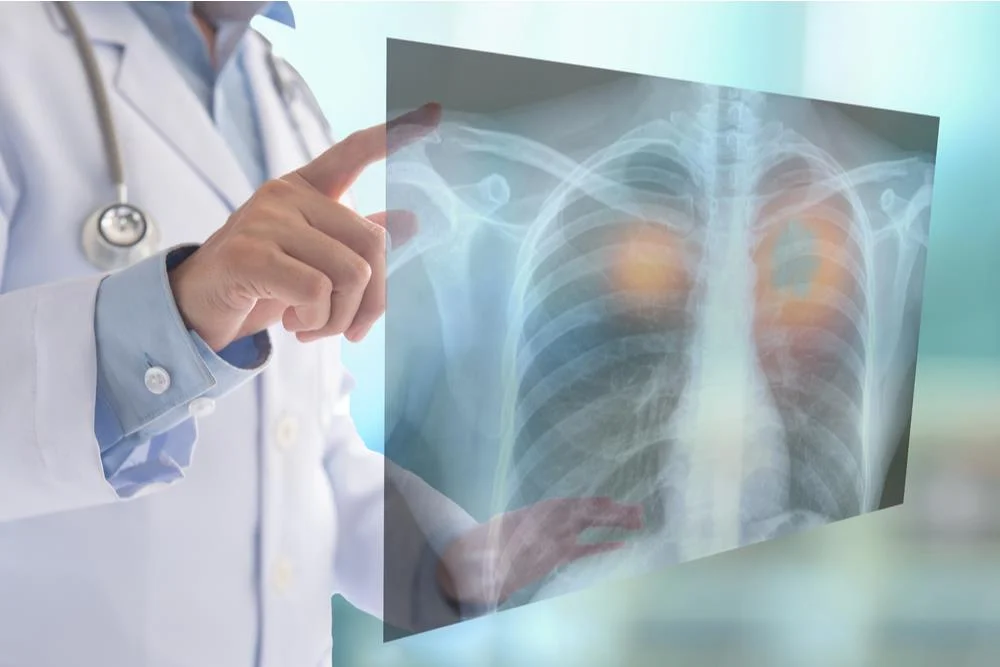
PET-CT is an advanced hybrid imaging method that combines positron emission tomography with computed tomography in a single scan, mapping both the metabolic activity and the anatomical structure of the body at once. A small dose of a radioactive tracer, often a glucose analogue, is injected and gathers in cells that are working harder than normal, which is typical of many tumours. Because it can show where a disease is active before it changes the shape of an organ, PET-CT is one of the most valuable tools for detecting cancer, working out how far it has spread, and checking whether treatment is working.
- →←Multi-Wavelength Aesthetic Laser
A multi-wavelength aesthetic laser is a dermatology platform that combines two or more laser wavelengths in a single device. A common pairing is an erbium (Er:YAG) laser, which works on the skin surface, with a neodymium (Nd:YAG) laser, which reaches deeper layers. By switching wavelengths and settings, one platform can resurface the skin, soften scars and fine lines, treat visible vessels, remove unwanted hair and gently tighten skin without breaking the surface. Treatments are usually done as an outpatient, without general anaesthesia. People travelling for these treatments often combine them with other aesthetic care, but many results need a series of sessions, which is worth planning before the trip.
- →←Gamma Knife
Gamma Knife is a form of stereotactic radiosurgery, a highly precise way of treating targets deep inside the head without any cut, incision or general anaesthesia. Despite its name it is not a knife and involves no surgery in the usual sense. Instead, hundreds of finely focused beams of gamma radiation are aimed from many angles so that they all meet at a single point. Each beam alone is too weak to harm the tissue it passes through, but where they converge a strong, sharply shaped dose is delivered to the target while the surrounding healthy brain is largely spared. It offers a non-invasive option for tumours and other lesions that may be difficult or risky to reach with open surgery.
- →←Excimer Laser
The excimer laser is a precise, computer-controlled laser system used to correct refractive errors of the eye, most commonly short-sightedness (myopia), long-sightedness (hyperopia) and astigmatism. It works on the cornea, the clear front surface of the eye, gently removing microscopic layers of tissue to reshape it so that light focuses correctly on the retina. It is the workhorse behind most laser vision correction procedures, where its goal is to reduce or remove a person's dependence on glasses and contact lenses. The treatment is fast, carried out under anaesthetic drops, and recovery is generally quick.
- →←Gait Training Robot (Adult)
A gait training robot is an advanced rehabilitation device that helps adults relearn to walk after the ability has been lost or impaired. It works on the principle of neuroplasticity: by guiding the legs through the correct walking pattern many times over, it helps the brain and muscles rebuild their connections and form new pathways, so walking becomes possible again. The patient is held safely in a support harness that takes much of the body weight, while the robot moves the legs and sensors track every step. Because it allows far more repetitions than a therapist could deliver by hand, it can speed up recovery and make early walking practice safe.
- →←Femtosecond Laser (Laser Vision Correction)
Femtosecond laser technology is the foundation of modern, bladeless laser vision correction, used to treat refractive errors such as short-sightedness (myopia), long-sightedness (hyperopia) and astigmatism. Working with ultra-fast, low-energy pulses, the laser performs the most delicate steps inside the cornea with great precision and without a mechanical blade. It powers several well-known correction methods, in which the laser either creates a thin protective corneal flap or shapes a small disc of tissue to be removed. The aim is the same: to reduce or remove a person's need for glasses and contact lenses, with a fast recovery.
- →←Stereotactic Radiosurgery System
A stereotactic radiosurgery system is a radiotherapy machine built to deliver a very precise, high dose of radiation to a small, sharply defined target in one to five sessions, without any incision. Despite the name, nothing is cut: the word refers to the surgical level of accuracy. Dedicated platforms focus many beams on one point, so the dose falls away steeply at the edge of the target and nearby healthy tissue is largely spared. It is used mainly for brain tumours, brain metastases, blood vessel malformations and selected nerve conditions, and some platforms also treat small tumours in the spine and body. Short, outpatient treatment suits a planned trip.
- →←3 Tesla MRI
3 Tesla MRI is a high-field magnetic resonance imaging scanner that produces exceptionally detailed pictures of the inside of the body. The "3 Tesla" refers to the strength of its magnet, which is about twice that of a standard MRI scanner, and this extra power allows sharper, higher-resolution images, often in less time. Like all MRI, it uses a strong magnetic field and radio waves rather than X-rays, so there is no ionising radiation involved. It is especially valuable for examining the brain, the nervous system, joints and soft tissues, helping doctors detect and characterise problems that may be hard to see on other scans.
- →←Whole Body MRI
Whole body MRI examines the entire body in a single session, from the head down to the upper legs and sometimes the feet, producing one connected set of detailed images. It uses a strong magnetic field and radio waves rather than X-rays, so the examination involves no ionising radiation. By covering many organs and regions at once, it offers a broad overview that can pick up disease at an early stage. This makes it useful both as a screening tool for people who want a thorough check and as a way to look at conditions that may affect more than one part of the body.
- →←Coronary CT Angiography
Coronary CT angiography, sometimes called virtual angiography, is a computed tomography method that produces detailed images of the heart and its coronary arteries without the need for a catheter. Traditional angiography involves threading a thin tube into the arteries, but this scan does the same job from the outside, using a fast CT scanner and a contrast agent given through a vein. It clearly shows the build-up of calcium and plaque in the artery walls and any narrowing they cause. It uses X-rays, as all CT does, with techniques designed to keep the radiation dose low.
- →←Robotic Arm-Assisted Orthopedic Surgery
Robotic arm-assisted orthopedic surgery is a technology used mainly in knee and hip replacement to plan and carry out the operation with very high accuracy. A detailed three-dimensional plan is built from the patient's own CT scan, and during surgery a robotic arm guides the surgeon's instruments so that bone is prepared and the implant is positioned to that exact plan. The surgeon always holds and directs the instrument; the robotic arm adds steadiness and built-in limits that protect the surrounding tissue. The aim is a joint that fits and balances well, which can mean less pain and a smoother recovery.
- →←Neuronavigation
Neuronavigation is an image-guided surgical system that acts like a precise map and GPS for the brain and spine. Using the patient's own scans built into a three-dimensional model, it shows the surgeon exactly where the instruments are inside the body in real time, so the safest, shortest route to a lesion can be planned and followed. This is especially important in the brain and spine, where targets are often small, deep and surrounded by critical nerves and blood vessels. By guiding the surgeon away from healthy structures, neuronavigation supports accuracy, smaller approaches and added safety.
- →←Fotona SP Dynamis
Fotona SP Dynamis is a versatile aesthetic laser platform that brings two complementary laser wavelengths together in one device. An Nd:YAG laser reaches deeper layers of the skin to firm and remodel from within, while an Erbium:YAG laser works on the surface to resurface and refine. Because a single system can be tuned for many goals, it is used across a wide range of non-surgical skin treatments, from facial rejuvenation and tightening to acne, scars, pigment, hair removal and intimate aesthetics, all without incisions or injections.
- →←MR-Linac (MRI-Guided Radiotherapy)
MR-Linac combines a radiotherapy machine with an MRI scanner in a single device, so the radiation oncology team can watch the tumour and the soft tissue around it in real time while treatment is being delivered. Standard radiotherapy relies on planning scans taken on earlier days, but tumours and organs shift slightly from session to session and even with breathing. By seeing the target live, MR-Linac lets the team adapt the plan each day and pause or steer the beam as the tumour moves, delivering a precise dose where it is needed while better protecting healthy tissue.
- →←512-Slice CT
512-slice CT is a very fast, high-detail computed tomography scanner that captures a large number of thin image slices with each rotation. By gathering so much information so quickly, it can build detailed three-dimensional pictures of the body in a single short breath-hold. This speed is especially valuable for imaging moving organs such as the heart, where a fast scan freezes motion and produces sharp images. It uses X-rays, like all CT, but modern scanners of this kind are designed to keep the radiation dose as low as possible.