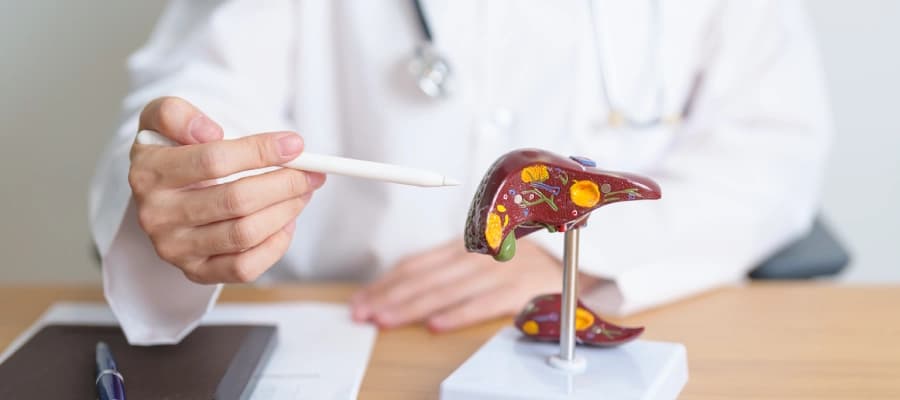
Liver Transplant
Istanbul
Liver Transplant in Istanbul is available at 4 hospitals in the Voumed network.
A liver transplant replaces a failing liver, in whole or in part, with a healthy liver from a living or a deceased donor, and it is the definitive treatment when chronic liver failure can no longer be controlled by medicines. Because the liver is the only organ that regenerates, a healthy adult can donate part of their liver and both the donated piece and the remaining liver grow back to near full size within weeks. Patients travel abroad for liver transplant to reach high-volume transplant centres, experienced surgical and intensive-care teams and coordinated assessment of both the recipient and a potential living donor under one roof. It is major surgery that needs careful preparation and a long, supervised recovery, but for the right patient it restores a full and active life.
On this page
At a glance
- Anaesthesia
- general anaesthesia
- Hospital stay
- usually about 2 to 4 weeks, including intensive care
- Procedure time
- roughly 6 to 12 hours, depending on the case
- Recovery
- gradual over 3 to 6 months before full activity returns
- Time before flying home
- usually about 6 to 8 weeks of local stay after surgery, once the new liver is stable
- Results visible
- liver function improves within days, with strength and energy returning steadily over the following months
What it is
A liver transplant is an operation that removes a diseased liver and puts a healthy liver, or part of one, in its place. The liver carries out many vital tasks: it processes medicines and nutrients, clears toxic substances such as ammonia and bilirubin from the blood, and makes essential proteins including the factors that allow blood to clot. When these functions fail and cannot be restored with treatment, replacing the liver is the only lasting option. A unique feature of the liver is its ability to regenerate, so more than half of a healthy person's liver can be given to a recipient, and both portions regrow to a nearly normal size in a short time. The new liver can come from a deceased donor or, as a partial graft, from a healthy living donor.
When it is recommended
A liver transplant is considered for liver failure that is either acute or chronic. Acute liver failure can develop over days or weeks, most often from certain poisons, mushroom poisoning or a reaction to medication, and may require an urgent transplant. Chronic liver failure most commonly follows cirrhosis, which is the leading reason for transplant worldwide, and cirrhosis itself can arise from long-standing hepatitis B or C, heavy alcohol use, fatty liver disease, bile-duct disorders or autoimmune disease. Inherited and metabolic conditions such as hemochromatosis, certain congenital diseases of childhood, and some early liver tumours that remain within accepted criteria are also treated by transplant. The decision is made by a transplant team after a full assessment confirms that the liver cannot recover and that the patient is fit for the operation.
How it is performed
A liver transplant is performed under general anaesthesia, so the patient is fully asleep and feels nothing. In a deceased-donor transplant, the whole diseased liver is removed and the donor liver is placed in the same position, with the blood vessels and bile duct carefully reconnected. In a living-donor transplant, a portion of a healthy relative's liver is removed and used as the graft, relying on the liver's power to regenerate in both donor and recipient. A related technique, sometimes called a split transplant, divides one deceased-donor liver between two recipients. The operation is detailed microsurgery on the major blood vessels and the bile duct and usually takes about 6 to 12 hours. Afterwards the recipient is cared for in intensive care for the first days while the new liver begins to work, and a living donor undergoes a separate, carefully planned operation with its own recovery.
Candidacy and preparation
Both the recipient and any living-donor candidate go through a thorough evaluation to confirm they are fit for surgery. For the recipient this includes liver-function and blood tests, screening for hepatitis B and C and other infections, detailed imaging to map the blood vessels and measure liver volume, and opinions from cardiology, chest medicine and anaesthesia, supported by psychological assessment and a transplant coordinator. A living donor is usually a healthy relative of a compatible blood group, and is assessed just as carefully to ensure donating is safe for them. A transplant is not advised when cancer has spread beyond the liver, when there is a severe uncontrolled infection or advanced heart or lung disease, in active alcohol or drug addiction, or when a patient could not keep to the lifelong medication and follow-up that a transplant requires. For international patients much of the early workup can begin remotely with records and scans reviewed before travel.
Recovery and planning your treatment abroad
Recovery from a liver transplant is steady and supervised. The recipient spends the first days in intensive care, then moves to a specialised ward, and most people are discharged from hospital within about 2 to 4 weeks. Immunosuppressive medicines, which stop the body rejecting the new liver, are started straight away and must be taken for life, with the doses adjusted by frequent blood tests in the early weeks. Because of this, patients are advised to remain in the destination city for roughly 6 to 8 weeks after surgery so the team can monitor liver function, fine-tune the medication and confirm that the graft is stable before a long flight. Crowded places are best avoided in the first months while the immune system is suppressed. Once home, follow-up continues with a local doctor and remote review of blood results by the transplant team, and international patient services commonly provide interpreters and coordinators so language is never a barrier. Most recipients return to normal activity within 3 to 6 months.
Risks, safety and results
A liver transplant is a major operation, and although modern transplant programmes achieve very good long-term results, it carries real risks that the team works hard to manage. Early concerns include bleeding, clotting in the reconnected vessels, bile-duct leaks or narrowing, and infection, which is why the first weeks are closely supervised. Rejection of the new liver is possible and is the reason immunosuppressive medication is essential and lifelong; these medicines themselves slightly raise the risk of infection, so the balance is monitored carefully. For a living donor, the donation is a separate operation with its own recovery, and studies show that a healthy donor's liver regrows and that their long-term health and life expectancy are not reduced. With a suitable donor, an experienced team and faithful follow-up, a liver transplant offers most patients a lasting return to a healthy, active life.
Frequently asked questions
These answers are general guidance and may vary by provider. Confirm the details with the hospital you choose.
How long will I need to stay abroad for a liver transplant?
A liver transplant requires a long stay. Most patients remain in hospital for about 2 to 4 weeks, then stay in the destination city for a total of roughly 6 to 8 weeks after surgery so the team can adjust the anti-rejection medication and confirm the new liver is working well before a long flight.
Where does the donor liver come from?
It can come from a deceased donor whose family has chosen to donate, in which case the whole liver is used, or as a partial graft from a healthy living donor, usually a relative of a compatible blood group. Both routes are well established, and the liver's ability to regenerate means a part of it can grow into a full-sized liver.
Does a living liver donor recover fully?
Yes. Thanks to the liver's unique ability to regenerate, the part removed from a living donor regrows to nearly its full size within weeks, and the donor undergoes a separate, carefully planned operation. Research shows that donating does not shorten a healthy donor's life expectancy.
When can I fly home after the operation?
Most patients are advised to wait roughly 6 to 8 weeks after surgery before a long flight, once the liver is stable and the medication doses have settled. The transplant team gives the final clearance for travel based on your blood results and overall recovery, never on a fixed date alone.
Will I have to take medication for the rest of my life?
Yes. Immunosuppressive medicines that prevent rejection must be taken every day for life. The doses are highest and most closely monitored in the first weeks and then become more stable, and your transplant team will explain the routine clearly before you travel home.
How does follow-up work once I am back home?
Follow-up combines regular blood tests with a doctor near your home and remote review of those results by the transplant team by message or video. The team coordinates with your local clinician so your medication stays correctly balanced, and interpreter support is available throughout.
Is it safe to travel for a transplant if I am already very unwell?
Travel is only planned once the team is confident you are stable enough for the journey and the surgery. The pre-transplant assessment, which can begin remotely with your records and scans, is designed to confirm this, and the timing of travel is arranged around your condition and the availability of a suitable donor.
Can a liver transplant treat liver cancer?
In selected cases, yes. When a liver tumour is confined to the liver and stays within internationally accepted size and number criteria, a transplant can treat both the cancer and the underlying liver disease at once. A transplant is not suitable when cancer has already spread beyond the liver, which is why careful imaging and staging come first.
Not sure which hospital fits your case?
Upload your medical records and let AI match you to the right hospital.
Upload records and get matchedAvailable at these hospitals

Acıbadem Ataşehir Hospital
istanbul
- Specialties
- 29

Memorial Bahçelievler Hospital
istanbul
- Specialties
- 31

Memorial Şişli Hospital
istanbul
- Specialties
- 29

Memorial Ataşehir Hospital
istanbul
- Specialties
- 28
Specialties
Not sure which hospital fits your case?
Upload your medical records and let AI match you to the right hospital.
Upload records and get matched