Knee Replacement
Istanbul
Knee Replacement in Istanbul is available at 12 hospitals in the Voumed network.
Knee replacement resurfaces a worn knee joint with a precision metal and durable plastic implant, ending the painful bone-on-bone contact so the joint can bend, walk and climb stairs again without constant pain. It is one of the most reliable operations in modern orthopaedics and gives lasting relief when arthritis has worn the joint and other treatments no longer help. The aim is comfort and a return to an active daily life, not just an image on a scan. Many patients travel abroad for knee replacement to reach experienced joint surgeons, modern implants and a well-structured rehabilitation programme, while recovering away from the demands of daily life.
On this page
At a glance
- Anaesthesia
- spinal or general anaesthesia
- Hospital stay
- usually about 2 to 4 nights
- Procedure time
- about 1 to 2 hours
- Recovery
- walking with support within a day; daily activities over about 6 weeks, full recovery over a few months
- Time before flying home
- usually about 10 to 14 days, after the wound and early mobility are checked
- Results visible
- pain relief begins early, with movement and strength improving steadily over weeks to months
What it is
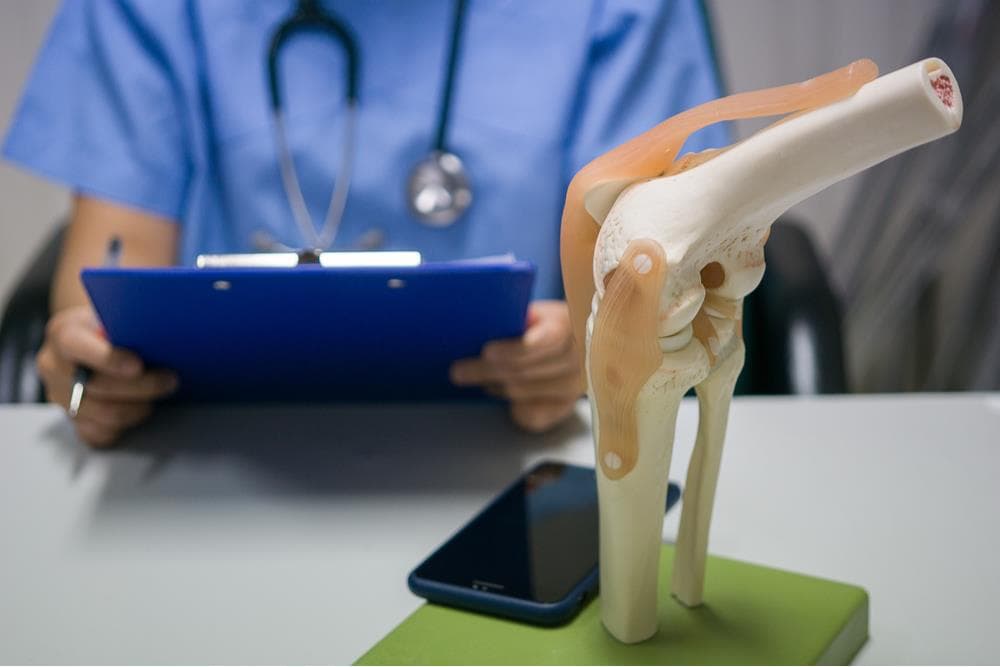
Knee replacement, also called knee arthroplasty, is surgery that caps the worn surfaces of the knee joint with a smooth implant so the bones no longer rub painfully against each other. The damaged ends of the thigh bone and shin bone are reshaped and covered with metal components, and a strong plastic spacer sits between them to glide like healthy cartilage; the kneecap surface may also be resurfaced. In a total knee replacement the whole joint surface is renewed, while a partial replacement resurfaces only the single worn compartment when the rest of the knee is healthy. The implant restores a smooth, pain-free joint that supports the natural movements of walking, bending and standing.
When it is recommended
Knee replacement is recommended when arthritis has worn the joint so far that pain and stiffness limit everyday life and simpler treatments no longer give relief. The most common cause is osteoarthritis, the age-related wearing of the smooth cartilage that lets the bones move freely, but the joint can also be damaged by rheumatoid and other inflammatory arthritis, by old fractures that disturbed the joint surface, or by previous joint infection. The key signs are constant or night-time knee pain, difficulty walking any useful distance, trouble climbing stairs or rising from a chair, and a knee that no longer responds to painkillers, weight management, physiotherapy or injections. Surgery is guided by how much the pain affects life, supported by an examination and X-rays, rather than by the scan alone.
How it is performed
Knee replacement is an open operation performed under spinal anaesthesia, where the patient is awake but feels nothing below the waist, or under general anaesthesia. Through an incision over the front of the knee the surgeon removes the worn cartilage and a thin layer of damaged bone, shapes the bone ends precisely and fixes the metal and plastic components in place, checking that the new joint moves smoothly and is well balanced before closing. The operation usually takes about 1 to 2 hours. Some teams use robotic or computer-assisted guidance to plan and position the implant accurately, but this is still carried out through the same open approach rather than a separate keyhole technique. A scar over the front of the knee is expected and fades over the following months.
Candidacy and preparation
A good candidate has knee arthritis that clearly limits daily life, has tried non-surgical care without lasting benefit and is well enough for anaesthesia and the recovery effort that follows. Preparation begins with an examination of the knee's movement, stability and alignment and with X-rays that show the degree of wear, alongside a general health check, blood tests and a heart trace where appropriate. Any other medical conditions, such as diabetes or high blood pressure, are brought under control, sources of infection like dental or urinary problems are treated first, and certain blood-thinning medicines are paused on medical advice. For international patients this can largely begin remotely from existing reports and scans, with the final assessment and anaesthetic review completed on arrival. Stopping smoking and strengthening the leg muscles beforehand both help recovery.
Recovery and planning your treatment abroad
Recovery is active from the start. Most patients stand and take their first steps with support within a day of surgery, using a frame or crutches, and a physiotherapist guides exercises to restore movement and strength. The hospital stay is usually about 2 to 4 nights, and the wound is checked and the dressing changed before discharge. Walking improves steadily over the following weeks, most everyday activities return over about six weeks, and strength and confidence keep building over a few months. Planning a trip abroad, it is sensible to stay in the destination city for about 10 to 14 days so the wound can be checked, any stitches managed and safe walking confirmed before flying. Because long flights carry a clot risk after major joint surgery, the surgeon gives clear advice on timing, blood-thinning medicine and moving the legs in flight. Afterwards, follow-up continues remotely by message, photo or video, with interpreter and coordinator support, and routine checks and ongoing physiotherapy can be arranged near home.
Risks, safety and results
Knee replacement is a safe and highly successful operation, and most patients gain lasting freedom from arthritis pain and a return to comfortable walking. As with any major surgery there are risks, including infection, bleeding, blood clots in the leg, stiffness, and over many years the gradual wear or loosening of the implant that can eventually need revision. These risks are kept low by careful planning, antibiotics, clot-prevention measures and a well-followed rehabilitation programme, which is why an experienced team and good aftercare matter so much. With committed physiotherapy most people regain a stable, pain-free knee that lets them walk, climb stairs and take part in everyday and gentle recreational activities for many years.
Frequently asked questions
These answers are general guidance and may vary by provider. Confirm the details with the hospital you choose.
Is knee replacement done under general or spinal anaesthesia?
It can be done either way. Many knee replacements are performed under spinal anaesthesia, so you are awake but feel nothing below the waist, often with light sedation, while general anaesthesia is used when it suits you better. Your surgeon and anaesthetist choose the safest option for you.
How many days should I plan to stay abroad?
Most patients plan to stay in the destination city for about 10 to 14 days. This covers the operation, the hospital stay of around two to four nights, the start of physiotherapy and a wound check, so the team can confirm you are walking safely before you fly home.
How soon will I walk after the operation?
Usually within a day. Most patients stand and take their first steps with a frame or crutches the day of or the day after surgery, guided by a physiotherapist, and walking distance grows steadily over the following weeks as strength and confidence return.
Is robotic knee replacement different from standard surgery?
Robotic or computer-assisted guidance helps the surgeon plan and place the implant precisely, but the operation is still done through the same open approach, not a separate keyhole method. The benefit is accuracy in positioning; the implant and recovery are broadly the same.
When can I fly home after knee replacement?
Most patients fly home about 10 to 14 days after surgery, once the wound is healing well and safe walking is confirmed. Because major joint surgery raises the risk of a clot on long flights, your surgeon advises on timing, blood-thinning medicine and keeping the legs moving during the journey.
How long does a knee replacement last?
A modern knee implant commonly lasts many years, and most patients never need it replaced. Over a long lifetime an implant can gradually wear or loosen and may eventually need a revision operation, which is less likely with a well-placed implant, a healthy weight and steady follow-up.
How does follow-up and physiotherapy work once I am home?
Your surgeon gives a written rehabilitation and aftercare plan and stays reachable for remote follow-up by message, photo or video. Ongoing physiotherapy and routine checks, including any wound care, can be carried out by clinicians near your home, and interpreter support is available throughout so the plan is clear in your own language.
Not sure which hospital fits your case?
Upload your medical records and let AI match you to the right hospital.
Upload records and get matchedAvailable at these hospitals

Liv Hospital Vadistanbul
istanbul
- Specialties
- 24

Acıbadem Altunizade Hospital
istanbul
- Specialties
- 28

Liv Hospital Topkapı
istanbul
- Specialties
- 18

Acıbadem Ataşehir Hospital
istanbul
- Specialties
- 29

Liv Hospital Bahçeşehir
istanbul
- Specialties
- 24

Liv Hospital Ulus
istanbul
- Specialties
- 24

Acıbadem Fulya Hospital
istanbul
- Specialties
- 22

Acıbadem Maslak Hospital
istanbul
- Specialties
- 29

Memorial Bahçelievler Hospital
istanbul
- Specialties
- 31

Memorial Şişli Hospital
istanbul
- Specialties
- 29

Memorial Göztepe Hospital
istanbul
- Specialties
- 24

Memorial Ataşehir Hospital
istanbul
- Specialties
- 28
Specialties
Not sure which hospital fits your case?
Upload your medical records and let AI match you to the right hospital.
Upload records and get matched