

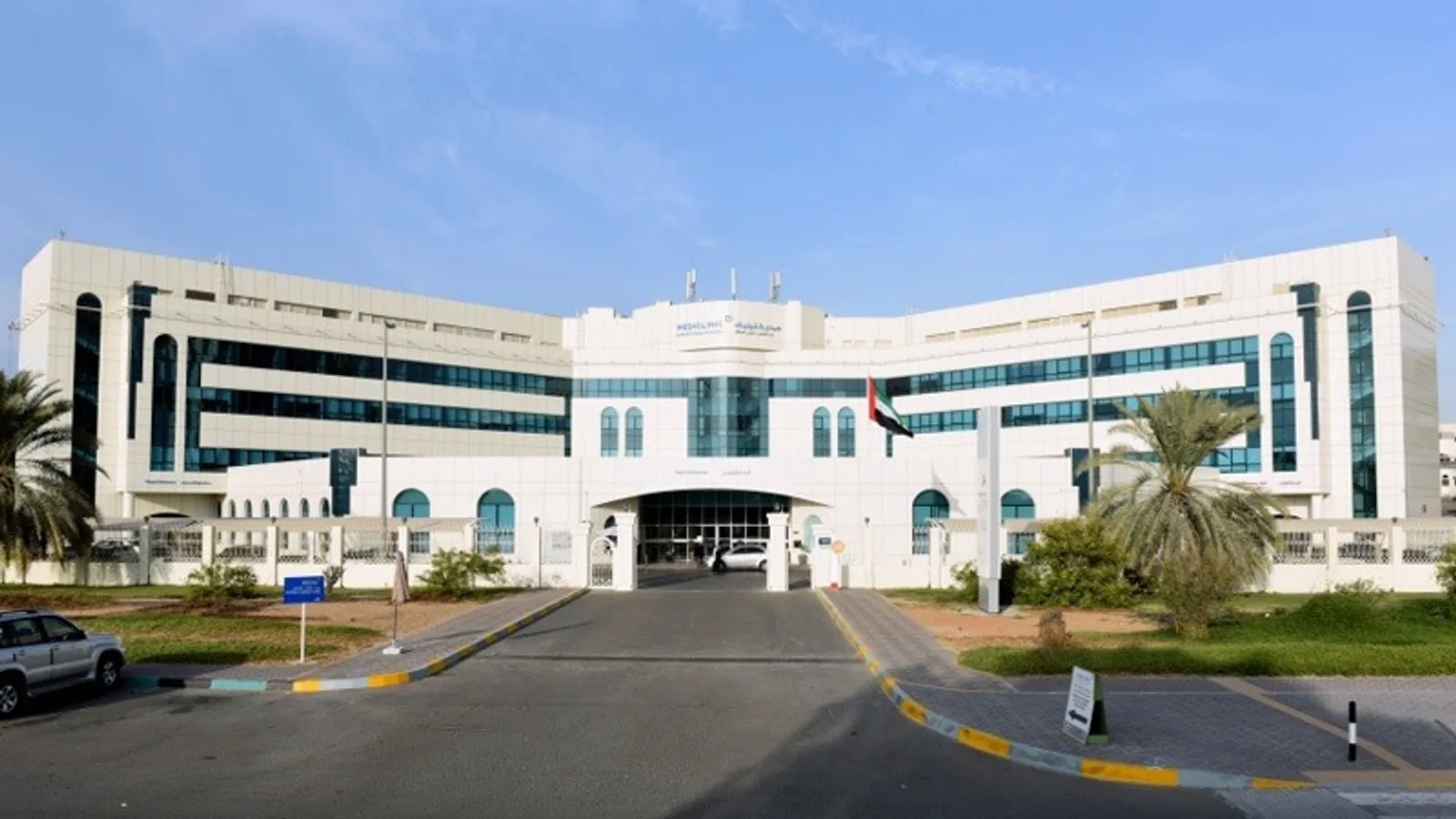
Mediclinic Airport Road Hospital
Abu Dhabi

- Specialties
- 25
- Departments
- 47
Not sure which hospital fits your case?
Upload your medical records and let AI match you to the right hospital.
Upload records and get matchedAbout
Mediclinic Airport Road Hospital was established in 2008 on Airport Road in Abu Dhabi, next to Zayed Sports City, with a licensed capacity of 203 beds. It provides inpatient and outpatient services seven days a week, including a 24 hour emergency department, and was the first private hospital in Abu Dhabi with renal dialysis and nuclear medicine capabilities. Clinical services include cardiology and cardiothoracic surgery supported by a cardiac intensive care unit and a heart attack centre, with coronary artery bypass and mitral, aortic and tricuspid valve repair and replacement; neurology, neurosurgery and an acute stroke unit; bariatric surgery; ophthalmology including cataract surgery with premium intraocular lens implants, vitreoretinal surgery and laser vision correction; urology with Rezum water vapour therapy and extracorporeal shock wave lithotripsy; endoscopic procedures; and a breast centre with breast imaging and breast surgery. An adjacent building houses the Comprehensive Cancer Centre, modelled on the oncology unit at Mediclinic City Hospital, where radiotherapy is delivered on a Varian TrueBeam linear accelerator with on board imaging and respiratory gating using IMRT, VMAT, stereotactic radiosurgery and stereotactic body radiation therapy, and where nuclear medicine provides PET-CT and SPECT-CT imaging and radiopharmaceutical therapy. The same building added a long term care unit, further outpatient clinics and inpatient wards. Orthotics and prosthetics, physiotherapy and rehabilitation and a sleep laboratory are also provided. The hospital is accredited by Joint Commission International, and its obesity and weight management service is accredited under the European Association for the Study of Obesity Collaborating Centres for Obesity Management scheme.
Specialties
Physicians
1-12 of 123
Departments
- Cardiology
- Cardiothoracic Surgery
- Acute Coronary Syndrome Programme
- Vascular Surgery
- Comprehensive Cancer Centre
- Radiotherapy
- Nuclear Medicine
- Haematology
- Paediatric Haematology and Oncology
- Breast Centre
- Breast Imaging
- Breast Surgery
- Neurology
- Neurosurgery
- Acute Stroke Unit
- Orthopaedics
- General Surgery
- Minimally Invasive Surgery
- Thyroid Surgery
- Gastroenterology
- Bariatric Surgery
- Obesity and Weight Management Centre
- Urology
- Men's Health Unit
- Nephrology
- Obstetrics and Gynaecology
- Fetal Medicine
- Endometriosis Clinic
- Menopause Clinic
- Paediatrics
- Paediatric Surgery
- Neonatology
- Ophthalmology
- Ear, Nose and Throat
- Cochlear Implant Programme
- Dermatology
- Endocrinology and Diabetes
- Dentistry
- Plastic Surgery
- Respiratory Medicine
- Rheumatology
- Sleep Laboratory
- Physiotherapy and Rehabilitation
- Orthotics and Prosthetics
- Long Term Care Unit
- Chronic Pain Management
- Health Assessment Clinic
Procedures
Bariatric and Metabolic Surgery
Cardiology and Cardiovascular Surgery
Dental, Oral and Maxillofacial Surgery
Ear, Nose and Throat
Gastroenterology
General Surgery
Gynecology and Obstetrics
Neurology and Neurosurgery
Ophthalmology
Orthopedics and Traumatology
Physical Medicine and Rehabilitation
Plastic and Aesthetic Surgery
International patient services
- Cross border telemedicine consultations
- Airport meet and greet service
- Short and long term hotel reservations
- Language translation services
- Inbound visa support for the United Arab Emirates
- Airport transfer and chauffeur services
Technologies and equipment
UroLift (Prostatic Urethral Lift)
UroLift is a minimally invasive treatment for an enlarged prostate that holds the obstructing tissue out of the way instead of removing or destroying it. Working through the urethra with a slim instrument, the urologist places small permanent implants that pull the two lobes of the prostate apart, opening the channel like a curtain being tied back. No tissue is cut, heated or vaporised, so there is no healing of a raw surface afterwards and symptom relief is felt within days rather than weeks. It is chosen particularly by men who want to preserve sexual function, since it does not cause the retrograde ejaculation that follows most other prostate procedures.
Varian TrueBeam
Varian TrueBeam is a linear accelerator, the machine that produces the high-energy beams used in external radiotherapy. It combines fast beam delivery with imaging built into the treatment head and gantry, so the tumour can be located immediately before and, where needed, during each session. Because it can track breathing, hold treatment when the target moves out of position and shape the beam continuously as the gantry rotates, it delivers intensity-modulated and rotational treatments, stereotactic radiosurgery to the brain and stereotactic body radiotherapy to sites such as the lung, liver, spine and prostate on the same platform. It is a general-purpose accelerator: most patients treated on it receive conventional daily radiotherapy, with the advanced techniques used where the case requires them.
ESWL (Shock Wave Lithotripsy)
ESWL (Extracorporeal Shock Wave Lithotripsy) is a non-surgical way to break up stones in the urinary system, such as kidney and ureter stones, without any incision. High-energy shock waves are generated outside the body and focused precisely onto the stone, shattering it into small fragments that can then pass naturally with the urine. Because nothing is inserted into the body and no cut is made, ESWL is one of the gentlest stone treatments available. It is typically a same-day procedure, after which most people return home and pass the broken fragments over the following days.
PET-CT
PET-CT is an advanced hybrid imaging method that combines positron emission tomography with computed tomography in a single scan, mapping both the metabolic activity and the anatomical structure of the body at once. A small dose of a radioactive tracer, often a glucose analogue, is injected and gathers in cells that are working harder than normal, which is typical of many tumours. Because it can show where a disease is active before it changes the shape of an organ, PET-CT is one of the most valuable tools for detecting cancer, working out how far it has spread, and checking whether treatment is working.
CO2 Fractional Laser
The CO2 fractional laser is a carbon dioxide skin resurfacing system that delivers energy in thousands of tiny microscopic columns rather than treating the whole surface at once. This fractional pattern leaves healthy skin untouched between each treated point, which speeds healing while the controlled heat triggers collagen and elastin renewal in the deeper layers. The result is smoother texture, firmer skin and a fresher tone, with a recovery that is shorter than older fully ablative lasers. It is one of the most versatile tools in aesthetic dermatology for scars, wrinkles and sun damage.
SPECT-CT
SPECT-CT is a nuclear medicine imaging method that merges single photon emission computed tomography with computed tomography in one device, capturing both how an organ functions and its anatomical structure in a single session. A low-dose radiopharmaceutical is injected and gathers in the target tissue, where a rotating gamma camera builds three-dimensional functional images while the CT scan defines the exact location within the body. By showing not just the shape of a structure but how active it is, SPECT-CT helps doctors find disease, pinpoint exactly where it sits, and plan treatment with greater confidence.
iTind (Temporary Implantable Nitinol Device)
iTind treats an enlarged prostate with a device that is placed for a few days and then taken out, leaving nothing behind. A small nitinol frame is folded into a delivery catheter, positioned in the prostatic part of the urethra and released, where it expands and presses gently at three specific points. Over five to seven days that steady pressure reshapes the tissue, creating channels through which urine can flow, and the device is then removed in the clinic. Because no tissue is cut, heated or removed and no implant remains, the approach appeals to men who want relief from urinary symptoms with a low risk to sexual function and without a permanent change to the prostate.
FibroScan
FibroScan is a non-invasive, ultrasound-based device that measures how stiff the liver is, which reflects the degree of scarring, or fibrosis, and at the same time estimates the amount of fat in the liver. It offers a fast, painless alternative to a liver biopsy, with no incision or needle, and it assesses a larger area of the organ than a tiny tissue sample would. A probe is simply placed on the skin over the liver while the patient lies down, and a numerical result is available within minutes. It is widely used to detect and follow liver conditions and to guide and monitor treatment.
Cardiac MRI
Cardiac MRI is a non-invasive imaging method that produces remarkably detailed pictures of the heart and the large blood vessels around it. It uses a strong magnetic field and radio waves rather than X-rays, so there is no ionising radiation involved. Unlike many other heart tests, it shows not only the shape and motion of the heart but also the condition of the heart muscle itself, down to the tissue level. This makes it a powerful tool for diagnosing and guiding the treatment of a wide range of heart conditions.
Tomosynthesis Mammography (3D Mammography)
Tomosynthesis mammography, often called 3D mammography, is an advanced form of digital mammography that builds a three-dimensional picture of the breast from a series of thin layers. Instead of a single flat image in which overlapping tissue can hide or mimic a problem, it lets the radiologist scroll through the breast slice by slice on a high-resolution screen. This makes small lesions and tumours easier to see and helps distinguish real findings from harmless overlapping tissue, which is especially valuable for screening and for women with dense breasts.
Rezum (Water Vapor Therapy)
Rezum is a minimally invasive treatment for an enlarged prostate that uses the natural energy stored in water vapour, or steam, to gently shrink the overgrown tissue. Benign prostatic enlargement is a common condition in older men, where the prostate grows and presses on the urinary channel, causing symptoms such as a weak stream, frequent urination and getting up at night. Rezum delivers small, precise bursts of steam directly into the enlarged tissue through the urethra, with no cutting. Over the following weeks the treated tissue is naturally reabsorbed, the channel opens up, and urinary symptoms improve.
Thulium Laser (ThuLEP)
Thulium laser is a modern surgical laser used mainly to treat an enlarged prostate, a common cause of urinary difficulty in older men. Its best-known use is the ThuLEP technique (Thulium Laser Enucleation of the Prostate), in which the overgrown inner prostate tissue is removed through the urethra with no external cut. A defining feature of the thulium laser is that it penetrates tissue only very shallowly, which allows extremely precise cutting and excellent sealing of small blood vessels as it works. The result is a minimally invasive treatment with little bleeding, a short recovery and durable relief of urinary symptoms.
pH-metry (Reflux Diagnosis)
pH-metry is a diagnostic test that confirms reflux disease by directly measuring how much acid reaches the food pipe (oesophagus) over an extended period. It is especially useful when standard endoscopy looks normal but a person still has reflux-type symptoms, because it captures acid exposure that a single snapshot examination would miss. In a common modern version, a tiny pH capsule is attached to the lower oesophagus during a brief endoscopy under sedation, then records acid levels for about 24 to 48 hours before detaching on its own and passing naturally. The result gives an objective picture of whether, and how often, acid is reaching the oesophagus.
Location
Mediclinic Airport Road Hospital, Airport Road, Next to Zayed Sports City, P.O. Box 48481, Abu Dhabi, United Arab Emirates
View on Google MapsAccreditations
- JCI
Not sure which hospital fits your case?
Upload your medical records and let AI match you to the right hospital.
Upload records and get matched