


Burjeel Hospital Abu Dhabi
Abu Dhabi

- Specialties
- 27
- Departments
- 30
Not sure which hospital fits your case?
Upload your medical records and let AI match you to the right hospital.
Upload records and get matchedAbout
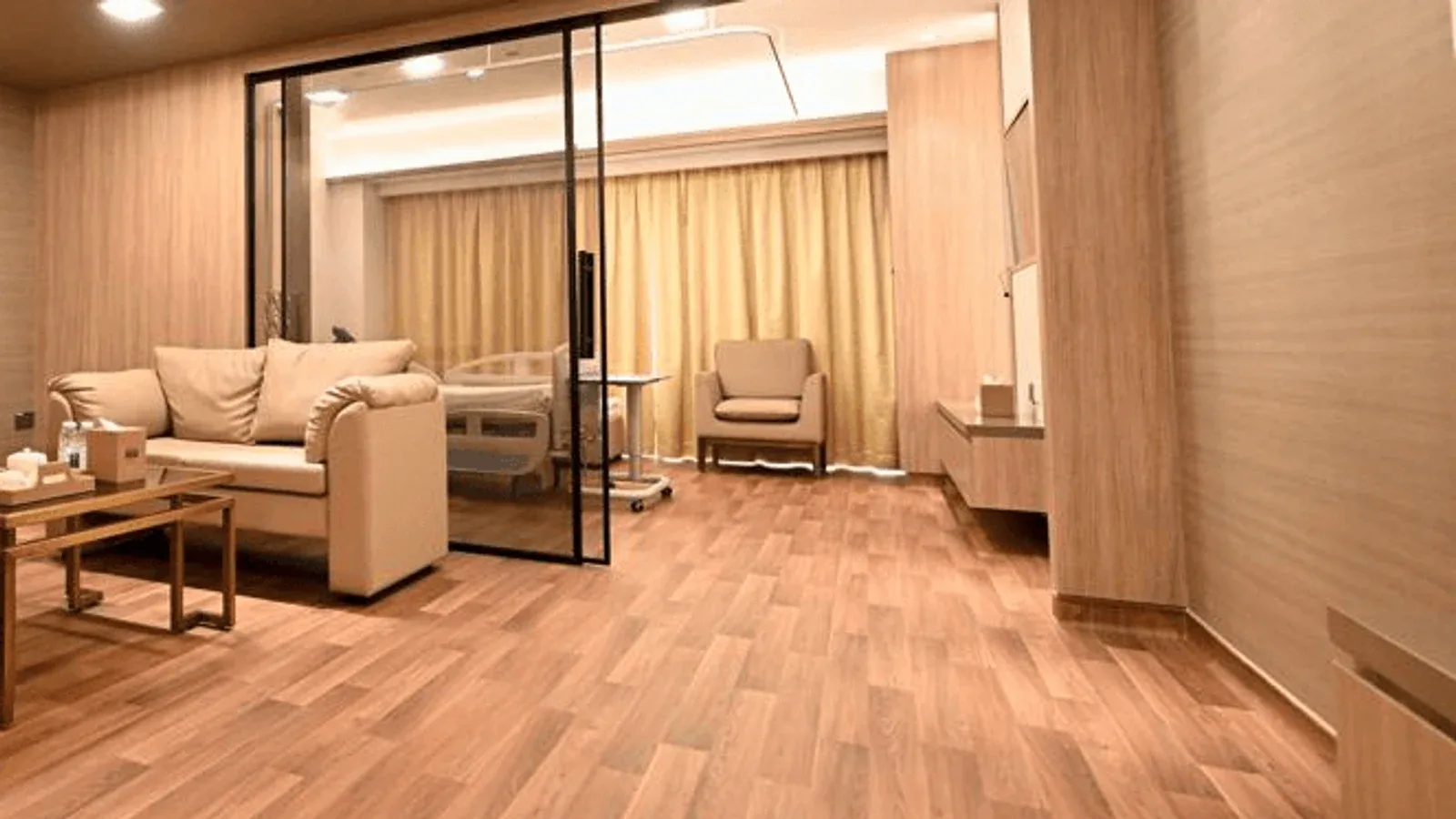
Burjeel Hospital Abu Dhabi is the tertiary care flagship of the Burjeel brand, on Al Najdah Street in central Abu Dhabi, operated by Burjeel Holdings. It treats adults and children across more than forty clinical departments, among them cardiology and cardiac surgery, oncology and haematology, orthopaedics and sports medicine, a dedicated spine clinic, neurology, bariatric and metabolic surgery, general and laparoscopic surgery, gynaecology and obstetrics, urology with a robotic surgery programme, ophthalmology, ENT and head and neck surgery, plastic and reconstructive surgery, and physical medicine and rehabilitation. Cardiac surgery covers coronary artery bypass grafting on pump and off pump, valve replacement, aortic dissection and aneurysm repair, and thoracic procedures including lung resection. The hospital also hosts the Korean Pavilion, a unit staffed by Korean physicians, and a programme of premium inpatient suites used by patients travelling from abroad. The hospital holds JCI accreditation.
Specialties
Physicians
1-12 of 103
Departments
- Bariatric and Metabolic Surgery
- Cardiac Surgery
- Cardiology
- Dentistry
- Dermatology and Aesthetic Clinic
- Diabetes and Endocrinology
- ENT, Head and Neck Surgery
- Gastroenterology
- General and Laparoscopic Surgery
- Gynecology and Obstetrics
- Neonatology
- Nephrology
- Neurology
- Oncology
- Ophthalmology
- Orthopedics and Sports Medicine
- Pain Management
- Pediatric Cardiology
- Pediatric Neurology
- Pediatric Surgery
- Pediatrics
- Physical Medicine and Rehabilitation
- Physiotherapy
- Plastic, Aesthetic and Reconstructive Surgery
- Pulmonology
- Rheumatology
- Spine Clinic
- Urology
- Vascular and Endovascular Surgery
- Korean Pavilion
Procedures
Bariatric and Metabolic Surgery
Cardiology and Cardiovascular Surgery
Dental, Oral and Maxillofacial Surgery
Gastroenterology
General Surgery
Gynecology and Obstetrics
Neurology and Neurosurgery
Oncology
Orthopedics and Traumatology
Physical Medicine and Rehabilitation
Plastic and Aesthetic Surgery
International patient services
- International patient office
- Interpreter and translation services
- Visa and travel assistance
- Airport transfer
- Accommodation assistance
Technologies and equipment
DSA Digital Subtraction Angiography
Digital subtraction angiography (DSA) is an advanced imaging method that shows the blood vessels throughout the body in fine detail. A thin catheter delivers a contrast agent into the arteries, and specialised computer processing strips away the surrounding bone and tissue so that only the vessels stand out sharply. It is used to detect vascular problems such as narrowing, aneurysm, malformation and abnormal connections in the brain, abdomen, skin and limbs. DSA is also the basis for many minimally invasive treatments, allowing a specialist to find and, in the same session, treat a vascular problem through a tiny entry point rather than open surgery.
EBUS Endobronchial Ultrasound
Endobronchial ultrasound (EBUS) is a minimally invasive method that combines bronchoscopy with ultrasound to examine the airways and the tissues and lymph nodes that surround them. A thin, flexible bronchoscope carrying a camera and a small ultrasound probe is passed through the mouth into the airways, where the probe creates real-time images of structures just beyond the airway wall, such as lymph nodes and masses that cannot be seen with a camera alone. Under this live ultrasound guidance, a fine needle can take samples for the laboratory in the same session, all without any surgical incision.
Coronary CT Angiography
Coronary CT angiography, sometimes called virtual angiography, is a computed tomography method that produces detailed images of the heart and its coronary arteries without the need for a catheter. Traditional angiography involves threading a thin tube into the arteries, but this scan does the same job from the outside, using a fast CT scanner and a contrast agent given through a vein. It clearly shows the build-up of calcium and plaque in the artery walls and any narrowing they cause. It uses X-rays, as all CT does, with techniques designed to keep the radiation dose low.
V-NOTES Scarless Surgery (Vaginal Laparoscopy)
V-NOTES (Vaginal Natural Orifice Transluminal Endoscopic Surgery) is a minimally invasive gynaecological technique performed entirely through the natural vaginal opening, with no incision on the abdomen at all. A camera and slim surgical instruments are passed through the vagina, so the surgeon can reach and treat the uterus, ovaries and fallopian tubes from inside without cutting the abdominal wall. Because nothing is opened on the outside of the body, the technique leaves no visible scar and is generally linked with less pain and a quicker recovery than conventional or keyhole abdominal surgery.
Location
Burjeel Hospital, Al Najdah Street, PO Box 7400, Abu Dhabi, United Arab Emirates
View on Google MapsAccreditations
- JCI
Not sure which hospital fits your case?
Upload your medical records and let AI match you to the right hospital.
Upload records and get matched